Walk into any bachata social and count the flame logos: Fuego is the most worn and most argued-about dance sneaker in the salsa and bachata world. The company was started in 2019 by Kevin Weschler, who took salsa classes in Brooklyn and could not find a shoe that worked on a bar floor, and it now sells to dancers in over 120 countries. Popularity is not the same as quality though, and half the online praise comes with a discount code attached. This review separates what Fuegos genuinely do well from what they do not, using the brand’s own specs and several hundred unpaid dancer reports.
At a Glance
Who Fuegos Are Actually For
Fuegos solve one specific problem better than anything else: dancing on floors that were never meant for dancing. Sticky bar floors, tiled rooftops, concrete patios, gravel-adjacent festival stages. Dancers who do their socials in venues like that keep coming back to Fuegos because the sole spins where rubber sneakers grab, and grabs where suede soles get shredded. One Los Angeles bachatero reported nearly two years of weekly bar socials on a single pair, exactly the environment that destroys a suede-soled shoe in a month.
They are also the shoe for people who refuse to carry a shoe bag. Fuegos pass as normal streetwear, so you can wear one pair to the venue, dance all night, and walk home. If your socials happen on a proper wooden floor and you change shoes at the door anyway, that convenience is worth much less, and a suede sole will outperform them. Our best salsa dancing shoes roundup covers those alternatives.
The FlowTec Sole, Explained
Every Fuego model uses the same patented outsole: a rubber compound tuned to sit between slip and grip, with two raised discs under the ball of the foot made from a denser material. Those discs are the pivot points you spin on, and they are the reason the shoe turns on surfaces where normal trainers stick. The sole is water and spill resistant and has a 12 mm heel-to-toe drop, about the same as a running shoe.
How that plays out depends heavily on the floor, and this is where honest expectations matter. On typical studio wood the balance is right, and singles and doubles release cleanly. On sticky bar floors and tile the sole is best in class, which is the core reason to buy. On rough outdoor concrete the shoes protect your knees, but several owners confirm spins remain hard work on truly rough surfaces. And on very polished or dusty wood some dancers find them too slippery. No sole wins on every floor; this one is tuned for the bad ones.
The Four Models Compared
Low-Top ($150, EUR 130) is the default and what most people mean by “Fuegos”. At 238 g it is light, heavily cushioned, and the most street-neutral looking, with over 5,000 reviews averaging 4.86 or higher across the black and white colorways. Its weakness is the flip side of the cushioning: the thick sole mutes floor feel, which casual social dancers rarely notice and technique-focused dancers dislike.
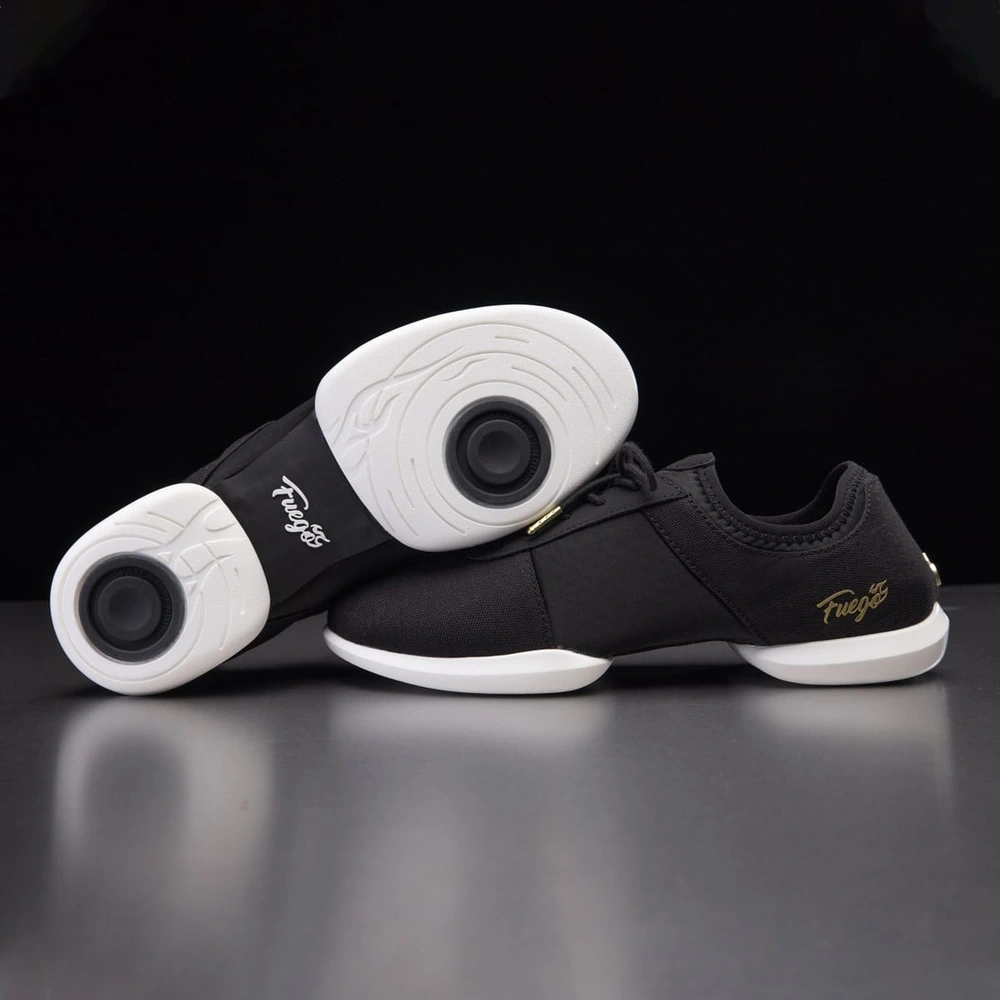
Split-Sole ($150, EUR 130) is the dancers’ pick and the answer to the floor-feel complaint. At 174 g it is the lightest model, the outsole is split at the midfoot so the shoe bends and points with your foot, and even dancers who find the standard models clunky tend to recommend this one. Trade-offs are real: there is no arch support, no heel structure, the cloth-style upper stains faster than the wipeable vegan leather, and it fits narrower. A common pattern in the scene is practicing footwork in Split-Soles and wearing Low-Tops to socials.
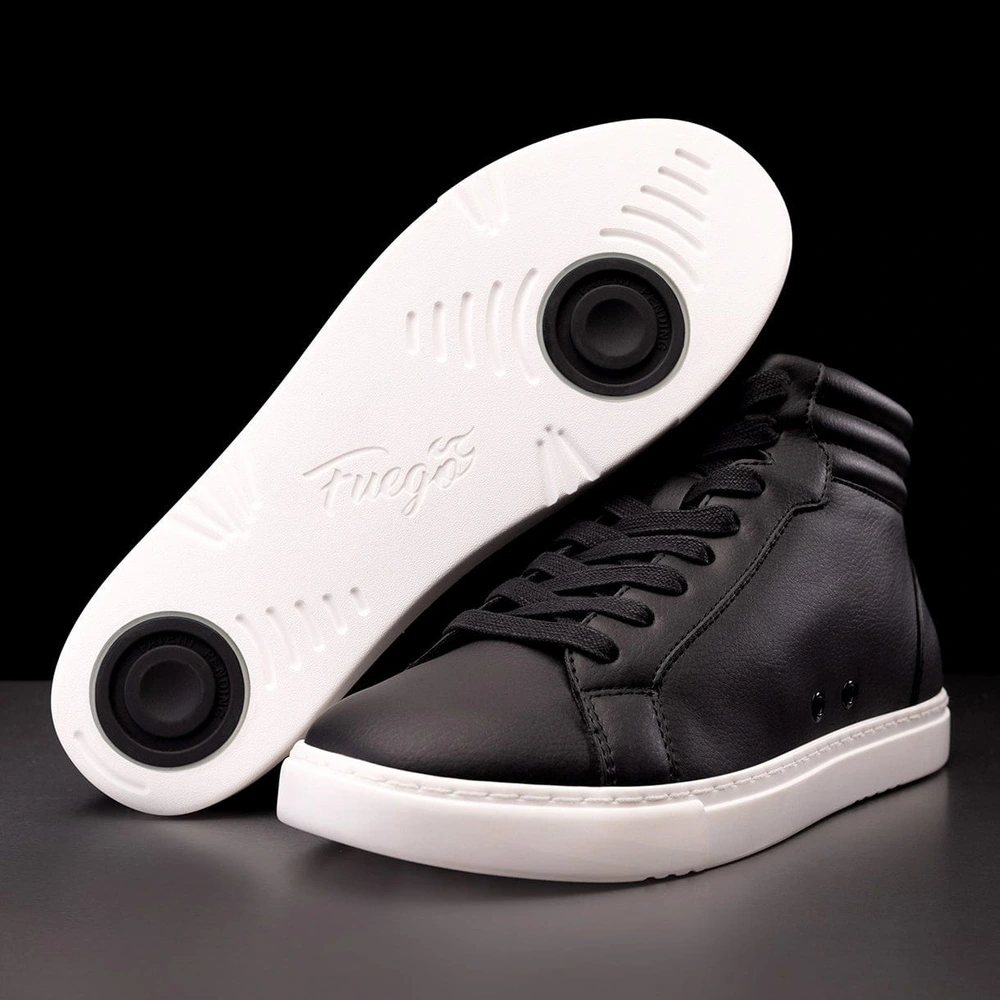
High-Top ($155, EUR 135) adds a padded collar around the ankle. Dancers who own both consistently name it the more stable shoe for spinning, and it is the one to consider if your ankles wobble on doubles. The cosmetic caveat from owners: it makes your feet look noticeably bigger.
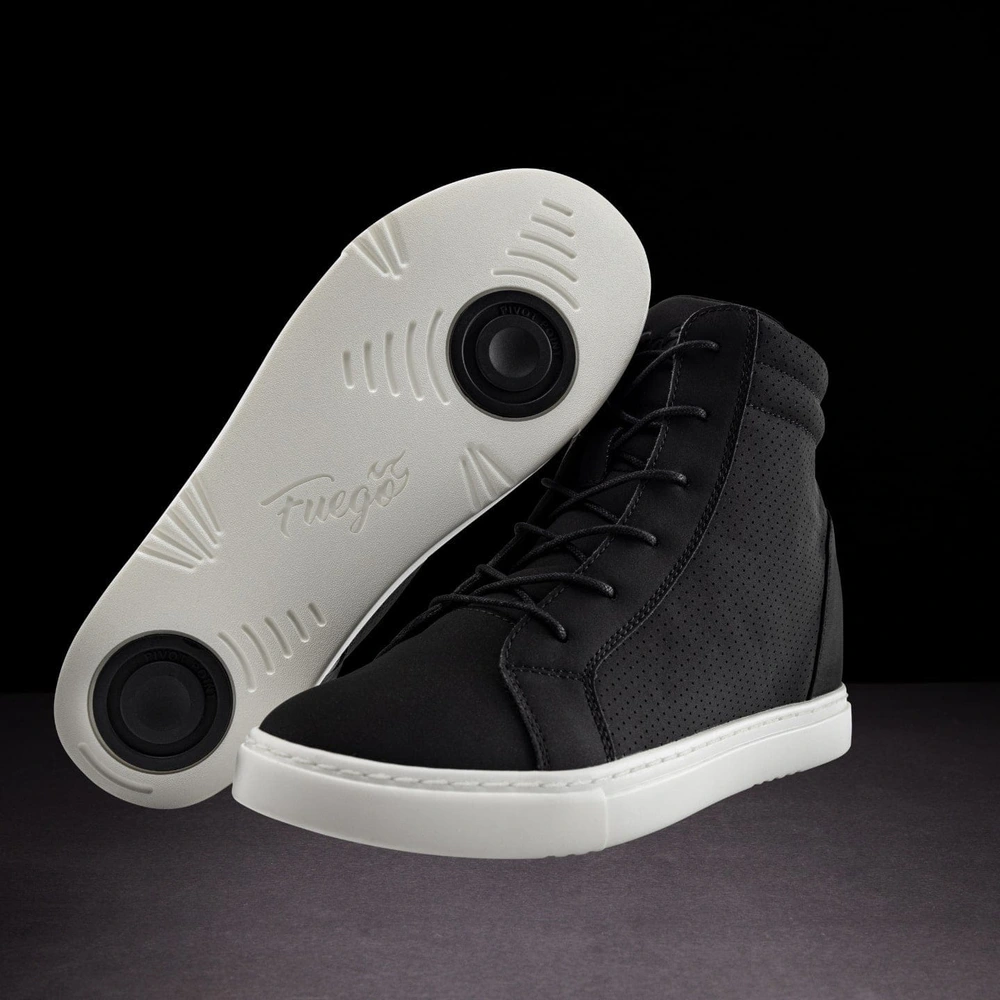
Wedge ($155, EUR 140) hides a 63.5 mm wedge heel inside a sneaker silhouette. It exists for followers who want heel-like posture on floors where actual heels would be miserable, and it shares the same footbed and pivot points as the other models. It is the heaviest of the range at 408 g, the sole is stiffer, and like the Split-Sole it has no arch support, which owners fix with inserts.
Beyond the core four, Fuego sells collab lines: the Derek Hough Low-Top and Split-Sole at $160, the Jade line at $165 with a knit upper that breathes better but runs smaller, and the BDash Low-Top at $150. Functionally they ride on the same sole, so you are paying for the colorway. The ATACA collab with bachata star Jorge “Ataca” Burgos was discontinued in 2026; if you see remaining stock at third-party retailers, that is why.
| Model | Weight | Price | Pick it for |
|---|---|---|---|
| Low-Top | 238 g | $150 / EUR 130 | One shoe for everything |
| Split-Sole | 174 g | $150 / EUR 130 | Footwork and floor feel |
| High-Top | 258 g | $155 / EUR 135 | Ankle stability on spins |
| Wedge | 408 g | $155 / EUR 140 | Heel posture without heels |
Sizing: Read This Before Ordering
The reliable rule from hundreds of buyer reports: order your normal sneaker size, the one you wear in Nike. Fuego’s own guidance is true to size with a half size up for wide feet, and that matches what most people experience. What you should not trust is the printable foot-measuring chart on their site, which repeatedly maps real foot lengths one to two sizes above what actually fits. Your sneaker size is the better instrument.
Three more things worth knowing. There are no wide or narrow widths, and the toe box starts snug; the upper stretches over the first few nights, but dancers with genuinely wide feet report corns and tend to be happier in other brands. The Jade knit colorways run smaller and stiffer than the standard models, so consider a half size up there specifically. And if you do get it wrong, US and EU orders include up to two free exchanges with prepaid labels, which takes most of the risk out.
The Honest Downsides
Durability is the loudest genuine complaint, and it is colorway-dependent. White pairs crease and can crack at the big-toe flex within months of heavy use, and there are reports of the logo peeling and, in two cases, soles splitting. Black pairs demonstrably hold up better. Realistic lifespan at two to three socials a week, dancing only: one to two years. Worn as an everyday street shoe on top, roughly half that.
The vegan upper does not breathe. Multiple long-term owners describe the standard models as hot, and sweat smell is a recurring theme, to the point that entire forum threads exist asking for a more breathable alternative. If you have hot feet, the knit Jade models help somewhat; a real-leather competitor helps more.
Finally, be aware of the recommendation economy around this brand. Fuego runs a large ambassador program where anyone can register a personal 10 percent code and earn commission, which is why so many teachers and forum posts push Fuegos with a code attached. The shoes did not become the scene standard by accident, but the volume of praise is amplified by those incentives. That is exactly why this review leans on reports without codes.
Fuego vs Taygra, GFranco and Capezio
Against Taygra, the handmade Brazilian sneaker at roughly $85 to $120, the pattern in the community is consistent: Taygra turns better indoors and gives far more floor feel, Fuego wins outdoors and on cushioning. One salsa leader who owns both put it plainly: gold for outdoor dancing, but for indoor dancing Taygra improved his turns. Taygras run narrow and thin to the point of feeling barefoot after a long social, so support-seekers stay with Fuego.
Against the GFranco Evolution at $115, you save money and gain floor feel, but GFranco itself states the Evolution is not built for rough outdoor surfaces or daily wear, which is precisely Fuego’s home ground. Dancers split on comfort: some find the Evolution more comfortable, others miss Fuego’s cushioning.
Against the Capezio Dansneaker, often $45 to $80 on Amazon, you are choosing a studio shoe. It pivots well on proper floors and costs half as much, but it is not made for the street or for sticky venues. If your dancing happens in studios, read our Capezio Canvas Dance Sneaker review before spending Fuego money, and consider the Pulse Dance Sneaker as the mid-priced all-rounder.
And against regular street sneakers, the case is medical rather than stylistic: rubber outsoles grip mid-spin and load your knees. Dancers who switched describe the difference as the reason they stopped hurting after socials.
Where to Buy, and the Amazon Trap
Fuego sells through fuegodance.com and a published list of physical stockists, and nowhere else. There are zero genuine Fuegos on Amazon or AliExpress; the dozens of “spin sole dance sneaker” listings there at $30 to $60 are lookalikes copying the pivot-point concept. A genuine pair has the flame script on the sole, the two dark pivot discs, and a seller that appears on Fuego’s official wholesale partners page. In Europe those stockists include Dancing Queens in Switzerland, Dancewear Central in the UK, Dance Makers in Helsinki, and more than 40 shops across Germany, France, and Italy where you can try sizes on.
Buying direct is straightforward in the EU: orders ship from Fuego’s Czech warehouse in two to eight business days, shipping costs $9.95 for one pair and is free from two pairs, and there are no customs charges. Returns run 30 days with a prepaid label minus an $8.95 restocking fee, and exchanges are free. On price, list is list except during holiday sales, which cut 15 to 30 percent, and the ever-circulating ambassador codes are worth a flat 10 percent, so never pay full price without checking for one.
Caring for Them
Fuego’s own care guidance is wipe-only: a damp cloth or mild soap on the upper and the sole, no machine washing, and never a dryer, since heat and agitation break down the adhesives and structure. Air dry at room temperature away from sunlight, stuff them with newspaper if they get properly wet, and air them out after every social. The insoles are removable and replaceable, which is the cheap fix once the cushioning packs down. Expect the Split-Sole’s fabric upper to need the most attention. A proper dance bag keeps the dance-only pair dance-only, which is the single best thing you can do for their lifespan.
Verdict
Buy Fuegos if your dancing happens on unpredictable floors: bars, rooftops, tile, outdoor festivals, or if you want one comfortable pair that goes from street to social without a shoe bag. Start with the black Low-Top, or the Split-Sole if footwork and floor feel matter to you.
Skip them if you dance mostly on good wooden floors and care about glide, where suede-soled shoes at half the price turn better. Skip them for wide feet, which do better in stretchier brands like Taygra. And skip them if breathability is non-negotiable, because the vegan upper runs hot. Those are not flaws in your feet; they are the actual boundaries of this shoe.
Frequently Asked Questions
Are Fuego dance sneakers worth the price?
At $150 they are worth it for mixed, sticky, or outdoor floors and street-to-social convenience. They are not worth it if you dance mostly on good wooden floors, where cheaper suede-soled shoes turn better.
Do Fuego sneakers run true to size?
Order your normal Nike size and ignore the printable chart, which runs large. Wide feet go half a size up; the Jade knit colorways run smaller. Two free exchanges on US and EU orders cover mistakes.
Can you buy genuine Fuego shoes on Amazon?
No. Everything labelled “fuego” or “spin sole” on Amazon and AliExpress is a lookalike. Genuine pairs come from fuegodance.com or the brand’s listed stockists.
Which Fuego model is best for salsa and bachata?
The Low-Top for most social dancers, the Split-Sole for footwork and floor feel, the High-Top for ankle stability, the Wedge for heel posture on bad floors.
How long do Fuego sneakers last?
One to two years at two to three socials a week, dancing only. Black outlasts white, and street wear on top roughly halves the lifespan.
Ready to Dance?
The whole point of shoes that survive bad floors is going out more. Find your next social on our salsa events map or browse bachata events worldwide, from London to Berlin to Barcelona. Breaking in a pair somewhere warm? The festival calendar lists the congresses and open-airs where Fuegos earn their keep.