Zouk vs Kizomba: How to Tell Them Apart

The real differences between Brazilian Zouk and Kizomba — origins, music, the embrace, and which one to start with as a beginner.

By Laura · · Updated · 11 min read

The most common question I get from dancers stepping into either of these scenes for the first time is some version of: "Aren't they the same thing?" They look similar from across a dim room — close embrace, slow tempo, two bodies moving like one. They sometimes share festivals, sometimes share DJs, sometimes share dancers. But they come from different continents, follow different musical traditions, and reward completely different things in your body. After a decade of dancing both, I can tell them apart from the doorway. This guide will get you there faster than I did.

At a Glance

Origins Angola (Kizomba) · Brazil (Zouk)
Tempo Both 80–110 BPM
Movement Grounded walk vs flowing arcs
Signature Tarraxinha · Cambré
Browse Kizomba & Zouk events
Kizomba and Zouk dancers sharing a social floor
---

The 30-Second Answer

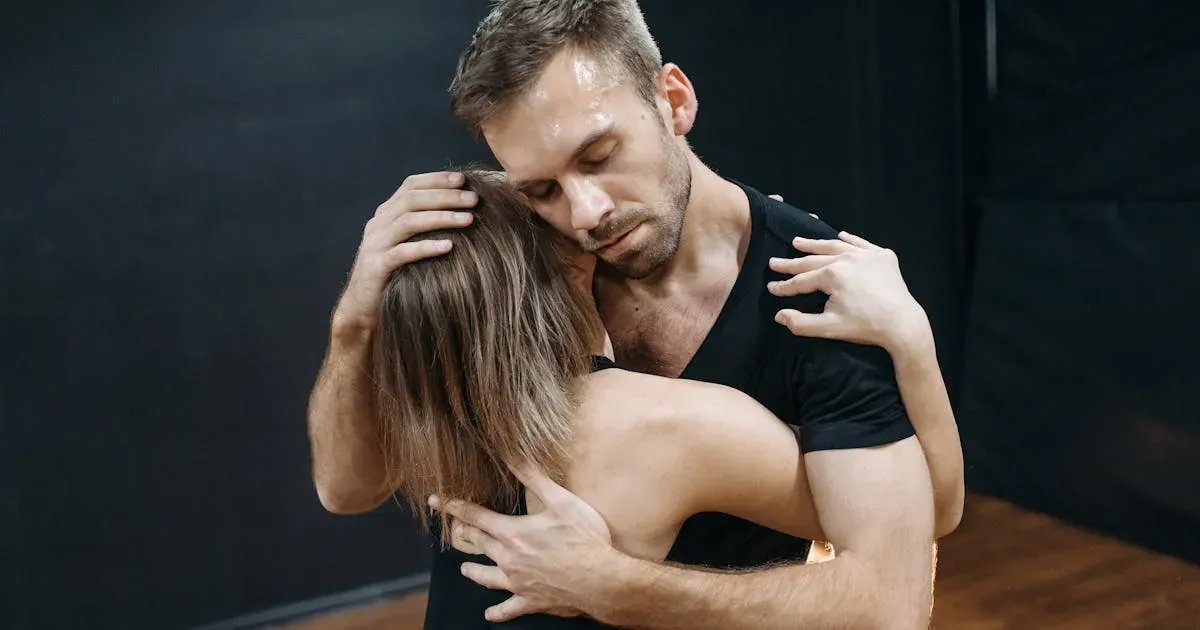
Kizomba is an Angolan dance that walks. The two of you connect chest-to-chest in a close, grounded embrace and travel the floor in slow, deliberate steps timed to electronic beats with Portuguese or Cape Verdean vocals. The depth comes from stillness and connection, not from patterns. There are almost no spins.

Brazilian Zouk is a Brazilian dance that flows. The two of you connect through chest and core in a more dynamic frame, then travel through curves, lateral arcs, and signature head movements (cambrés) to a wide range of music — anything from R&B to electronic to acoustic remixes — at a similar tempo. The depth comes from continuous movement and musical interpretation.

If you watch one and the other for thirty seconds: Kizomba dancers walk; Zouk dancers ripple. That single distinction will let you tell them apart from across any room.

---

Different Countries, Different Stories

Angolan and Brazilian roots side by side

Kizomba was born in Luanda in the late 1970s and early 1980s. It grew out of semba, a faster Angolan partner dance, when local musicians began blending semba with the Caribbean zouk records arriving on Angolan radio. The result was a slower, more intimate dance that kept semba's chest-to-chest embrace but matched the smoother groove of the new music. By the 1990s, Angolan diaspora communities had brought Kizomba to Lisbon, and from there it spread across Europe.

Brazilian Zouk has a different origin story entirely. In the late 1980s, Brazil was swept up in the Lambada craze — a fast, hip-driven partner dance that exploded globally with Kaoma's 1989 hit. The craze faded almost as quickly as it arrived. But the dancers in Rio de Janeiro who had built their movement vocabulary around Lambada were left looking for new music. They found it in the slower zouk tracks playing on Brazilian radio — and as the tempo dropped, the dance transformed. The faster, hip-driven Lambada slowed into the flowing, body-led dance we now call Brazilian Zouk.

The shared word "zouk" is the source of every confusion in this conversation. Caribbean zouk is the music genre — created by bands like Kassav' in Guadeloupe and Martinique. It influenced Kizomba musically. It also gave Brazilian Zouk its name and early soundtrack. But neither dance is danced primarily to Caribbean zouk music today.

---

The Music Tells You Everything

The fastest way to identify which dance you're at: listen for thirty seconds.

Kizomba music has a defined home. Slow, steady electronic beats. Portuguese or Cape Verdean Creole vocals. Smooth production with R&B influences. Tempos sit between 80 and 110 BPM. Artists like Nelson Freitas, Mika Mendes, C4 Pedro, and Yola Araujo are staples. If you hear Portuguese vocals over a hypnotic, electronic groove with no trumpets and no fast percussion, you are at a Kizomba night.

Zouk music is whatever the DJ wants it to be. R&B remixes (often slowed and re-edited for the floor). Pop covers. Electronic downtempo. Neo-soul. Acoustic guitar tracks. Occasional traditional Brazilian zouk and even kizomba crossovers. The unifying factor is tempo — 80 to 110 BPM — and a smooth, continuous quality that supports flowing movement. A great Zouk DJ builds a journey across genres. The same set might pull from Frank Ocean, Alok, an unreleased Brazilian remix, and a stripped-down acoustic cover.

This is why Kizomba feels musically focused and Zouk feels musically eclectic. Same tempo range, totally different sonic worlds.

---

The Body: Grounded vs Flowing

The Kizomba close embrace versus the Zouk flowing frame

Both dances communicate through the chest, not the hands. That's where the resemblance ends.

Kizomba uses a grounded, walking-based embrace. The chest contact is firm and continuous. Both dancers stay close to the floor — knees soft, weight low, steps small. The lead's chest moves forward, and the follower feels it and steps back. If the chest pauses, both pause. The arms barely participate. The whole dance happens in about a square metre of floor and a square foot of torso.

Zouk uses a flowing, body-led frame. The chest connection is still present, but the embrace opens and closes throughout the dance. Movement originates in the core and ripples outward through the spine, ribcage, and hips. Travel is lateral and circular rather than walking-forward. There's a constant sense of motion — when one beat finishes, the next is already initiating. Where Kizomba says "step, pause, step, pause," Zouk says "travel, redirect, travel, redirect."

If you place your hand on a Kizomba dancer's lower back during the basic, you'll feel weight transferring side-to-side. Place your hand on a Zouk dancer's lower back and you'll feel a continuous wave moving through them.

---

The Basic Step

Kizomba's basic is genuinely the simplest step in the partner-dance world. Three weight transfers and a pause: 1, 2, 3, hold. You walk forward. You walk back. You step to the side. You pause. That's the entire foundation. The depth comes from how you walk — connection, weight, musicality — not from what you're doing. A clean basic with a strong connection will dance an entire song beautifully.

Zouk's basic is a "elastic" or "Rio basic" — typically a three-step lateral movement with the second step elongated to create the signature stretching feel. Footwork happens to a slow-quick-quick pattern. The body wave is built into the step from the first lesson. After 4–6 weeks of classes, beginners add a turn called the elastico, then progressively more complex turn patterns and cambrés. Where Kizomba layers depth into a fixed step, Zouk layers vocabulary on top of the base.

This is why Kizomba beginners often feel competent quickly but plateau later. Zouk beginners often feel overwhelmed early but accelerate fast once the body movement clicks.

---

The Signature Move: Tarraxinha vs Cambré

Each dance has one move that, more than any other, makes it instantly recognisable.

For Kizomba, it's tarraxinha. When the music drops into a slow, bass-heavy track with minimal melody, the room goes quiet and the dancing gets very close. Feet barely move. The dance becomes about hip circles, chest movement, weight shifts, and subtle isolations — all communicated through the embrace at almost zero footwork. Tarraxinha isn't for beginners; it requires body awareness that takes months to develop. But seeing it for the first time is a moment most dancers remember.

For Brazilian Zouk, it's the cambré. The follower's head and upper body extend backward or to the side, creating the dramatic visual most non-dancers associate with Zouk. From outside it can look alarming. In practice, cambrés are gradual, controlled, and led — the follower is never thrown, and they can decline at any time. A well-executed cambré uses core engagement, not neck flexibility. It's typically introduced in beginner classes from week 3 or 4 once basic body movement is established.

---

Difficulty Curve for Beginners

Honest assessment after watching hundreds of beginners go through both:

Kizomba is one of the most beginner-friendly social dances in the world for the first night. The basic step is achievable in one class. The slow tempo gives you time to think. The connection is the hard part, but it's also the addictive part — most people who survive their first social want to come back. The plateau comes around month three or four, when you realise the simplicity hides surprising depth in connection, musicality, and tarraxinha. Our Kizomba beginner guide walks through exactly what to expect at your first social.

Brazilian Zouk has a steeper initial curve. The body movement, lateral travel, and head movements require more body awareness than most newcomers bring on day one. Expect three to six months of weekly classes plus regular socials before the dance starts feeling natural rather than mechanical. The reward: Zouk dancers consistently report it becomes their favourite dance because the ceiling is so high — there are dancers a decade in who are still finding new musical and movement vocabulary.

Quick rule: Kizomba is faster to start, slower to plateau. Zouk is slower to start, deeper to grow into.

---

Which One Should You Start With?

A beginner deciding between her first Kizomba and Zouk classes

If you have a clear preference based on the music, follow it. Music is the single most reliable predictor of which dance someone sticks with — whichever soundtrack moves you, that's your dance.

If you're unsure: start with Kizomba if you're brand new to partner dancing and want to feel competent on a social floor quickly. The on-ramp is gentler and the community tends to be very welcoming to first-timers. The slow tempo is forgiving when your timing isn't there yet.

Start with Zouk if you have any background in dance — ballet, contemporary, hip-hop, yoga — that's given you body awareness. Zouk's body-led movement will feel intuitive faster than it does for someone coming in cold. Also start with Zouk if the cambré drew you in. Some people are visual learners who fall in love with what the dance looks like, and that obsession is enough fuel for the slower learning curve.

If you can't decide and have access to both communities, attend one social of each over two weekends and watch your body's reaction. The dance you keep thinking about during the week is the one to commit to.

---

Where They Overlap (and Don't)

The overlap is real but often overstated. Many cities — especially in Europe — have dancers who do both, festivals that programme tracks for both, and DJs who curate sets that bridge the two. The chest-led connection transfers between them. So does the broad understanding of social-dance etiquette: respecting boundaries, declining gracefully, dancing one song at a time.

What doesn't transfer: the muscle memory. Kizomba's grounded walking and Zouk's flowing redirection are different physical patterns, and switching mid-dance requires a deliberate gear change. Most teachers recommend committing to one for the first 3–4 months and adding the second after your basic vocabulary is automatic. Trying to learn both from week one usually slows down both.

The communities also differ in feel. Kizomba scenes are often anchored by Lusophone diaspora communities — Angolan, Cape Verdean, Portuguese — and the cultural roots run deep. Zouk scenes tend to be smaller, more international, and built around festival circuits more than weekly local nights. Neither is better; they're different gravity wells, and they pull different kinds of dancers.

---

FAQ

Are Zouk and Kizomba the same dance?

No. They're related but distinct. Kizomba originated in Angola and is slow, grounded, and built on a chest-to-chest walking embrace. Brazilian Zouk evolved in Rio de Janeiro from Lambada in the 1990s and is built on flowing, circular movement with signature head movements (cambrés). The confusion comes from the music — Kizomba was musically influenced by Caribbean zouk records that arrived in Angola in the 1980s — but the dances themselves come from different continents and feel completely different.

Which is easier to learn — Zouk or Kizomba?

Kizomba has a gentler entry curve. The basic step — slow, slow, side — is one of the simplest in partner dancing, and most beginners can survive their first social after a single class. Zouk's body waves, lateral movement, and head movements need 3–6 months of weekly practice before a social feels comfortable. Both reward years of patience, but Kizomba is the faster on-ramp.

Can I learn both Zouk and Kizomba at the same time?

Yes, and many dancers do. The chest-led connection translates directly between them. The risk is muscle memory confusion — Kizomba's grounded, walking-based movement and Zouk's flowing, circular travel pull you in different directions. Most teachers recommend committing to one for the first 3–4 months, then adding the other once your basic vocabulary is automatic.

Do Zouk and Kizomba play the same music?

No. Kizomba has a defined musical home — slow electronic beats with Portuguese or Cape Verdean Creole vocals at 80–110 BPM. Zouk dances to almost anything in the 80–110 BPM range: R&B remixes, pop covers, electronic downtempo, neo-soul, and traditional Brazilian zouk tracks. A Kizomba DJ plays Kizomba music. A Zouk DJ curates a journey across genres. Many events play one or two crossover tracks, but the underlying playlists are different.

Is Zouk dangerous for the neck because of the head movements?

When taught and led correctly, no. The cambré is a controlled, gradual movement — never a sudden drop — and good instruction covers safety from the first beginner class. The risk comes from untrained leads attempting head movements without a base, or from beginners who haven't learned how to engage their core during the movement. Always learn cambrés in a real class, never from YouTube. Followers can decline a cambré at any time, and good leads test gently before going further.

---

Both Kizomba and Brazilian Zouk reward years of practice, and the most committed dancers in either scene tend to hold the other in real respect. Pick one. Commit for three months. Then come back to this page and decide whether to add the second.

Share this guide:
Laura, Dance Writer at Where to dance Salsa

Laura

Dance Writer

Social dancer based in Europe with a decade of experience on salsa, bachata, and kizomba floors. Laura writes from personal experience — every guide reflects real nights out.