I remember the exact moment I realised Bachata was not one dance. I was at a festival in Barcelona, three years into dancing, and the DJ switched from a slow Prince Royce remix to a fast Anthony Santos track. The entire floor changed. Partners who had been melting into close embraces suddenly pulled apart into open holds, their feet flying through footwork I did not recognise, laughing and improvising. I stood there frozen. It was the same song family. Same language. Same basic step. But the dance itself was unrecognisable from the one I had been learning.
If you have only ever danced one style of Bachata — probably Sensual, if you learned in Europe or North America in the last fifteen years — you are missing more than half the picture. This guide explains the three dominant Bachata styles, how they diverged, why the tensions between them exist, and what to listen for when a DJ shifts the mood on the floor.
Where Bachata Came From (Briefly)
To understand the styles, you need to know the dance’s origin. Bachata was born in the barrios of the Dominican Republic in the early 1960s, growing out of bolero and son traditions. It was played on acoustic guitars in bars and backyards, sung about heartbreak and working-class struggle, and dismissed by Dominican elites as lower-class music. Radio stations refused to play it. The first generation of Bachata was almost invisible to anyone outside rural Dominican communities.
That marginalisation is important. Bachata was not a cultural export for decades. It was a community dance, passed down in informal gatherings, evolving in the bodies of Dominicans without institutional codification. By the time the world discovered Bachata in the 1990s and 2000s, there was no single “official” Bachata — just a lineage of regional styles, family traditions, and club variations.
Then things changed fast. Juan Luis Guerra’s “Bachata Rosa” went international in 1990. Aventura and Romeo Santos took the music pop-ward in the early 2000s. And as the music travelled, so did the dance — but differently in different places. Three dominant styles emerged. For a broader history and beginner introduction, see what is Bachata dancing.
Dominican Bachata (Traditional)
Dominican Bachata, often called “Bachata Dominicana” or just “traditional” Bachata, is the closest to how the dance has been done in the Dominican Republic for decades. It is playful, improvisational, grounded in the music’s bongo patterns, and built on footwork rather than body movement.
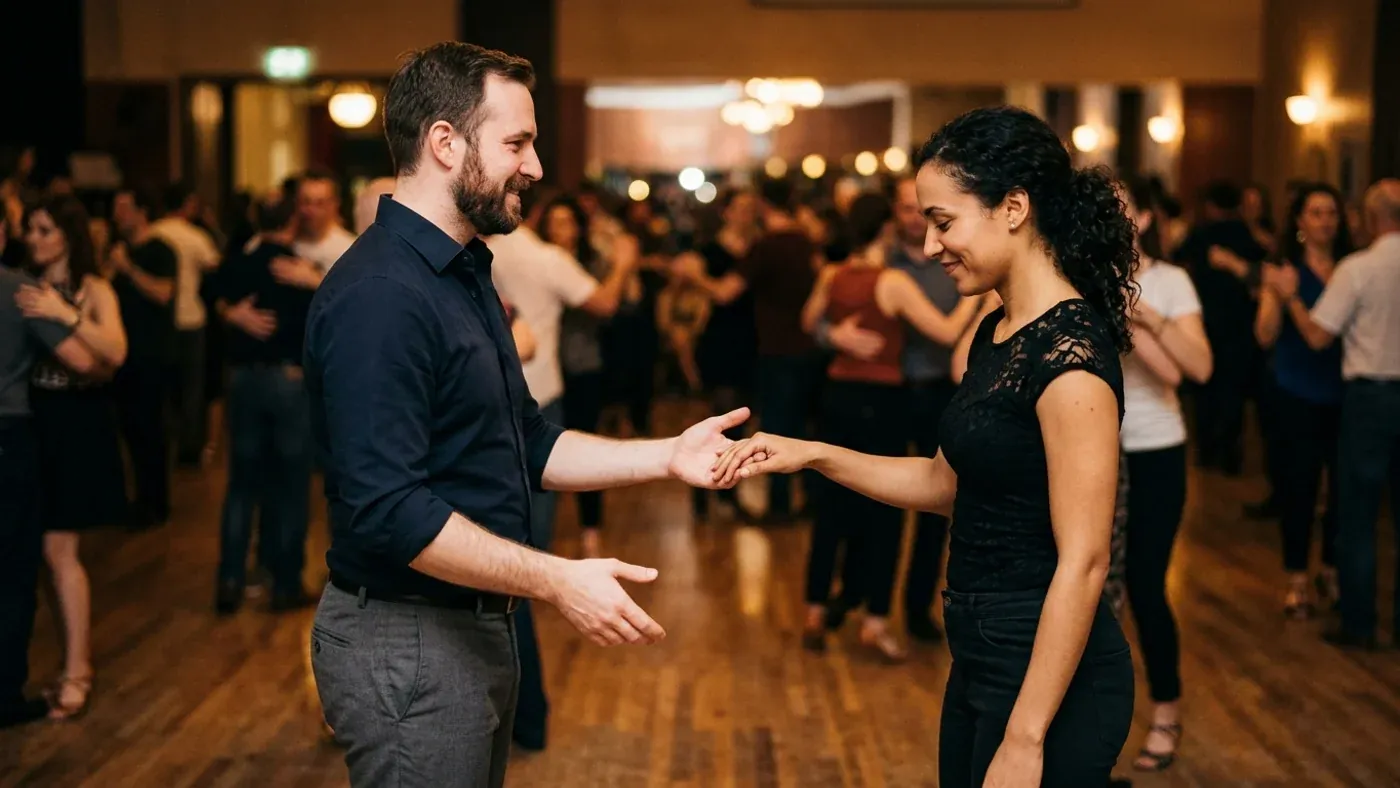
The first thing that surprises Sensual-trained dancers about Dominican is the hold. It is more open. Partners dance further apart, often with just one hand connected, giving both people room to improvise footwork independently. The lead’s role is less about guiding the follow through patterns and more about setting up moments of play — syncopations, musical accents, sudden tempo shifts that the follow can respond to however they choose.
The footwork is where Dominican Bachata lives. Rapid syncopated taps, toe-heel patterns, crosses, and stops that play against the bongo. A skilled Dominican dancer can spend an entire song in a tight four-foot square, carving out rhythmic intricacy with their feet while barely moving their upper body. The knees stay soft. The feet stay light. Weight transfers are sharp and committed. The whole body is tuned to the music’s accents rather than to a choreographed pattern.
Dominican Bachata is also musically rooted in a specific tradition. It is typically danced to faster, guitar-driven tracks with tight bongo rhythms — the kind of Bachata that emerged from Dominican barrios and evolved through artists like Jose Manuel Calderon, Luis Segura, Antony Santos, Raulin Rodriguez, and Frank Reyes. Many modern Bachata tracks are too slow for full Dominican-style dancing, which is part of why the style can feel out of place at international festivals that emphasise Sensual tempos.
The culture: Dominican Bachata is not just a style. It is tied to Dominican identity, family, and community. In Santo Domingo, Bachata is danced at birthdays, weddings, Sunday afternoons in the neighbourhood, and late-night colmados where the whole street becomes a dance floor. This context matters. Dominican dancers did not develop the style to perform for audiences. They developed it to dance with each other, and that social-first sensibility shows in the style’s relaxed, conversational quality.
Where you find it: Santo Domingo is the source. New York and Miami have strong Dominican Bachata scenes, driven by their large Dominican diaspora populations. In Europe, Dominican workshops are increasingly common at festivals as dancers seek out the roots of the style, but dedicated Dominican socials are rarer. If you want to learn Dominican Bachata seriously outside the DR, look for workshops with Dominican instructors and follow teachers like Kiko & Christina, El Tiguere, or Ataca & La Alemana (who moved to Sensual but started in Dominican).
Sensual Bachata
Sensual Bachata is the dominant style at international socials and festivals today. If you have taken Bachata classes in Europe, North America, or Asia in the last decade, you almost certainly learned Sensual Bachata. It is the style you see on Instagram, at dance festivals, and in viral YouTube videos of couples swaying together in dim studios.
The style was developed in Cadiz, Spain, in the mid-2000s by Korke Escalona and Judith Cordero. They were Spanish dancers who had been learning traditional Bachata from Dominican teachers and began integrating elements from contemporary dance, zouk, and lyrical movement into the basic Bachata structure. What emerged was a slower, more intimate style built on body waves, head rolls, body isolations, and flowing close-embrace movements that interpret the music through the body rather than the feet.
The technical signature of Sensual Bachata is the body wave — a ripple of movement that travels through the torso from hips to head or head to hips. Good Sensual dancers can initiate a wave on a specific musical accent, hold it through a phrase, and release it on a key word in the song’s lyrics. Head rolls are another signature move — circular movements of the head that follow the lead’s guidance or respond to the music. Dips, shadow positions, and isolations of the chest or hips round out the vocabulary.
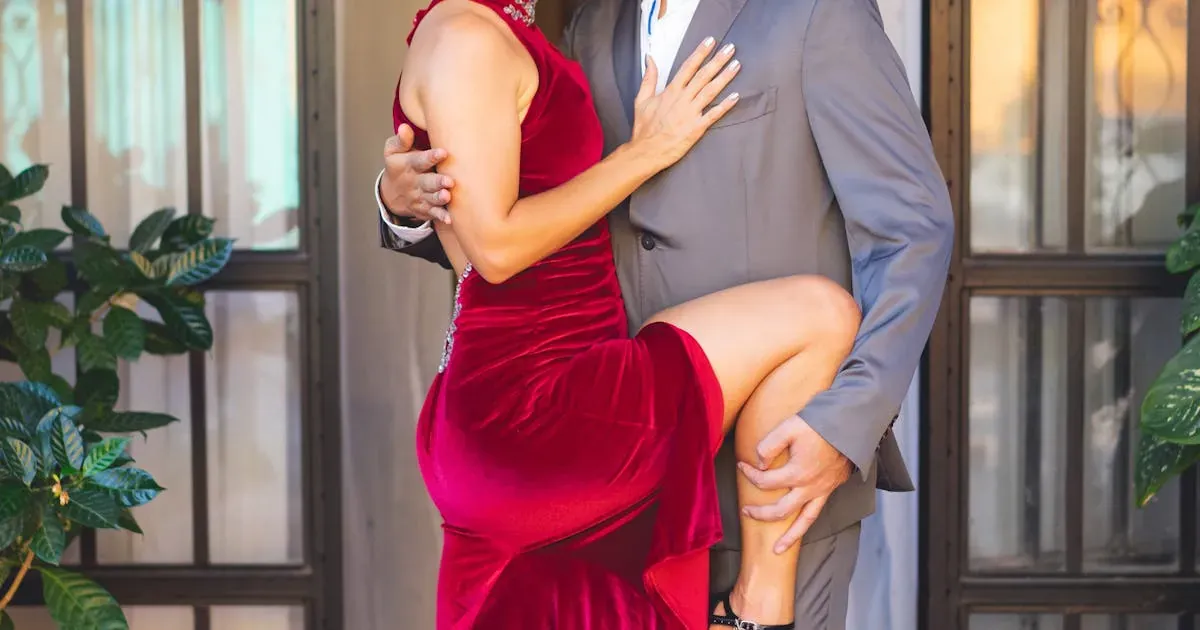
The hold is much closer than in Dominican. Chest-to-chest contact is common, especially on slower tracks. The lead’s right hand sits between the follow’s shoulder blades rather than on the lower back, and the connection is maintained through subtle shifts in posture and weight rather than through strong arm leads. The style rewards body awareness, patience, and musicality. Flashy footwork is almost entirely absent.
The music: Sensual Bachata works best with slow, romantic, modern Bachata. Romeo Santos, Prince Royce, Daniel Santacruz, Dani J, DJ Tronky, and DJ Husta are core artists and producers. Bachata remixes of English-language pop songs — Adele, Ed Sheeran, and countless others — are staples on Sensual dance floors and have become their own genre. Tempo matters: Sensual dancers look for tracks in the 110-130 BPM range with long melodic phrases and emotional builds. Faster Dominican tracks make the body-wave vocabulary feel rushed and awkward.
The cultural note: Sensual Bachata is culturally controversial. Dominican dancers have raised legitimate concerns about a non-Dominican style becoming synonymous with “Bachata” at international events. There are also debates about whether the close-embrace style is appropriate for a dance with deep family and community roots. Most dancers on both sides interact respectfully, but the tension is real and worth knowing about. When you attend Dominican events, lead with curiosity and respect. The dance did not start in Spain.
Where you find it: Sensual dominates most European scenes. Madrid and Barcelona are the global capitals, unsurprising given the style’s Spanish origins. Paris, London, Berlin, and Amsterdam all have thriving Sensual scenes. Outside Europe, Sensual is strong in most international cities. See our guide to the best Bachata cities in Europe for a fuller picture.
Modern Bachata (Urban)
Modern Bachata — sometimes called Urban Bachata — is harder to define because it is not a single style so much as a family of fusion approaches. If Dominican is rooted in tradition and Sensual is rooted in contemporary dance, Modern Bachata is rooted in experimentation. It borrows from hip-hop, zouk, contemporary, and urban kiz, and it continues to evolve rapidly.
The movement vocabulary is broader than the other two styles. Dips are common. Tricks — lifts, drops, acrobatic elements — appear regularly in choreographed performances. Shadow positions, where partners dance side by side or front to back without facing each other, are a Modern signature. Role switches, where the lead and follow trade positions mid-song, are increasingly common. The style is visually impressive and designed to photograph well — a reality that shapes how it evolves.
Tempo is more variable. Modern Bachata works on slow tracks, medium tracks, and occasionally faster ones, depending on the music. DJs often play remixed Bachata tracks that blend Bachata’s guitar and bongo with electronic production, trap beats, or R&B vocals. The boundaries with urban kiz and contemporary zouk are increasingly blurry — some Modern tracks could be danced as either Bachata or urban kiz with minor adjustments.
Modern Bachata is particularly popular among younger dancers and has a strong social-media presence. This is not a criticism. The style has produced genuinely innovative movement, and its top practitioners — dancers like Marco & Sara, Demetrio & Nicole, and Gero & Migle — are legitimate artists pushing the form forward. But it also means the style evolves fast, what was cutting-edge two years ago can feel dated now, and social media sometimes rewards risk over craft.
The limitations: Modern Bachata’s flashier elements — dips, drops, tricks — require training, trust, and careful execution. They should not be attempted at a social without proper instruction and partner familiarity. I have seen too many beginners throw a dip at a stranger mid-song and either drop them or scare them. If you are learning Modern Bachata, learn it in a studio with a regular partner before bringing it to the social floor. The best Modern dancers know when to save the tricks for performances and when to dance basic for a partner they do not know.
Where you find it: Modern Bachata dominates festival performance sets and workshop tracks at large international events. It is strong at festivals like Esencia Paradise in Barcelona, Adam Bachata Festival in Amsterdam, and most European congresses. At weekly socials, it tends to appear in pockets — dancers with performance backgrounds who bring Modern vocabulary into their social dancing — rather than as the dominant style.
The Basic Step Is the Same (Mostly)
One thing unites all three styles: the basic step. Whether you learn Dominican, Sensual, or Modern, the foundation is the same three-step-tap pattern danced to the 8-count rhythm. Step left, step left, step left, tap right. Step right, step right, step right, tap left. That rhythmic framework is the genetic code of all Bachata.
This means that a dancer who learned Sensual can absolutely step onto a Dominican floor and find the rhythm. The basic step will work. The tap will land on the right beat. What will not transfer is everything else — the hold, the footwork vocabulary, the musical accents to hit, the feel of improvisation versus following a lead. Cross-style dancing works, but each style has its own cultural grammar.
The basic step also means that if you are a total beginner deciding where to start, you are not really committing to “a style” for life. You are committing to the basic step, which you will use in any style you go on to learn. Start with whatever is strongest in your city. Adjust later.
Which Style Should You Learn?
My honest answer: learn whichever style is most available at your local socials. A Sensual-dominant city will have Sensual classes every week, Sensual socials every weekend, and a community of dancers who can help you grow. Starting with Dominican in a city that only has Sensual socials means you will struggle to find partners to practice with.
That said, if you do have a choice, here are some rough temperament guides. Dancers who love musicality and footwork tend to thrive in Dominican. Dancers who love body movement, close connection, and emotional interpretation gravitate toward Sensual. Dancers who love visual expression, experimentation, and fusion styles lean Modern. None of these are exclusive — many dancers love all three.
If you are a beginner, I would offer one gentle piece of advice: do not let social-media Bachata set your expectations for what the social floor looks like. The spectacular Modern Bachata videos you see on Instagram represent maybe 5% of what you will experience at a real weekly social. Most of the dance is simpler, gentler, and more conversational than performance clips suggest. This is a good thing. Basic Bachata danced well is one of the most enjoyable things in social dancing.
For more on getting started as a total beginner, see our beginner guide to Bachata, which covers the basic step, first social, and what to wear.
Why Knowing the Styles Matters
Even if you only dance one style, knowing the others changes how you dance. When a DJ switches from a slow Prince Royce track to a faster Antony Santos track, a Sensual dancer who understands Dominican will shift their body, open their hold, and let the footwork breathe — instead of forcing body waves onto music that does not want them.
When you travel, knowing the styles helps you read a scene. Walk into a Madrid social and you will feel Sensual immediately. Walk into a New York Dominican night and the hold and footwork will tell you you are in a different world. Walk into a festival like Adam Bachata and you will see all three styles on the same floor, often in the same song. Knowing what you are seeing makes you a better partner across the board.
And finally — and this matters — knowing the styles makes you culturally literate. Bachata is not a neutral dance form. It has a specific history, specific communities, and real political and cultural contexts. Dancing it well means respecting those contexts. It means not calling Sensual “real Bachata” in front of Dominican dancers, and not dismissing Sensual as “fake” in front of Spanish dancers. Both styles exist. Both are legitimate. Both deserve respect. And a dancer who can hold that complexity — who can love Sensual while acknowledging its relationship to the Dominican original — is a better dancer and a better community member.
Where to Go From Here
If you want to see Dominican Bachata in its home environment, nothing replaces a trip to Santo Domingo. For Sensual immersion, spend a weekend in Madrid or Barcelona. For a mix of all three, the best Bachata festivals in 2026 will expose you to each style in a single weekend.
If you are building a Bachata practice from scratch, browse our Bachata events worldwide to find socials near you. Most cities have weekly socials that include a beginner class before the social dancing starts — the single best way to start.
For partners: Bachata and Salsa are almost always played at the same socials. If you are learning one, you will hear the other, and many dancers learn both. See salsa dancing for beginners for a companion introduction. If you want to explore a different musical-dance family entirely, what is Kizomba dancing covers a slower, more grounded partner dance that shares the same social floors at many events.
Bachata is bigger than any single style. Whichever door you walk through first, the dance keeps unfolding for years. There is no rush. Pick one. Start.
Browse Bachata events worldwide or explore our interactive map to find the nearest social to you.