The best bachata shoe depends on your floor and fit. For a sneaker intended for both indoor and outdoor use, start by comparing Fuego Low-top and Split-sole. For an indoor suede option, look at the Mia T-Bar heel or the lower-heeled Contra. Bloch Boost adds a different choice: a split-sole sneaker with built-in arch support. The comparison below explains the trade-offs before you spend.
At a Glance
How We Chose These Shoes for 2027
This is a researched buying guide, not a hands-on test. We compared official product pages for sole construction, heel options, fit guidance, listed prices and ordering restrictions. Our category picks are editorial judgments about those specifications. We have not measured grip, cushioning, durability or all-night comfort, and we do not turn manufacturer reviews into our own test scores.
The shortlist covers different buying decisions: a street-style sneaker, a flexible sneaker, an arch-support sneaker, a Latin heel and a low-heeled lace-up. It is not an exhaustive ranking of every dance brand. “For 2027” means planning your next season with models listed when researched on October 26, 2026. It does not mean these are new 2027 releases or that future prices are known.
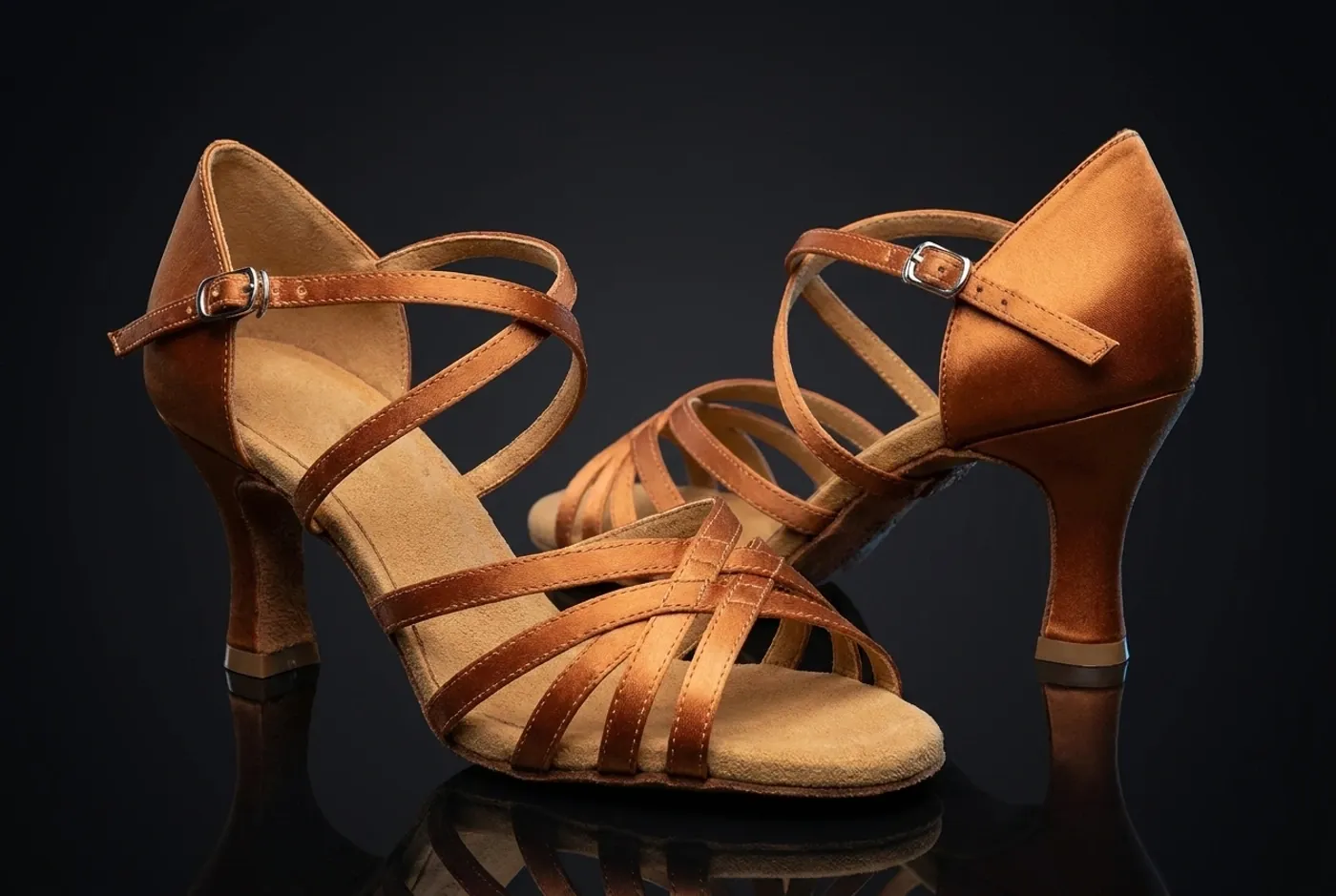
Product links in this comparison go directly to manufacturers and are not affiliate links. The header image illustrates dance footwear; it is not a photograph of our testing or of a specific recommended model.
Bachata Shoe Comparison: Five Models Side by Side
Prices are the displayed prices for the named colour and storefront at the research date, before any additional delivery charges, destination taxes or customisation costs. USD, EUR and GBP are kept separate; this is not a converted-price ranking. A live product page does not establish that every size is in stock. Select your size and delivery country before checking availability and the final total.
| Model and source | Best fit for | Sole / heel | Listed price | Main trade-off |
|---|---|---|---|---|
| Fuego Low-top (All-black) | Dance and streetwear in one pair | Full FlowTec outsole; dual pivot points | US$150 (USD storefront) | Moderate flexibility, according to Fuego |
| Fuego Split-sole (All-black) | Dancers prioritising foot articulation | Split FlowTec outsole; neoprene midsection | US$150 (USD storefront) | Try the flexible midfoot before committing |
| Bloch Boost S0538L | Practice with built-in arch support | Split synthetic outsole; spin spot | €102.50 (EU store) | Raised arch shape needs a fit check |
| IDS Mia T-Bar (Black Satin) | Indoor socials in a Latin heel | Standard suede; 2-inch heel option | £130 base (UK store) | Black Satin is marked bespoke and non-returnable |
| IDS Contra (Black Lycra) | Indoor dancing in a low-heeled lace-up | Split sole; standard suede; 1-inch heel | £137 base (UK store) | Confirm stock and return terms for your fitting |
Sources: linked manufacturer pages, researched October 26, 2026. Category recommendations are our interpretation of specifications, not measured performance results.
Fuego Low-top: Our Pick for Dance and Streetwear
Fuego lists the All-black Low-top at US$150, with a full FlowTec outsole, pivot points at the forefoot and heel, cushioning, and materials intended for indoor and outdoor use. The brand rates its flexibility as moderate. That combination makes it our starting point if you want a conventional sneaker shape and do not want an indoor-only suede shoe. Manufacturer specifications and current options.
Trade-off: choose it for that versatility, not for maximum articulation. Compare the Split-sole if bending and pointing the foot matters more to you. Fuego’s multi-surface claims are not a guarantee of traction on a particular floor. Try gentle basics, stops and turns when you arrive, especially if the surface is unfamiliar.
Fuego Split-sole: Our Pick for Foot Articulation
The US$150 All-black Split-sole uses a divided FlowTec outsole and a neoprene midsection, with pivot points and a cushioned insole. Fuego presents it as the more flexible design and also markets it for indoor and outdoor use. We favour this construction over the Low-top when articulation is the reason for buying a dedicated dance sneaker. Manufacturer specifications and current options.
Trade-off: more flexibility is not automatically a better fit for your foot. Compare the midfoot feel with your existing shoes before keeping it. We have not verified claims that it prevents fatigue, lasts longer or improves technique. Those would require evidence beyond its construction.
Bloch Boost S0538L: Our Pick for Built-in Arch Support
The €102.50 S0538L has a split, non-marking synthetic outsole with a spin spot, built-in arch support and adjustable lacing. Bloch also lists an EVA sock liner and cushioning under the heel. Its raised arch construction gives you a distinct alternative to the Fuego models. Bloch EU product specifications.
Trade-off: the arch shape needs to suit your foot; “support” is not proof of greater comfort for everyone. This is not a suede-soled ballroom shoe. The colour name includes “Mesh Suede”, but Bloch specifies a man-made outsole and a suede heel grip. On the EU store, order using its EU sizing instructions rather than applying a sizing rule from another regional store.
IDS Mia T-Bar: Our Pick for an Adjustable Latin-Heel Setup
The £130 Black Satin Mia T-Bar offers a T-bar fastening, gel padding, a relatively enclosed front and several width and heel choices. The configurator includes a 2-inch (5.2 cm) IDS heel and standard suede sole. We would start by comparing that lower option with whichever heel height you already use comfortably. Mia T-Bar specifications and configurator.
Trade-off: this exact Black Satin version is labelled bespoke and non-returnable. Confirm fit before ordering, and check the selected configuration rather than assuming the general returns policy applies. Width options make it worth investigating for difficult fits, but they do not guarantee a wider footbed. This is our heel option for indoor socials, not a default recommendation for someone who has never worn dance heels.
IDS Contra: Our Pick for a Low-Heeled Lace-up
The £137 Black Lycra Contra combines a split-sole design with arch padding, a cushioned insole and a 1-inch (2.5 cm) heel. The ordering options include standard suede and different width fittings. It is sold as a men’s ballroom practice shoe, but our reason for including it is its low heel and enclosed lace-up format, not a rule about who should lead or follow. Contra specifications and options.
Trade-off: choose the suede version for indoor use and bring a separate pair for the journey. Check whether your exact fitting is standard stock or bespoke before paying. The manufacturer lists several ordering conditions; the existence of a product page is not a delivery promise for your size.
Choose for Your Floor, Not Just Your Dance Style
For an indoor venue where you change shoes at the door, suede deserves consideration. For travel between outdoor socials and indoor venues, compare a purpose-built dance sneaker whose manufacturer explicitly allows outdoor use. In this shortlist, Fuego makes that claim; we do not extend it automatically to Bloch Boost or the suede IDS configurations.
Avoid the old shortcut that all rubber soles are unsuitable for bachata. Outsole construction matters: a dance sneaker with pivot zones is a different proposition from deeply treaded trainers. Equally, a suede sole is not automatically the right amount of grip on every floor. The useful check is whether you can transfer weight, turn and stop without forcing the movement or sliding unexpectedly.
Heels are optional for either dance role. Start from your preferred height and the fit you can control, not a supposed universal height for sensual bachata. Salsa and bachata can share the same pair. If you are booking a bachata festival, find out about the workshop and party floors before deciding which pair to pack.
Fit, Width and Returns: Check Before You Order
Measure both feet and use the chart for the exact model and regional store. Check length, forefoot space, heel hold and fastening. A shoe that feels secure should not require curled toes or painful pressure to stay in place. Keep any try-on within the retailer’s stated return conditions; a whole social is not an unworn fitting check.
Fuego’s size guidance recommends a half-size increase for wide feet or between sizes. That is a brand recommendation, not a dedicated wide fitting or a universal dance-shoe rule. IDS explains its width system differently: changes mainly increase the circumference of the upper, while the insole remains the same width through most fittings. Someone needing more sole width should confirm the actual dimensions instead of relying on a “Wide” label.
Before payment, check the exact colour, heel, sole and width, whether that combination is returnable, the cost of returning from your country, and the delivery estimate. This matters especially for the bespoke Mia configuration. Do not assume another colour or heel has identical stock or terms.
What to Spend, and What We Cannot Promise
Use the prices in the table as a shortlist budget, then compare delivered totals in your own currency. A lower sticker price in a different currency does not establish better value. Customisation, delivery and a return can change the result. If your budget is below these options, look for a clearly identified model with documented materials and a practical return route; we have not established a reliable sub-US$50 winner in this comparison.
We do not have comparable long-term wear data for these five shoes. There is no supported claim here that a pair will last a season, two years or a particular number of socials. Similarly, cushioning descriptions and arch-support features do not establish which model will be most comfortable for you. Fit and a suitable sole are more useful buying criteria than an unsupported durability score.
Care for the Sole You Actually Bought
For suede, follow the maker’s brushing instructions and keep the soles dry. For synthetic outsoles, use the relevant cleaning guidance rather than a wire suede brush. Let shoes air out after dancing and dry naturally, away from direct heat. IDS provides separate instructions for suede, rubber, satin and leather, including caution around the stitching on its mixed-material XG soles. Read the manufacturer’s care guide for your material.
Inspect fastenings, heel tips and sole attachment as the shoes wear. Ask the maker or a cobbler whether a repair is appropriate before replacing the whole pair. Do not assume a damp suede sole is permanently ruined: IDS describes natural drying and careful brushing to restore the nap. If grip still feels wrong, reassess it before dancing.
Frequently Asked Questions
What are the best bachata dancing shoes for beginners?
Start with your floor, preferred heel height and fit. Our shortlist includes Fuego Low-top for a sneaker designed for indoor and outdoor use, and Bloch Boost for a split-sole option with built-in arch support. These are recommendations based on specifications, not wear-test winners. You do not need heels to learn bachata.
Can I wear the same shoes for salsa and bachata?
Yes, provided they fit securely and turn and stop predictably on your floor. There is no need to buy a second pair solely because you change dance styles. The sole, fit and heel height matter more than a salsa or bachata label.
Are suede soles better than rubber for bachata?
Neither is universally better. Suede is an indoor option that needs brushing and protection from moisture. Purpose-built synthetic dance soles can include pivot zones and may be intended for outdoor use. Ordinary trainer tread and a dedicated dance outsole should not be treated as the same thing.
What heel height should I choose for bachata?
There is no required heel height for leaders or followers. Choose a height at which you can balance and transfer weight comfortably. In this comparison, Contra has a 1-inch heel, and Mia T-Bar offers a 2-inch option as well as higher heels. A sneaker is also a valid choice for either role.
Which option should I consider for wide feet?
Mia T-Bar and Contra list different width fittings, but confirm how those fittings affect the sole and upper before ordering. Fuego suggests a half-size increase for wide feet or between sizes; that is not a dedicated wide last. Check return eligibility before choosing a bespoke fitting.
Are these new 2027 shoe releases?
No. This is a buying guide for dancers planning their 2027 season, researched on October 26, 2026. It compares existing models. Prices, available sizes and return terms can change, and no 2027 wear testing is claimed.
Sources and Research Date
Manufacturer pages checked for this revision on October 26, 2026:
- Fuego All-black Low-top and All-black Split-sole: product construction, intended surfaces and displayed USD prices.
- Bloch Boost S0538L, EU store: synthetic outsole, arch construction, EU sizing and displayed EUR price.
- IDS Mia T-Bar Black Satin and Contra Black Lycra: heel and sole options, fit choices, displayed GBP prices and ordering restrictions.
- Fuego size charts, IDS sizing and fittings, and IDS shoe care: fitting and maintenance guidance.
These sources establish published specifications and terms, not independent performance results. Where we say a model is our pick for a particular use, that is our interpretation of the features above. Recheck the linked page for your chosen variant before buying.