Madrid is the bachata capital of Spain on a weekly basis. That’s a defensible claim: no other Spanish city runs a denser calendar of dedicated bachata nights, and very few European cities outside of Paris can match the combination of school density, club-night reliability and sensual-lineage depth that Madrid has built over the past twenty years. The city doesn’t quite have Barcelona’s beach-and-festival spectacle, but on the fundamentals — weekly floors, teaching quality, community depth, and the variety of bachata styles that coexist in a single night — Madrid quietly outperforms most of its European peers. This guide covers where to dance bachata in Madrid in 2026, which nights matter, how the style mix plays out on the floor, and what to expect if you’re flying in for a long weekend or planning a multi-city Spanish trip.
Table of Contents
- What Is Madrid’s Bachata Scene Actually Like?
- Where Can I Dance Bachata in Madrid?
- What Nights Are Best for Bachata in Madrid?
- Sensual, Traditional, Modern: The Style Mix
- What Should I Expect at a Madrid Bachata Social?
- Can I Also Dance Salsa, Kizomba and Zouk in Madrid?
- Are There Bachata Festivals in Madrid?
- How Do I Get to Bachata Venues in Madrid?
- Where Should I Stay If I’m Visiting to Dance?
- Tips for Visiting Bachata Dancers
- Find Events
- FAQ
What Is Madrid’s Bachata Scene Actually Like?
Madrid’s bachata scene is built on three pillars: a dense club calendar centred on The Host and Azúcar, running multiple dedicated bachata nights a week; a heavyweight studio infrastructure that trains generations of sensual-lineage dancers; and a Latin American community — particularly Dominican, Colombian and Ecuadorian — that keeps traditional bachata audibly alive on playlists and floors. Together these three layers produce something other European cities don’t quite replicate: a bachata scene where you can find a proper dance floor seven nights a week without ever leaving the city.
The Spanish sensual bachata lineage runs deep here. After Cádiz, Madrid was arguably the most important early-adoption city for sensual pedagogy in the mid-to-late 2000s, and the schools that trained directly from that first generation of teachers now form the backbone of the studio scene. What that means practically: a class at almost any Madrid school delivers quality that would headline festivals elsewhere. If you’re in town for a week, add a class or a private to your dance itinerary — you’ll leave a better dancer than you arrived.
At the same time, the Dominican community in Madrid is significant, visible and audible. Traditional bachata — Anthony Santos, Frank Reyes, Luis Vargas, Aventura, the whole Dominican songbook — gets regular rotation at the late-night clubs, and older regulars will dance clean, musical, footwork-rich traditional bachata that most sensual-trained dancers simply can’t follow. This is not a preserved-fossil traditional scene; it’s living, and the best sensual dancers in Madrid respect it and learn from it.
One honest observation: Madrid’s bachata scene can feel more insider than Barcelona’s. The weekend tourist-dancer contingent is smaller, the regulars know each other, and first-time visitors who show up at The Host on a Wednesday night can feel the room’s social geography in a way you don’t at Antilla Barcelona on a Friday. This isn’t hostile — Madrid dancers are welcoming — but it does mean you should go in with realistic expectations about the social warmth curve. Your second visit to a venue will feel very different from your first.
Where Can I Dance Bachata in Madrid?
These are the dedicated weekly floors I’d send a visiting bachata dancer to in 2026. All are verified and active.
The Host — Bachata and Kizomba Nights (Tue/Wed/Fri)
The Host on Calle de Ferraz 38 in Moncloa-Aravaca is Madrid’s most dedicated weekly Latin venue. The programming is tight:
- Tuesday: Kizomba Night from 23:00
- Wednesday: Bachata Night from 23:00
- Thursday: Salsa & Bachata from 23:00
- Friday: Bachata Night from 23:00
- Saturday: Latin Crossover (salsa/bachata/kizomba) from 23:00
The dedicated bachata nights on Wednesday and Friday are the city’s clearest weekly bachata-only rooms — a rare thing in Europe where most “bachata nights” are actually SBK rotations. The Thursday salsa-and-bachata split is also well-balanced. If you’re building a Madrid trip around bachata, The Host is your anchor venue.
Azúcar Salsa Disco — Latin Nights (Thu/Fri/Sat)
Azúcar Salsa Disco on Calle de Atocha 107 in Centro runs Latin Nights Thursday through Saturday from 23:00 until late. Despite the name, bachata is a core part of the rotation alongside salsa. Azúcar is the more central, more club-atmosphere option — busier weekend crowds, more of a party feel, larger dance floor. If The Host is the serious-dancer Wednesday night, Azúcar is the Saturday-night party where you’ll dance bachata alongside a broader Madrid nightlife crowd.
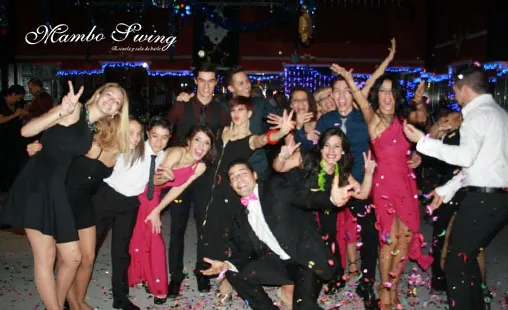
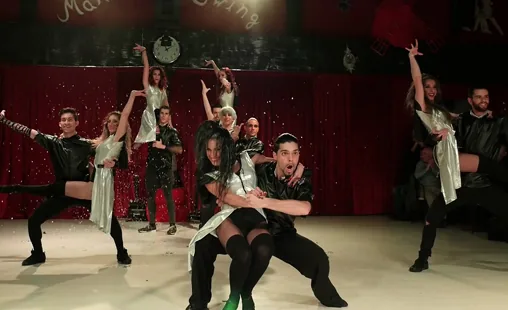
Mambo Swing — Latin Social (Fri/Sat/Sun)
Mambo Swing on Calle de Molineros in Arroyomolinos runs Latin Socials on Friday, Saturday (both 18:00 until late) and Sunday (18:00–22:00). The Sunday afternoon format is particularly worth noting — it’s one of the few Madrid options that doesn’t require staying up until 04:00, which makes it ideal for dancers with Monday commitments or anyone who wants to taste the scene without a full late-night commitment. Arroyomolinos is southwest of central Madrid; plan the commute.
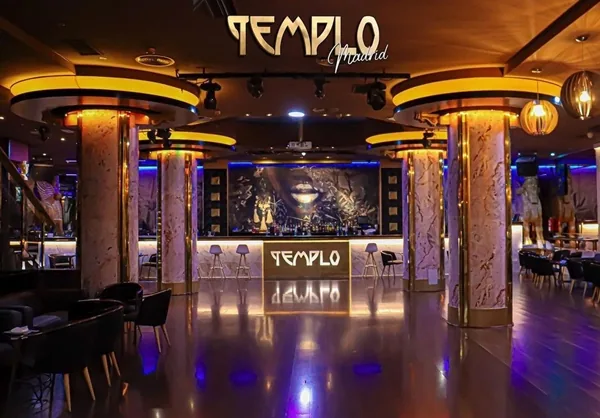
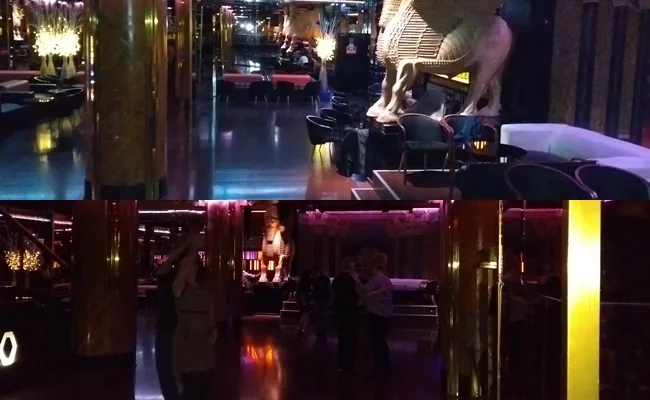
Temple Madrid — Salsa & Bachata Social (Tuesdays)
Temple Madrid on Calle de Ferraz 1 (near The Host) runs a Salsa & Bachata Social on Tuesdays from 21:00 until late. The earlier start time compared to The Host’s Kizomba Night gives you a two-venue Tuesday route: Temple from 21:00 for salsa/bachata, then over to The Host after 23:00 for kizomba.
Sala de Baile Maracas — Discoteca Maracas (Saturdays)
Discoteca Maracas at Sala de Baile Maracas runs Saturday Latin Night from 20:00 to 05:00 — salsa, bachata, kizomba in rotation. This is one of Madrid’s longer-format Saturday floors, useful if you want a club-atmosphere Saturday beyond the Azúcar/Host circuit.
Jowke Club — Sunday Latin
Jowke Latin Sundays at Jowke Club (from 23:30 until late) covers the late-Sunday slot for dancers who want to extend the weekend until the last possible hour before Monday.
Studio Socials and School Nights
Beyond the dedicated clubs, the real depth of Madrid’s bachata scene lives in the studio circuit. Individual schools run weekly socials, monthly big-room events, and pre-festival warm-up parties that can pull 200+ serious dancers. These events rotate through the year and don’t always appear on standard calendars. Check our bachata events in Madrid listing for week-to-week coverage.
What Nights Are Best for Bachata in Madrid?
Here’s how a typical Madrid bachata week shakes out in 2026:
- Monday: Quiet. Some studio socials; otherwise a rest day.
- Tuesday: Decent. Temple Madrid (salsa/bachata 21:00), The Host (kizomba 23:00).
- Wednesday: Strong. The Host Bachata Night — one of the most dedicated bachata floors of the week.
- Thursday: Strong. The Host (Salsa & Bachata 23:00), Azúcar Salsa Disco Latin Night 23:00.
- Friday: Peak. The Host Bachata Night 23:00, Azúcar Latin Night 23:00, Mambo Swing 18:00.
- Saturday: Peak. The Host Latin Crossover 23:00, Azúcar Latin Night 23:00, Mambo Swing 18:00, Discoteca Maracas 20:00, plus studio parties.
- Sunday: Workable. Mambo Swing 18:00–22:00 (afternoon-into-evening), Jowke Latin Sundays 23:30 late.
If you’re in Madrid for three nights, a classic dancer’s rhythm is Thursday (The Host or Azúcar) → Friday (The Host Bachata Night) → Saturday (Azúcar or The Host Latin Crossover). That gives you dedicated bachata on Friday and a broader SBK mix on the bookends.
Timing: Madrid runs late. Floors don’t fill at The Host or Azúcar until after midnight, peak from 01:00 to 03:00, and continue to 04:00 or 05:00. Eat late, nap if you need to, and pace yourself. Madrileños dine at 22:00 and go out at 00:30 for a reason — the whole city runs on this clock, and the dance scene is no exception.
Sensual, Traditional, Modern: The Style Mix
Madrid bachata floors are predominantly sensual with a respected traditional presence. Practical observations:
- Spanish Sensual dominates the studio scene. Madrid’s schools teach in the sensual lineage almost exclusively. Drop-in classes, socials-with-a-class-included, festivals — sensual pedagogy is the default.
- Traditional Dominican bachata is audible on club playlists (particularly at Azúcar and the late-night Dominican-community-anchored spots) and danced by Latin-American regulars. The dance culture respects it: you won’t get side-eyed for dancing a traditional basic and clean footwork, and the best sensual dancers can switch cleanly.
- Modern/urban bachata (Demetrio Rosario lineage, musicality-heavy fusion) is present at festival parties and advanced-level studio showcases but isn’t dominant on weekly floors.
What sets Madrid apart is the integration. At Barcelona’s Antilla, sensual and traditional feel like parallel scenes sharing a playlist. At Madrid’s Azúcar or The Host on a peak night, you’ll see sensual dancers throw in traditional footwork for fun, traditional dancers add a body wave where the song asks for it, and the whole floor moves between styles more fluidly than any other European city I’ve danced in. This is genuinely distinctive and worth experiencing.
Our bachata sensual vs traditional vs modern guide covers the distinctions in plain language.
What Should I Expect at a Madrid Bachata Social?
Dress Code and Atmosphere
Smart-casual, slightly dressier than Barcelona or Berlin. Madrileños dress up — jeans are fine, but a well-cut shirt, polished shoes (or proper dance shoes), and a general sense of taking your appearance seriously go a long way. Women frequently wear heels or proper dance shoes; men wear dress shirts or well-fitted tees. Sports kit, flip-flops, and obvious tourist attire will get you side-eyed if not turned away at the door at the bigger clubs.
Cover Charge
€10–€15 at The Host, Azúcar, and Mambo Swing, typically including a first drink. Free workshops at some studio socials; school-run socials often €8–€12. Festival parties €15–€25 for single-night tickets.
Asking to Dance
Direct. Spanish is the default and Madrid dancers are less English-switching than Barcelona’s — if you speak any Spanish, use it. ¿Bailamos? is universal. Eye contact, a clear invitation, and an extended hand work everywhere. A “no” is just a no — read nothing into it and move on. Multiple dances with the same partner in one night are common and not socially loaded; one song-at-a-time rotation is equally normal.
Sensual Etiquette
Read your partner’s frame. Sensual bachata’s close-frame and body-movement vocabulary requires active communication, and Madrid’s dancers are broadly excellent at this — but the late-night weekend crowd at the bigger clubs can include dancers who push beyond comfort. If your partner’s frame stiffens, if they break eye contact, if their body language pulls back: adjust. Conversely, follows should feel empowered to say “no, thanks” to a dance that’s going somewhere they don’t want. The Madrid community broadly polices this well, but trust your own read.
Floors and Shoes
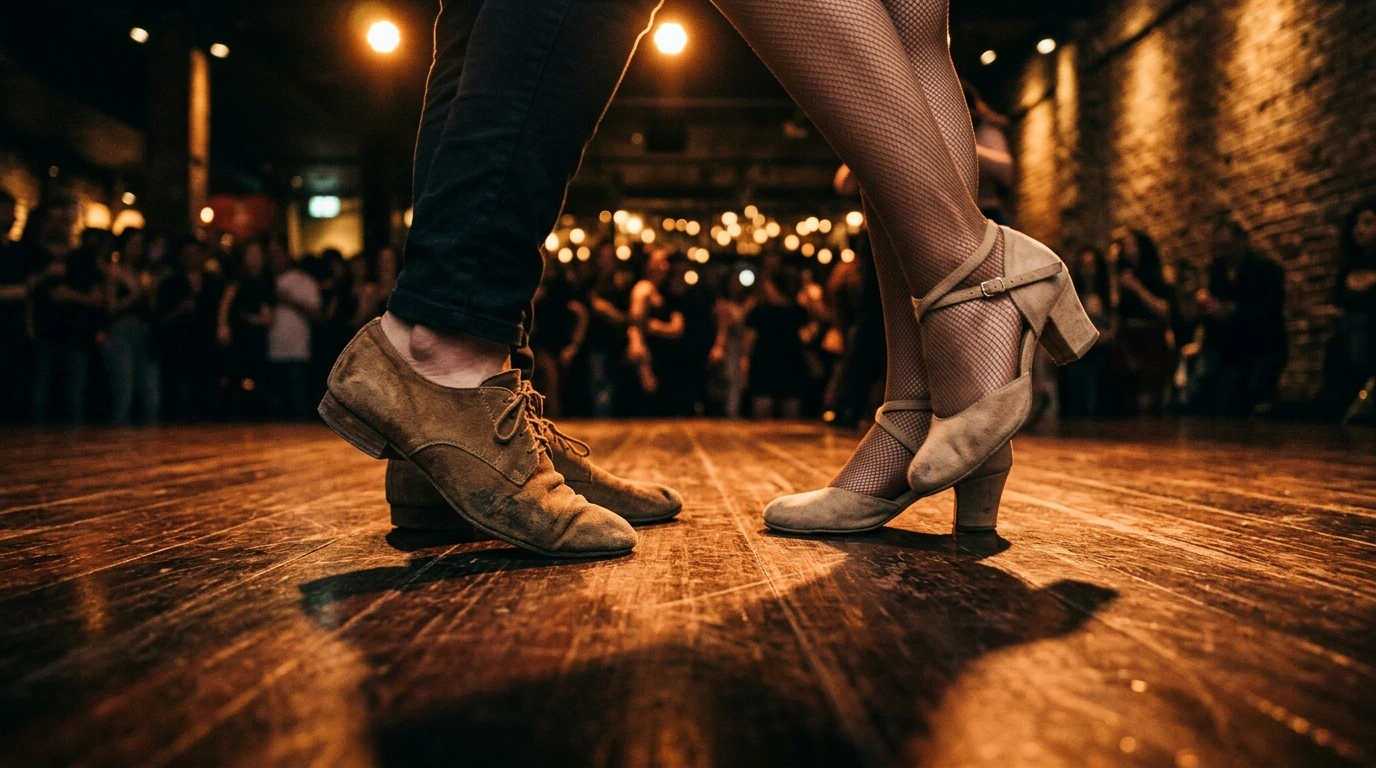
Club floors can get sticky when packed. Studio floors are excellent. Suede-soled dance shoes pivot through both. Our best bachata dance shoes 2026 guide covers what actually works for sensual body movement on mixed surfaces. Our dance floor etiquette guide covers broader social-floor basics.
Can I Also Dance Salsa, Kizomba and Zouk in Madrid?
Yes — Madrid is a proper multi-style city.
Salsa
Salsa in Madrid is dense and technically serious, with a real On2/NY-style community plus strong Cuban casino and LA-style contingents. Most of the bachata venues listed above also run salsa nights or heavy salsa rotations. For the full picture, read our salsa dancing in Madrid guide. Current listings: salsa events in Madrid.
Kizomba
Madrid has one of the stronger kizomba scenes in Spain. The Host’s Tuesday Kizomba Night is the dedicated weekly, supplemented by school-run socials and a festival calendar anchored by KIM 2026 – Kizomba International Madrid (13–16 March 2026). For kizomba specifically, Madrid is a better destination than Barcelona and a useful complement to Lisbon or Paris. Current listings: kizomba events in Madrid. New? Read kizomba for beginners.
Zouk
Brazilian zouk has a small but active Madrid community. The Madrid Zouk Bachata Festival 2026 (17–20 September) and MZBF 2026 are the flagship zouk-inclusive events. Weekly zouk socials exist but are thinner on the ground than bachata or kizomba weeklies. Current listings: zouk events in Madrid.
Are There Bachata Festivals in Madrid?
Madrid has a serious festival calendar across bachata, kizomba and zouk. Key 2026 events:
Rhythm Vibes Marathon Experience 2026
Rhythm Vibes Marathon Experience 2026 runs 21–24 August 2026. Marathon-format focus means continuous social dancing over lighter workshop programming — an increasingly popular format for experienced dancers who want floor time over classroom time.
Madrid Zouk Bachata Festival 2026
Madrid Zouk Bachata Festival 2026 runs 17–20 September 2026 — bachata and zouk combined, full festival format with international instructors.
KIM 2026 – Kizomba International Madrid
KIM 2026 runs 13–16 March 2026 — dedicated kizomba with some bachata overlap.
VACILALO Congress Madrid 2026
VACILALO Congress Madrid 2026 (17–20 September 2026) runs parallel to the Zouk Bachata Festival and leans salsa-and-bachata with a strong instructor roster.
For the broader European picture see best bachata festivals 2026 and best kizomba festivals 2026.
How Do I Get to Bachata Venues in Madrid?
Madrid’s metro is excellent, cheap, and extensive — better than Barcelona’s on most routes, though Barcelona’s is perfectly adequate. Getting to key venues:
- The Host and Temple Madrid (Calle de Ferraz): Metro L3 or L10 to Plaza de España, short walk. Both venues are on the same street within a few hundred metres.
- Azúcar Salsa Disco (Calle de Atocha): Metro L1 to Antón Martín or Tirso de Molina, 5-minute walk. Very central.
- Mambo Swing (Arroyomolinos): Southwest of Madrid. Car or long metro+bus combination. The venue is outside the central easy-transit zone — budget 45 minutes each way from centre.
The Madrid metro closes at 01:30 every night and runs from 06:00 daily. Since bachata nights often continue past 04:00, you’ll usually need a taxi, Uber, Bolt or Cabify home. Cross-city rideshares run €8–€15; peak-hour and late-weekend rates can be higher.
Night buses (buhos) run the main routes from around 00:30 to 06:00 — cheap but slow.
The interactive map has a useful Madrid view for visualising venue clusters vs. accommodation.
Where Should I Stay If I’m Visiting to Dance?
- Centro / Sol / Gran Vía: Most central, walkable to Azúcar and reasonable metro to The Host. Endless restaurants for late dinners.
- Moncloa / Argüelles: Walking distance to The Host and Temple Madrid. Quieter, more residential, good value on accommodation.
- La Latina / Lavapiés: Trendy neighbourhoods south of centre, good tapas, walkable to Azúcar, metro to The Host.
- Avoid: Far-out districts (Villaverde, Vicálvaro) — transit times will eat your evening. Chamartín and the business districts are sterile in the evening.
For a festival weekend (KIM, Rhythm Vibes, VACILALO), check the event’s official accommodation partners — many offer better rates than standard booking sites.
Tips for Visiting Bachata Dancers
- Check our bachata events in Madrid listing before heading out — studio socials and pre-festival parties shift dates
- Bring proper dance shoes. Some club floors get sticky; suede soles solve it. Our best bachata dance shoes 2026 guide covers what actually works
- Eat late, really late. Dinner at 21:30–22:30 is the Madrid norm. Eating at 19:00 means you’ll be hungry again before the club fills
- Wednesday at The Host is the bachata-heads night. If you want to see the serious Madrid bachata community rather than the weekend-tourist crowd, plan a Wednesday stop
- Sunday Mambo Swing is civilised. The 18:00 start at Mambo Swing on Sundays is a rare chance to dance without committing to a full late-night
- Speak Spanish if you can. Madrid switches to English less automatically than Barcelona — even a few phrases matter
- Sensual doesn’t mean intimate. Read your partner, keep it clean, respect their signals. The floor is a social space
- Dress up a notch. Madrileños notice clothes. A well-cut shirt makes a difference
- Barcelona is 3 hours by AVE. A Madrid-Barcelona bachata week is arguably the best bachata trip in Europe — read bachata dancing in Barcelona if you’re planning one
Find Events
Browse the current bachata events in Madrid, salsa events in Madrid, kizomba events in Madrid, and zouk events in Madrid, updated weekly. If Madrid is one stop on a longer trip, our how to find social dance events while traveling guide has the research workflow I use for every new city, and the interactive map helps you visualise venue clusters.
Planning a longer European loop? Read bachata dancing in Barcelona, bachata dancing in Berlin, and the best cities for bachata in Europe ranking.