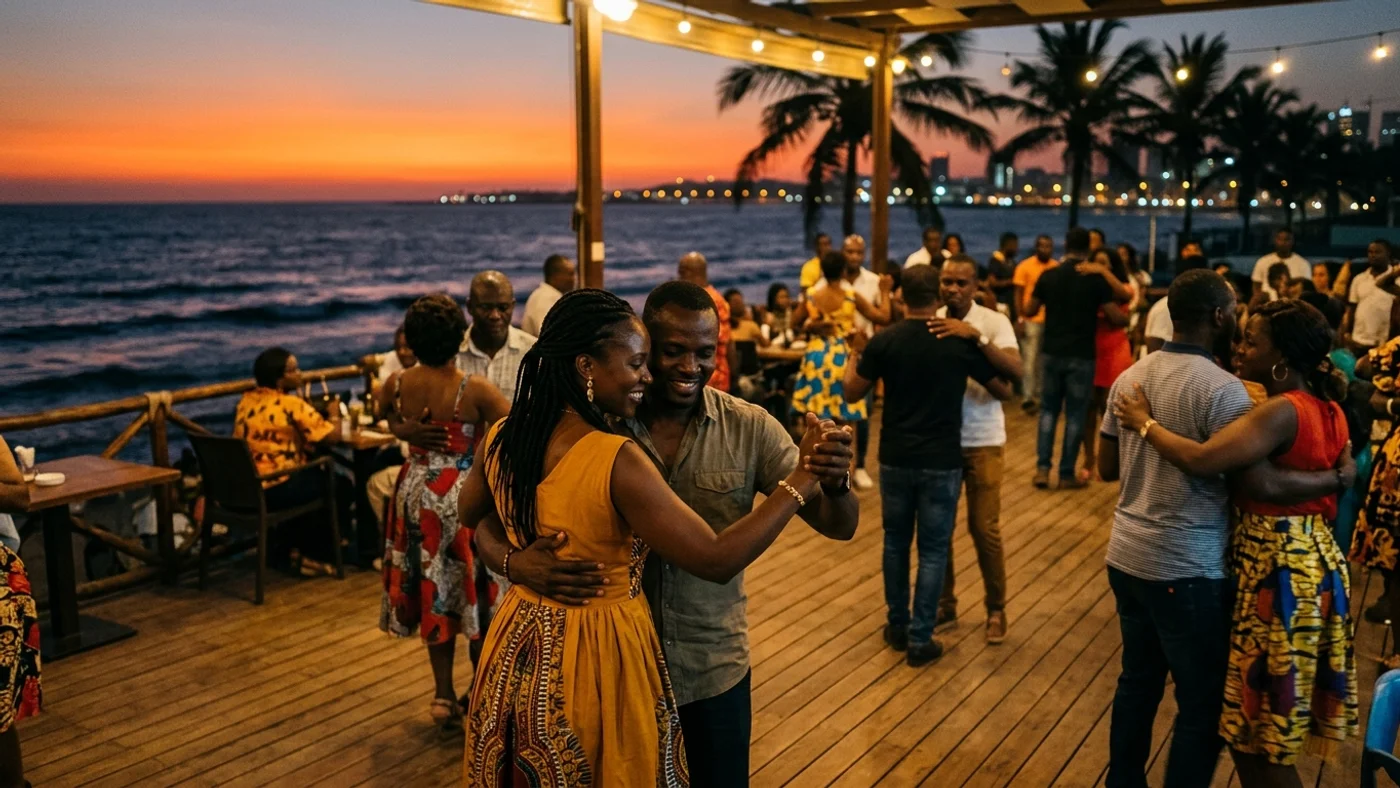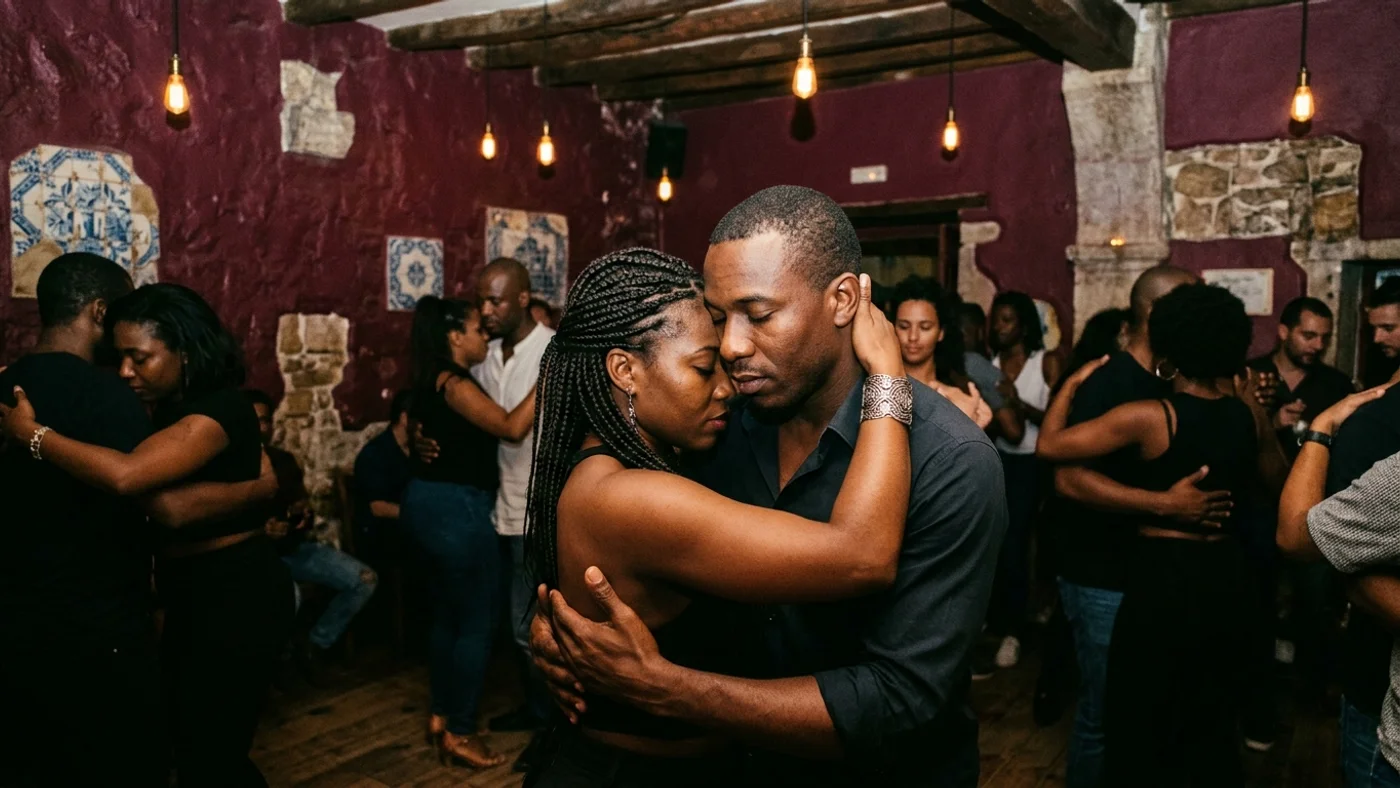
I arrived in Lisbon thinking I knew Kizomba. Five years of weekly socials in London and Berlin, a couple of festivals on the European circuit, the basic step automatic, the embrace comfortable. Then I walked into a Sunday night social in Cais do Sodré and watched for two songs before I understood that what I'd been dancing in Northern Europe was a competent translation of something whose original was happening in front of me. The room was older. The music was different — heavier on Cape Verdean tracks, with semba thrown in without warning. The walking was rounder, the connection less performative, and the regulars danced like they had nothing to prove. Three nights later I left the city dancing differently. This is the guide I wish I'd had before that first social.
At a Glance
Why Lisbon Is the Home of European Kizomba
Kizomba was born in Luanda in the late 1970s, but it became a European dance in Lisbon. The story is migration. Through the 1980s and 1990s, large communities of Angolans and Cape Verdeans settled in Portugal, particularly in and around Lisbon — Portugal's colonial-era ties to Lusophone Africa meant the country was the natural first landing point for those communities, and the music and dancing came with them. By the late 1990s, Lisbon had a Kizomba scene that didn't exist anywhere else outside Africa.
Portuguese dance schools started teaching it. Local Portuguese dancers picked it up. International dancers visiting Lisbon for other reasons discovered it. By the 2000s, Lisbon was the city you flew to if you wanted to learn Kizomba seriously — and Lisbon teachers were the ones travelling to Paris, London, Madrid, and eventually Berlin and Amsterdam to seed the scenes that now exist there. Our Kizomba primer covers the dance's broader history; this guide focuses on what dancing in Lisbon specifically feels like today.
The point isn't that Lisbon is the "best" Kizomba city — Paris has a larger scene by raw numbers, and London has more weekly events. The point is that Lisbon is the closest most European dancers will get to dancing Kizomba in something like its source context, with regulars who grew up with the music and treat the dance as cultural inheritance rather than weekend hobby.
---The Sound of Lisbon Kizomba
Lisbon DJs play differently than DJs in London, Paris, or Berlin. The biggest distinction is the weight given to Cape Verdean tracks. Mornas, coladeiras, and Cape Verdean Kizomba (often called Cabo Zouk) appear far more often in Lisbon sets than they do further north. The Cape Verdean diaspora is huge in Portugal, and the music reflects that — slower, more melodic, often acoustic-led, with Creole vocals.
The second distinction is semba. Lisbon DJs will throw semba sets into a Kizomba night without ceremony — three or four faster tracks at 120+ BPM that send the floor into a different mode entirely. Semba is the parent dance from which Kizomba evolved, and Lisbon regulars dance it with real fluency. If you don't know semba, sit out, watch carefully, and ask someone to teach you the basics during the social break.
The third distinction is tarraxinha. Lisbon goes deep on tarraxinha — slow, bass-heavy, minimalist tracks where the dancing happens in a few square feet of floor with maximum body isolation. A Lisbon DJ's tarraxinha set is often the highlight of the night for regulars and a complete shock for visitors who've only ever danced in Northern European scenes where tarraxinha is occasional.
---The Neighborhoods Where the Scene Lives
Lisbon Kizomba doesn't cluster into one neighborhood the way some scenes do. It's distributed across a few areas, each with its own character.
Cais do Sodré, on the river just below Bairro Alto, is the most visitor-friendly part of the scene — a few central nightlife venues run regular Kizomba parties that draw a mix of tourists, expats, and Portuguese regulars. This is the right neighborhood for your first night because the venues are walkable from most central hotels and the crowd is welcoming to new faces.
Bairro Alto and Príncipe Real host smaller, more intimate studio socials — the kind of nights where everyone knows everyone and a visitor stands out a little. Worth the trip once you've found your feet, especially if you want to dance with regulars rather than other tourists. Levels tend to be high.
The northern suburbs — including Amadora and Loures — are where the largest Angolan and Cape Verdean communities live, and they host some of the most culturally grounded Kizomba and semba nights in the city. These nights are not built for tourists. If you go, go with a regular, dance respectfully, and treat it as a privilege rather than an item on a checklist. The dancing here is extraordinary, and it will recalibrate everything you think you know about the dance.
---Weekly Socials and What to Expect
Lisbon runs weekly Kizomba socials nearly every night of the week, with the biggest crowds on Friday and Saturday and a famously good Sunday scene that runs late. The Sunday social phenomenon is unusual — most European cities have weak Sundays — and it's a hint that Kizomba in Lisbon is a real weekly habit rather than weekend entertainment. We track the current weekly calendar on the Lisbon Kizomba events page; check the latest before you fly because nights shift venues regularly.
Most socials follow the standard format: beginner class around 21:00, social dancing from 22:00 until at least 02:00 — often later in the dedicated Kizomba venues. Entry runs €5 to €10, almost always including the class. The dancing itself starts slow — Lisbon nights take a while to fill, and the room you walk into at 22:30 will be unrecognisable by midnight. Pace yourself.
Expect rotating partners, a wide age range (Lisbon Kizomba skews older than most European scenes — there are dancers in their 50s and 60s on the floor regularly, and they're usually the best dancers in the room), and a strong cultural mix. If you've only danced at Urban Kiz–dominant scenes, the connection style here will feel different — closer, more grounded, less performative. Go with it.
---Tukina Lisboa and the Festival Calendar
The flagship Lisbon festival is Tukina Lisboa, one of the most respected Kizomba and Semba events in Europe. It pulls in instructors and DJs with deep Angolan and Cape Verdean roots, and the social parties run later and harder than at most international festivals. If you're going to fly to Lisbon for one Kizomba weekend a year, this is the one.
Tukina Lisboa Kizomba & Semba Festival
Lisbon's anchor festival, with a programming focus on Kizomba and Semba taught by instructors with genuine roots in Angolan and Cape Verdean dance culture. The cultural depth is the differentiator — this isn't a generic European Kizomba festival, it's the one closest to source.
Beyond Tukina, Lisbon hosts smaller weekenders and one-off events throughout the year, plus several visiting international congresses. The full Lisbon festival calendar tracks what's currently scheduled, and our best Kizomba festivals 2026 guide places Tukina in the wider European context.
---Etiquette and Cultural Notes
Lisbon's Kizomba scene operates with a stronger cultural awareness than most European cities, and a little sensitivity goes a long way.
The Angolan and Cape Verdean regulars are the heart of the scene. They built it. They sustain it. They're generous and welcoming, but they notice — and quietly remember — visitors who treat their dance as a tourist attraction. The simplest demonstration of respect is to come having done basic homework: know roughly what semba is, recognise tarraxinha when it plays, and don't be the visitor who treats every track the same. Sitting out an Angolan or Cape Verdean track because you're not sure what to do is more respectful than dancing through it badly.
The standard Kizomba social etiquette applies — extend a hand, smile, "would you like to dance?" works in English, and any decline is final and not personal. Our beginner social guide covers the universal etiquette.
One Lisbon-specific note: don't try to teach on the social floor. This rule applies everywhere, but in Lisbon it's near-sacred. The regulars range from new dancers to teachers with twenty years of experience, and the assumption is that everyone is on the floor to enjoy the music — not to be corrected. Save technique for class. Save the floor for the dance.
---When to Come and How to Plan
Best months: April through June, and September through November. The weather is comfortable, the local scene is in full weekly rhythm, and the festival calendar tends to cluster in spring and autumn. July and August are quieter — many Lisbon regulars travel for festivals or holiday, and some weekly nights pause or move venues. December is also patchy. January through March are perfectly fine for the weekly scene, just colder and rainier.
Length of trip: A weekend (Friday to Sunday night) gives you three socials and a real taste of the scene. A long weekend (Thursday to Monday morning) lets you also catch a smaller weekday event and properly explore neighborhoods. A full week is overkill unless you're combining the trip with a festival or a learning intensive.
Where to stay: Anywhere central — Cais do Sodré, Bairro Alto, Chiado, Príncipe Real, or Baixa puts you within walking distance or a short ride of most central socials. Avoid staying in distant suburbs unless you've specifically planned around the suburban scenes, because Lisbon's late-night transport thins out after 1am. Ride-share is cheap and works well for getting home.
Floor type: Most Lisbon Kizomba venues have wooden or smooth tile floors — leather-soled shoes work well, rubber soles will fight you. Bring a clean pair specifically for dancing.
---Beyond Kizomba — Bachata and Salsa in Lisbon
Lisbon has scenes for both Bachata and Salsa, though neither has the same cultural anchor as Kizomba. The Bachata scene is the second strongest in Portugal after Madrid in terms of regular socials, with a Sensual-dominant feel similar to other European capitals. The Salsa scene is smaller and more diffuse but consistently active. The full Lisbon dance city page covers all three styles together.
Lisbon also hosts Pura Bachata Lisbon, an established Bachata congress that pulls international instructors and is worth pairing with a Kizomba trip if your timing aligns.
If you're new to either style and curious about how Kizomba relates to nearby dances, our Zouk vs Kizomba comparison guide covers the closest neighbour conceptually, and our full Kizomba primer goes deeper into the dance's musical and cultural roots.
---FAQ
Is Lisbon really the home of Kizomba?
Lisbon is the European home of Kizomba. The dance was born in Luanda in the late 1970s and grew up in Angola through the 1980s. The shift to global recognition came when Angolan and Cape Verdean diaspora communities brought Kizomba to Portugal in the 1990s, and Lisbon became the city where the scene took root in Europe and from where it spread to Paris, London, Berlin, and beyond. So Luanda is the actual birthplace; Lisbon is where Europe learned the dance.
What night should I go dancing in Lisbon if I only have one?
Saturday for the biggest crowd and the most international visitors, Friday for a slightly more local feel, and Sunday for the dedicated Lisbon Kizomba scene that runs late into the night without weekend warriors. We list the current weekly schedule on our [Lisbon Kizomba page](/kizomba/lisbon/) — check the latest before you go because individual nights move venues regularly.
How much do Lisbon Kizomba socials cost?
Most weekly socials run €5–€10 at the door, often with a beginner class included in the entry fee. Lisbon is one of the most affordable cities in Europe for Kizomba dancing — significantly cheaper than London or Paris. Festival weekend passes (like Tukina Lisboa) are separate and run €100–€180 for full passes.
Is Lisbon Kizomba mostly Traditional or Urban Kiz?
Both are present, but Traditional Kizomba — the closer-to-Angolan-roots style with circular movement and semba-influenced footwork — has more cultural weight in Lisbon than in most European capitals. Urban Kiz is danced too, especially at international festivals, but the local Lisbon scene retains a strong Traditional and Angolan-flavoured identity. If you want to experience Kizomba in its closest-to-source European form, Lisbon is where to do it.
Do I need to speak Portuguese to dance Kizomba in Lisbon?
No. Most regulars speak English, and dancing happens through the embrace, not language. That said, learning a few words — "obrigado" (thank you), "primeira vez" (first time), "outra música?" (another song?) — goes a long way at the more local-flavoured nights, where the Angolan and Cape Verdean regulars genuinely appreciate the effort. Show respect for the cultural roots and you'll be welcomed warmly.
Lisbon is one of those cities where the dance still feels like it belongs to the people who built it. Show up, listen carefully, dance respectfully, and you'll leave a different dancer than you arrived.