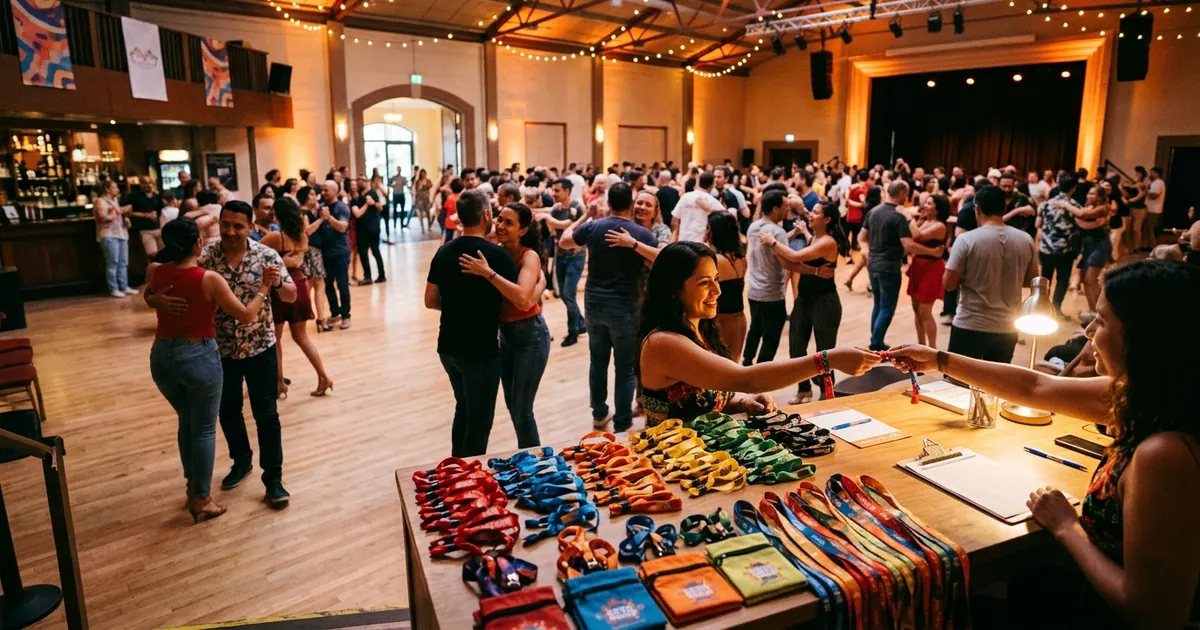
Brazilian zouk is a Brazilian dance with a Caribbean name. The dance evolved in the 1990s and 2000s from lambada, which came from the Afro-Brazilian carimbó of Pará state with influence from Caribbean zouk music that had become popular in Brazil. When the lambada craze faded, dancers adapted the movement vocabulary to slower, smoother zouk music, and a new dance gradually took shape — first in Porto Seguro, then in Rio, São Paulo, and Curitiba, each city developing its own accent on the common vocabulary.
Today Brazilian zouk is danced globally — Prague, Amsterdam, Tokyo, Denver, Sydney all have serious scenes — but South America remains the home continent. More importantly, Brazil remains the place where the dance’s cultural context is living rather than exported. This guide ranks the five best South American cities for Brazilian zouk in 2026 based on scene depth, stylistic authenticity, and what it is like to visit as an international dancer.
Honest framing up front: our event database coverage in South America is substantially thinner than our European and North American coverage, particularly for Brazilian domestic events. We have tried to compensate with cultural context and detail on the scenes themselves. If you want a complete weekly calendar of events, most of the daily Brazilian zouk scene operates through Portuguese-language Facebook groups and Instagram accounts rather than international dance platforms.
If you are new to the dance, start with our what is zouk dancing primer before planning a trip.
Table of Contents
- Rio de Janeiro, Brazil
- São Paulo, Brazil
- Curitiba, Brazil
- Porto Alegre, Brazil
- Buenos Aires, Argentina
- Honorable Mentions
- Festivals Worth Traveling For
- Planning a South American Zouk Trip
- FAQ
Rio de Janeiro, Brazil
Rio is the cultural center of Brazilian zouk in a way that is distinct from São Paulo’s numerical dominance. The Rio scene is closer to the dance’s lambada roots — faster, more playful, less heavily focused on body isolations and head movements, more engaged with traditional footwork and the musical bounce that lambada dancers recognize. Many Rio dancers will tell you that what has become the international export version of Brazilian zouk — the slow, head-and-chest-heavy São Paulo style — has drifted from the dance’s real musical heart.
What zouk looks like here: Closer to lambada in its movement vocabulary. Faster musicality, more footwork, a more grounded and playful connection. Rio dancers often move fluidly between lambada, lambazouk, and zouk across the same night, recognizing all three as related rather than strictly separated. The soneca head movement that international audiences associate with Brazilian zouk is present but less central than it is in São Paulo-style.
Best venues and events: The scene spreads across Copacabana, Ipanema, Leblon, and the wider Zona Sul, with additional activity in Lapa and the downtown neighborhoods. Weekly socials run at studios and dedicated dance venues. Beach and outdoor dancing — at scheduled events along the boardwalk and at Praça do Ó and similar public spaces — adds an outdoor dimension that São Paulo cannot replicate. Live music nights featuring zouk and related genres bring a cultural texture distinct from DJ-driven studio socials.
What makes it special: Cultural rootedness and the physical context that shaped how Brazilians dance socially. You are dancing in the city that the music is literally about — zouk, samba, bossa nova, and funk carioca are all part of the same Rio cultural ecosystem, and dancers here move between them naturally. The beach-city atmosphere supports a more outdoor, playful social-dance culture than São Paulo’s indoor studio scene.
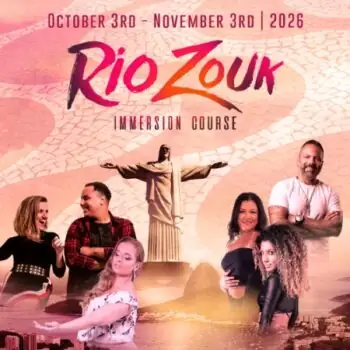
Best-known event: The Rio Zouk Immersion 2026 in October 2026 is a serious international-facing event that draws traveling dancers from across the Americas and Europe. Pairing it with additional weekly scene time is the best way to experience Rio zouk fully.
Practical notes: Portuguese is essential for the deeper scene. English gets you through tourist-facing events and international workshops. Safety practices matter — use established accommodations, plan transport carefully for late-night returns, and travel with local contacts when possible. Entry fees are moderate by international standards. Summer (December to March) is hot and humid; winter (June to August) is mild and generally better for intensive social dancing. Our zouk events in Rio de Janeiro listings are currently thin — check local studios, the major Brazilian zouk Facebook groups, and Rio Zouk Immersion organizers for the current calendar.
São Paulo, Brazil
São Paulo is the biggest Brazilian zouk scene in the world and the city that exported the dance globally. The São Paulo style — slower musicality, heavy body isolations, dramatic head movements, sensual aesthetics — is what most international dancers mean when they say “Brazilian zouk.” Major international instructors like Kadu Pires, Larissa Thayane, and the lineage of São Paulo teachers built the curriculum that now travels worldwide.
What zouk looks like here: The style you have seen online. Head movements, body waves, slow musical interpretation, sensual connection, and the focused attention on each phrase of the music that has become the dance’s international trademark. São Paulo dancers have codified the style in a way that makes it teachable and transmissible — which is why the international festival circuit dances São Paulo zouk, not Rio zouk.
Best venues and events: The scene spreads across Vila Madalena, Pinheiros, the city center, and multiple dedicated dance studios. Weekly socials run nightly somewhere in the city. The density of professional instructors means that on any given night you can take classes, attend a studio social, and dance at a late-night club event without repeating yourself. São Paulo runs multiple zouk festivals annually, including large events that anchor the global zouk calendar.
What makes it special: Scale and technical depth. São Paulo has more serious zouk dancers per square kilometer than anywhere else on Earth. The skill ceiling is high, workshops are excellent, and the pace of stylistic innovation happens here before it spreads internationally. If you want to train zouk at the highest level, São Paulo is where you go. The city has the production values, the teaching infrastructure, and the critical mass of expert-level dancers that no other scene matches.
Practical notes: Portuguese is the primary language but English is widely spoken in dance-school contexts, especially at events that cater to international visitors. São Paulo is a huge, sprawling city — plan one neighborhood per night, not multiple. Traffic is legendary. Entry fees are moderate. Winter (June to August) is the best dancing season — mild temperatures, lower humidity. The scene runs year-round without seasonal dips. Our zouk events in São Paulo listings are thin on our side but the scene itself is vast — check major Brazilian zouk community pages for the current weekly calendar.
Curitiba, Brazil
Curitiba has one of the most distinctive Brazilian zouk scenes — smaller than São Paulo or Rio, but technically excellent and producing disproportionate numbers of internationally touring instructors. The city’s dance culture generally (tango, forró, zouk, and others) is serious and training-focused, and that sensibility extends to zouk.
What zouk looks like here: A third stylistic tradition alongside Rio and São Paulo — recognizably Brazilian zouk but with its own accent. Curitiba dancers emphasize technique, musicality, and clean execution. The scene is known for producing dancers with strong fundamentals who translate well to international teaching careers.
Best venues and events: The scene centers on dedicated dance studios and weekly socials across the city. Curitiba hosts annual festivals that draw dancers from across Brazil and internationally. The community is tight-knit compared to São Paulo’s sprawl, which means regulars recognize each other and visiting dancers tend to be noticed and welcomed.
What makes it special: A training-serious culture paired with a more intimate scene. Dancers who want to take classes and workshops seriously without the overwhelming scale of São Paulo find Curitiba ideal. The city also has a more temperate climate than coastal Brazilian cities — cooler summers, mild winters — which makes intensive dance trips more physically manageable.
Practical notes: Portuguese dominates. Curitiba is smaller and easier to navigate than Rio or São Paulo. Public transit is relatively good by Brazilian standards. Entry fees are moderate. The city is less internationally visited than Rio or São Paulo, so expect fewer English-first venues and more need for basic Portuguese.
Porto Alegre, Brazil
Porto Alegre sits in the far south of Brazil and has an active Brazilian zouk scene with regional character. The city’s broader culture is influenced by its proximity to Argentina and Uruguay and a strong European-descended population, and the zouk scene reflects that — a bit more serious, a bit more studio-driven than Rio’s beach-culture informality.
What zouk looks like here: Recognizably Brazilian zouk with Southern Brazilian accents — clean technique, careful musicality, and a training culture similar to Curitiba’s. The scene is smaller than the three bigger Brazilian cities but genuinely rooted and sustained by dedicated studios and regular festivals.
Best venues and events: The scene centers on a few dedicated dance studios and weekly socials. Porto Alegre hosts annual zouk events that draw dancers from the broader Southern Cone region, including Argentines and Uruguayans who travel for the stronger Brazilian zouk infrastructure.
What makes it special: Geographic pairing opportunities. Porto Alegre is within reasonable travel distance of Buenos Aires and Montevideo, which makes it an ideal base for a multi-city Southern Cone zouk trip. The scene is small enough to be welcoming and large enough to sustain genuine weekly programming.
Practical notes: Portuguese is essential. Winter (June to August) is mild and dry — ideal for dance travel. The city is less internationally visited than the coastal Brazilian cities; expect a more local scene and less English.
Buenos Aires, Argentina
Buenos Aires is the largest non-Brazilian Brazilian zouk scene in South America and a genuine destination for dancers who want to experience the dance outside its home country. The combination of Argentine dance seriousness (the country’s tango culture sets a baseline of technical expectation), a substantial Brazilian expat community, and a growing international dance infrastructure has produced a scene that is smaller than the major Brazilian cities but genuine in its own right.
What zouk looks like here: Primarily São Paulo-style, imported through Brazilian instructors and teaching circulation between the two countries. Argentine dancers bring tango-informed body awareness to their zouk, which shows in posture, connection, and axis management. The scene is training-serious; social dancing is generally at a solid technical level.
Best venues and events: The scene centers on dedicated dance studios in Palermo, San Telmo, and the city center. Weekly socials run at a handful of venues. The crossover with the broader Argentine dance community — particularly tango and bachata — means many dancers are doing multiple styles in parallel, which enriches the social atmosphere.
What makes it special: Cultural crossover. Dancing zouk in Buenos Aires means being in a city where partner dance is part of the urban fabric — tango’s cultural weight influences how Argentines approach all partner dances. The resulting zouk scene has a distinctive flavor that is recognizably Brazilian but filtered through an Argentine sensibility.
Practical notes: Spanish is essential; English is reasonably widely spoken in dance contexts. Entry fees are low by international standards, reflecting Argentina’s economic situation. The city is large, walkable in its central neighborhoods, and has good public transit. Winter (June to August) is mild; summer (December to March) is hot. Buenos Aires works well as a cultural-immersion destination and pairs naturally with Rio or São Paulo on a broader South American dance trip.
Honorable Mentions
Florianópolis, Brazil
Santa Catarina’s island capital has a small but passionate Brazilian zouk scene shaped by its beach-city culture and the stream of Argentines and Brazilians who summer there. The scene is seasonal — larger in Brazilian summer (December to March) — but year-round activity exists. Beach and outdoor dancing are part of the local flavor.
Salvador, Bahia, Brazil
Bahia is the cultural home of much of what became the musical foundation for Brazilian zouk — carimbó, samba de roda, axé — and Salvador’s dance culture is correspondingly deep. The Brazilian zouk scene specifically is smaller than in the Southern cities but the cultural context is unmatched. Carnaval season brings intense dance-related tourism.
Porto Seguro, Bahia, Brazil
The mythical origin town of Brazilian zouk. Porto Seguro’s lambada-to-zouk transition in the 1990s is documented in interviews with surviving founders of the scene. The contemporary scene is small — this is a beach resort town, not a major city — but the cultural history is worth a visit for dedicated zouk dancers.
Montevideo, Uruguay
Small but present. Uruguay’s dance scene is influenced by Argentina’s and has a handful of dedicated zouk teachers and weekly events. Pairs naturally with a Buenos Aires trip via ferry across the Río de la Plata.
Santiago, Chile
Chile has an emerging Brazilian zouk community driven by Brazilian expats and traveling instructors. Smaller than Buenos Aires and more studio-focused than socially deep. A reasonable add-on to a Buenos Aires trip for dancers continuing through the Southern Cone.
Medellín, Colombia
Medellín’s dance infrastructure is overwhelmingly salsa- and bachata-focused but a small Brazilian zouk community exists, primarily at specific weekly socials tied to a handful of studios. For a sense of the city’s broader Latin dance culture, our salsa dancing in Medellín guide covers context.
Lima, Peru and Caracas, Venezuela
Both cities have small Brazilian zouk scenes driven by traveling instructors and local initiatives. Neither is a primary destination but both exist within the broader South American zouk network.
Festivals Worth Traveling For
Brazilian zouk’s festival calendar in South America is rich but a substantial portion of it runs through Portuguese-language channels that do not appear on international dance platforms. The festivals listed below are verified in our database; many additional domestic Brazilian events run throughout the year.
Rio Zouk Immersion 2026 — October 2026, Rio de Janeiro. International-facing festival combining Rio’s scene with a multi-day training and social program. The best anchor event for a Rio zouk trip.
Brazilian cities including São Paulo, Curitiba, Porto Alegre, and Florianópolis host multiple zouk congresses and festivals annually — domestic-focused events with international guests, in Portuguese. Finding them requires research through Brazilian zouk Facebook groups, Instagram accounts of major instructors, and direct contact with studios. Many of these events do not accept registration through standard international platforms.
For the European zouk circuit — which is more comprehensively documented on our platform — see our best zouk festivals 2026 guide.
Browse the full festival calendar for complete listings.
Planning a South American Zouk Trip
Pick your style bias. If you want the lambada-rooted Rio style, go to Rio. If you want the international-export São Paulo style, go to São Paulo. If you want technical-excellence-focused training in a smaller scene, go to Curitiba. A well-planned Brazilian trip can cover two or three of these in two to three weeks and give you a full picture of the dance’s internal diversity.
Learn basic Portuguese. The Brazilian zouk world operates in Portuguese. You can navigate tourist-facing events and international-oriented studios in English, but the deeper scene lives in Portuguese — socials, community chats, studio WhatsApp groups, Instagram. Even basic Portuguese (Olá, tudo bem?, obrigado/a, prazer) changes how you are received.
Use local contacts. Online groups, Brazilian expat communities in your home country, and dance-trip operators running organized groups all help. Showing up completely cold in São Paulo or Rio as a visiting zouk dancer is possible but much easier with even one local contact.
Respect the style distinctions. Rio dancers dance differently than São Paulo dancers, and they know it. Asking a Rio dancer to teach you “Brazilian zouk” when what you mean is “the São Paulo sensual style I see on Instagram” can produce awkward moments. Learn which style you want before you travel and plan accordingly.
Travel in Brazilian winter when possible. June through August gives you mild temperatures, low humidity, and better stamina for multi-night dance travel than the hot humid summer months. It also lines up well with winter dance trips from Europe and North America.
Plan for scale in São Paulo and Rio. Both cities are sprawling megalopolises — São Paulo has over 20 million people in its metro area. Plan one neighborhood per night, not multiple. Budget significantly for transport.
Budget safety planning into every trip. Brazilian cities require more planning around personal security than most European destinations. Use reputable accommodations, plan transport for late-night returns, and do not flaunt valuables. This is normal urban travel in major Brazilian cities and is not a reason to avoid them — but it is a reason to prepare.
Consider pairing with Argentine cities. Buenos Aires and Montevideo pair naturally with Porto Alegre or Florianópolis for dancers who want multi-country Southern Cone trips. The Argentine and Uruguayan scenes are smaller but add cultural texture — and the weekly tango community in Buenos Aires is a world of its own that zouk dancers with cross-style interests find rewarding.
Check current schedules. Brazilian zouk events change frequently and much of the calendar is not on international platforms. Verify every event directly with the organizer or through major Brazilian zouk community channels before booking flights.
FAQ
Is Brazilian zouk the same as Caribbean zouk?
No. Brazilian zouk is a partner dance that evolved in the 1990s and 2000s from lambada, which itself came from the Afro-Brazilian carimbó of Pará state with Caribbean zouk music influence. Caribbean zouk is a music genre (and a looser partner dance) from the French Antilles — Guadeloupe and Martinique — that emerged in the 1980s around bands like Kassav. The Brazilian dance adapted the Caribbean name but developed into something distinct: slower, more body-wave driven, with the head-and-chest movements that have become the style’s signature. Our what is zouk dancing guide covers the full history.
What is the difference between Rio style and São Paulo style zouk?
Real difference. Rio-style (sometimes called “lambazouk” or “Porto Seguro style” depending on who you ask) is closer to the dance’s lambada roots — faster, livelier, with more traditional footwork and a more playful energy. São Paulo-style (the dominant international export) developed more body isolations, slower musicality interpretation, heavier head movements, and a more sensual aesthetic. Most international festivals teach São Paulo-style; Rio dancers are more likely to dance the lambada-rooted version at home.
Where did Brazilian zouk originate?
Porto Seguro, Bahia, in the 1990s, evolving directly from lambada. The lambada-to-zouk transition happened partly because Caribbean zouk music became popular in Brazilian beach clubs as lambada’s 1990s fad faded, and dancers adapted the lambada movement vocabulary to the slower, smoother zouk rhythm. The dance then spread to Rio, São Paulo, and Curitiba, where different regional styles emerged. The Caribbean musical influence is why Brazilians call the dance “zouk” despite its choreographic lineage being entirely Brazilian.
Is Buenos Aires a real zouk destination?
Yes, increasingly. Buenos Aires has a growing Brazilian zouk community fed by Brazilian expats, traveling instructors, and a strong local dance culture that has integrated zouk alongside tango, bachata, and salsa. Smaller than Brazilian cities but genuinely rooted. The combination of Argentine dance seriousness and Brazilian zouk technique is producing high-quality dancers.
Should I visit Rio or São Paulo for zouk?
São Paulo for the biggest scene, the most international-style instruction, and the broadest weekly calendar. Rio for cultural depth, the lambada-rooted style in its home region, and the beach-city context that shaped how Brazilians dance socially. Ideally both — they are different scenes and represent different sides of Brazilian zouk culture. For the global zouk festival picture, see our best zouk festivals 2026 guide.
Find Zouk Events in South America
Browse all zouk events to find socials in your destination. Our complete festival calendar lists verified events globally. The Brazilian zouk world’s online center of gravity is still in Portuguese-language community groups — we recommend supplementing our listings with research through those channels for the fullest picture of a given city’s weekly calendar. Traveling dancers should read how to find social dance events while traveling and review dance floor etiquette. New to zouk entirely? Start with our what is zouk dancing primer. For context on the broader Latin dance scene in nearby regions, see our guides to salsa dancing in Medellín and the best cities for bachata in Latin America.