The first time I was asked to dance at a social, I panicked and shook my head no. The person smiled, nodded, and walked away. Thirty seconds later I was mortified — I had no idea whether I had just been rude, whether I had to explain myself, whether they would tell everyone I was a difficult person. Spoiler: they did not. They went and asked someone else and had a perfectly lovely dance. That was my first etiquette lesson. Most of what we worry about on the dance floor, nobody else is tracking.
Etiquette is not a set of formal rules you can memorise from a book. It is a collection of behaviours that make social dancing work for everyone in the room — learned through watching, through quiet corrections from regulars, and through a few cringe moments of your own. This guide will save you some of those cringe moments.
Whether you dance salsa, bachata, kizomba, or zouk, the underlying etiquette is the same. The communities differ in flavour, but the principles are universal.
Asking Someone to Dance
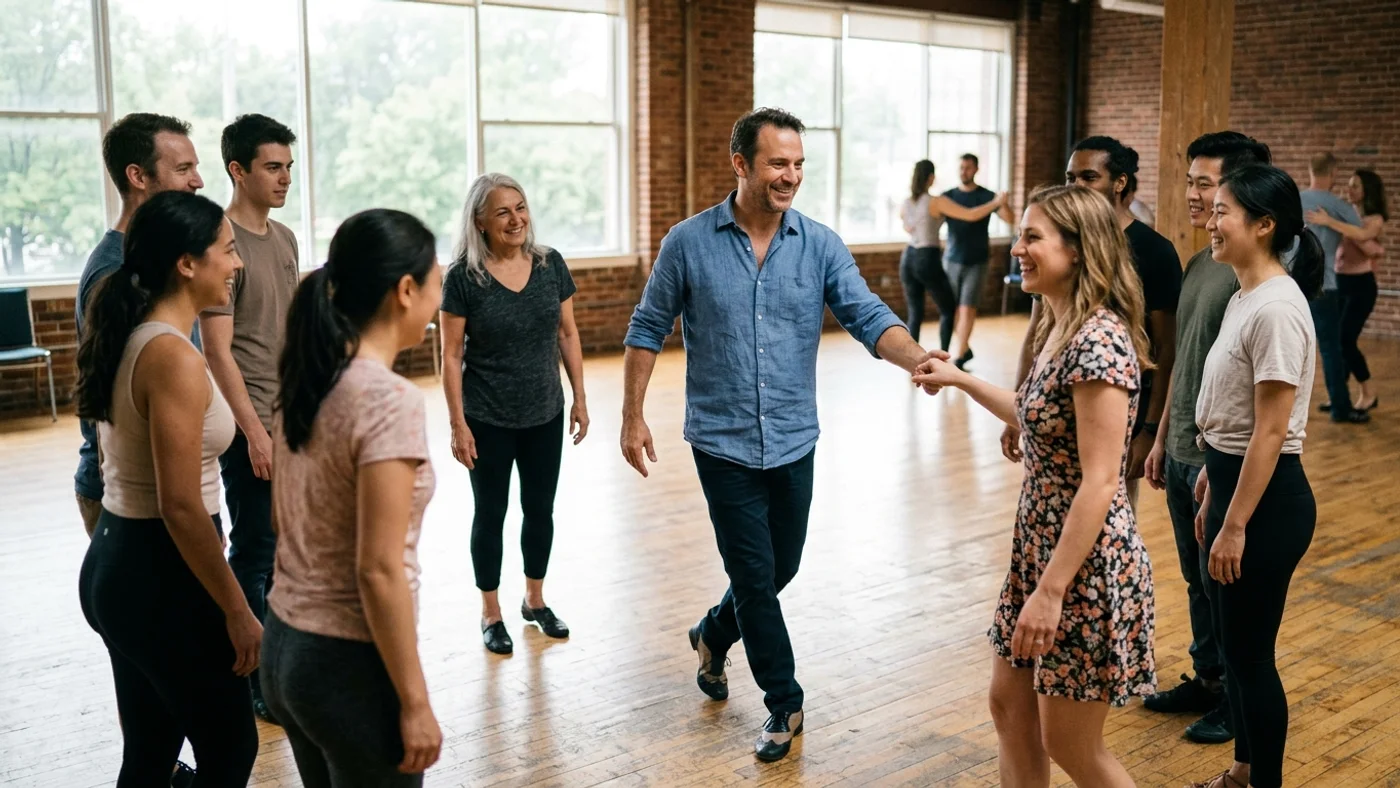
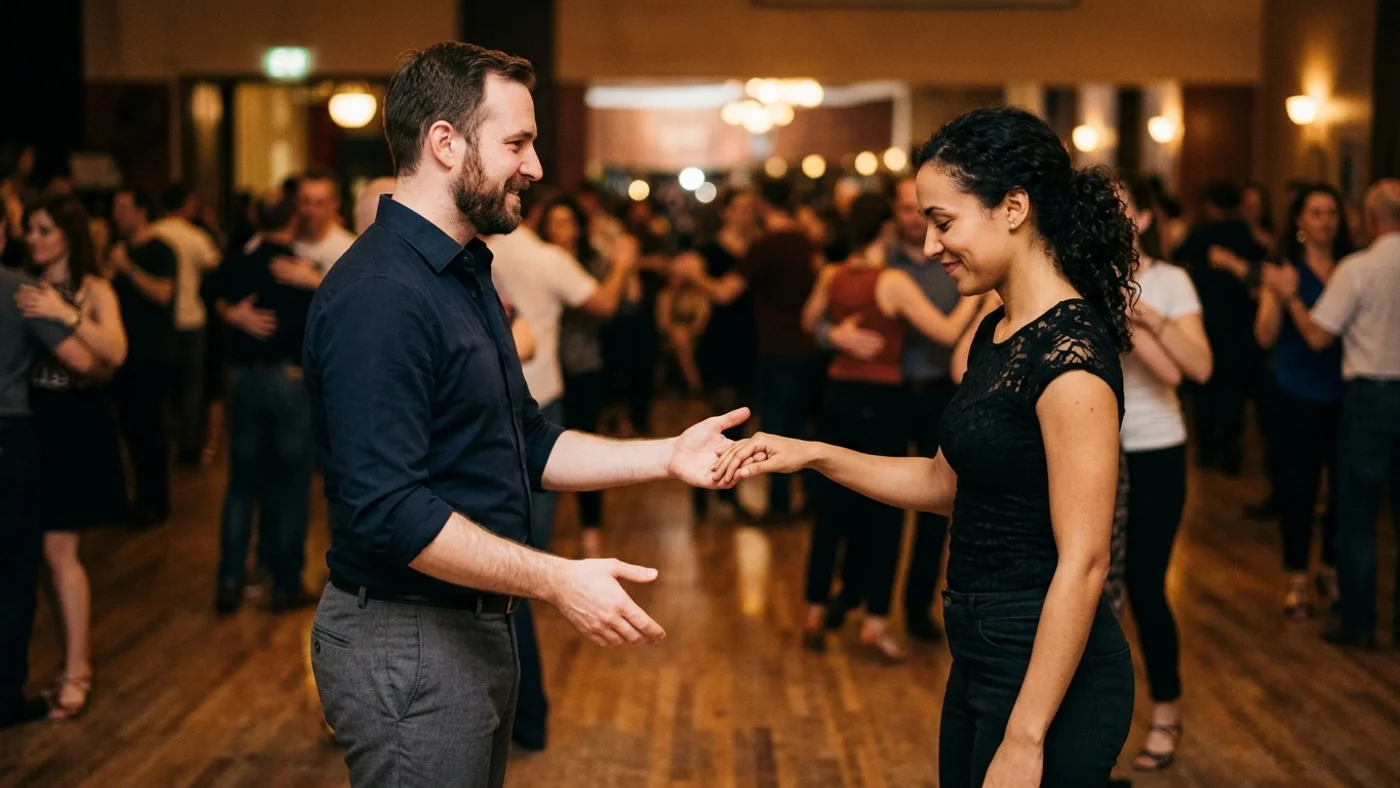
The mechanics are simpler than you think. Walk to within a few feet of the person. Make eye contact. Smile. Extend your hand. Say “would you like to dance?” — or just raise your hand as an invitation, which is equally clear. If they say yes, walk them to an open spot on the floor. That is the entire script.
A few notes. Anyone can ask anyone. Gender does not dictate who leads or who asks. Women lead, men follow, everyone asks everyone. Most scenes are explicit about this, and the ones that are not are usually a little behind the times. If you are a woman and you want to dance with someone, walk up and ask. Nobody will find this strange. Experience level does not matter either. Beginners can and should ask experienced dancers. Experienced dancers often ask beginners — it is a way to welcome new people into the scene and is widely considered a generous thing to do.
Do not stand in a corner waiting to be asked. This is the single biggest mistake new dancers make. The people most likely to ask you to dance are the people who see you engaged with the room — smiling, watching, moving around the edges of the floor. The people who are hardest to ask are the ones staring at their phone in a dark corner. If you want dances, make yourself visible.
The follow-up approach: if someone says no, move on immediately and ask someone else. Do not stand near them looking wounded. Do not circle back three minutes later with a face. Acknowledge the decline with a smile, say “no worries” or “another time,” and go. The worst thing you can do after a decline is make the other person feel like they have to justify themselves.
Saying No
Let me state this as clearly as possible: you can say no at any social, to any person, at any time, for any reason or no reason at all. This is not rude. It is normal, expected, and built into the structure of social dancing.
The language is simple. “Not this one, thanks” is universal and complete. “I’m sitting this one out” works. “Maybe later” is a soft variant, though it does create a mild expectation that you will dance later — if you say it, try to honour it when the chance comes. You do not owe anyone an explanation for declining. You do not need to justify the reason. You do not need to apologise.
There is exactly one etiquette rule about declining: do not decline one person and then immediately accept a dance from someone else to the same song. This is the one scenario where a decline does become a slight. If you have turned someone down “for this song,” you are implicitly telling them you need a break — so take the break. If you realise mid-song that you actually want to dance, wait for the next track and then accept.
How to handle being declined: accept it gracefully. Everyone gets declined. Everyone. I have been declined by friends, by beginners, by people who asked me to dance ten minutes later. Declines have nothing to do with you. The person might be tired, injured, saving their energy for a specific song, waiting for a specific partner, or simply not in the mood. A smile, a nod, and moving on is the entire correct response. Making a decline awkward — asking why, looking offended, telling other people — is the actual etiquette violation.
During the Dance
Leading and Following
Leads: your job is to guide, not to force. If a move does not work — the follow misses the cue, the timing breaks, there is not enough space — let it go. Do not repeat the same move harder, faster, or three more times hoping they will get it. Move to something that works. A social dance is not a class. Your partner is not there to receive corrections.
Follows: your job is to follow what is led, not what you think should happen. Backleading — executing moves your partner did not initiate — is exhausting for them and prevents the dance from feeling like a real conversation. If your lead is genuinely lost, be patient. Let them find the music. Do not take over.
Everyone: match your energy to your partner. If you are dancing with a beginner, simplify your vocabulary. Do not throw advanced patterns or unfamiliar moves at someone who is clearly still finding their footing. If you are dancing with an experienced partner, you can push your vocabulary a bit, but do not treat it as a performance. The dance is a shared experience, not a display of skill.
Connection and Space
Frame matters. Keep your arms relaxed but engaged — not limp, not stiff. The connection is how you communicate. Squeezing your partner’s hand, clamping down on their shoulder, or gripping their waist is both uncomfortable and counterproductive. Good connection is firm enough to transmit movement, soft enough to adjust.
Your personal space is yours. You are allowed to dance at whatever distance feels right to you. If your partner pulls you in closer than you want to dance, gently maintain your frame at the distance you prefer. Most leads will adjust. If they do not, you can end the dance early — see below.
The Golden Rule: No Teaching on the Social Floor
This is the single biggest faux pas in social dancing. Do not correct, teach, or coach your partner during a social dance. Even if they make mistakes. Even if they ask for a tip. Even if you genuinely know something that would help them. The social floor is not a classroom.
The reason: nobody came to the social to be corrected. They came to dance, to enjoy the music, to meet people, to have a nice night. When you stop mid-song to explain “no, the footwork actually goes like this,” you are killing the mood of the dance, embarrassing your partner, and — most insultingly — implying that you know better than their teachers.
If you really, really need to share technical advice, wait. After the dance, with a smile, you can say “have you taken a class with [teacher]? They have a great way of breaking down that move.” Or nothing. Usually nothing is better. A good social dance is not a teaching opportunity. It is an evening out.
The only exception: if your partner is doing something genuinely unsafe — leading a dip on a floor that is too crowded, or executing a move that could hurt either of you — you can calmly say “let’s skip that one tonight, the floor is packed.” Safety notes are always acceptable. Technique notes are not.
Floor Navigation
The Fundamental Rule
Leaders are responsible for steering. Follows should not have to navigate around other couples — their attention is on the connection and the music, not on spatial awareness. As a lead, you are constantly scanning the floor with your peripheral vision and adjusting your footwork to avoid collisions.
Do Not Stop in the Middle of the Floor
If you need to talk to your partner, fix your shoe, grab water, or do anything that is not dancing — move to the edges. Stopping in the middle of a crowded floor creates a traffic obstacle and often causes collisions. This is the floor equivalent of stopping at the top of an escalator.
Contain Your Dance
In crowded rooms, keep your movements small. This is the mark of an experienced social dancer — they can dance beautifully in a four-foot square because they have the technique to compress their vocabulary. Beginners often sprawl across the floor with wide steps, long cross-body leads, and big traveling patterns. This is not inherently wrong, but in a crowded social it causes collisions and stress.
The rule of thumb: if your lead is taking steps bigger than their normal walking stride, the floor is probably too small for that. Use smaller steps. Rotate more. Use in-place moves. Save the big traveling patterns for spacious venues.
Collisions Happen
When you bump someone — and you will, everyone does — apologise briefly, make eye contact, nod, and keep dancing. “Sorry!” is enough. Do not stop the dance to have a full conversation. Do not glare or blame. Do not loudly insist it was the other couple’s fault. Just acknowledge and move on.
If you collide with someone repeatedly, you have either a floor problem (too crowded) or a navigation problem (someone not steering). In either case, the solution is to adjust your path or wait for the crowd to shift. Public floor disputes are the mark of an amateur.
The Line of Dance
In some dances — ballroom styles like waltz, tango, and foxtrot — there is a formal “line of dance” where everyone moves counterclockwise around the floor. Salsa, bachata, kizomba, and zouk do not have a formal line of dance, but in crowded rooms you will see an informal one develop. Move with the flow, not against it. If couples are traveling counterclockwise around the edges, do the same. Cutting across the flow creates collisions.
Consent and Boundaries
Partner dancing is, by definition, close-contact. That makes consent and boundaries particularly important. Here is what a healthy social dance community expects.
Asking is consent. When you ask someone to dance and they accept, they have consented to a dance — not to any specific movement or level of closeness. A yes to “would you like to dance?” is not a yes to body waves, dips, close embrace, or any specific move. Those are negotiated inside the dance through physical cues.
Reading cues matters. If your partner resists a close embrace, let them maintain their distance. If they pull back when you attempt a dip, do not force it. If they seem uncomfortable, simplify. Dance is a physical conversation. If one person is not saying yes with their body, the other person needs to listen.
You can stop a dance at any time. If at any point during a song the dance feels uncomfortable — too close, inappropriate comments, a partner who will not adjust to your cues, or just a bad vibe — you can end it. Say “thank you” with a smile and walk off the floor. You do not need to explain. You do not need to finish the song. The norm in healthy communities is that ending a dance early is rare but entirely acceptable. Experienced dancers will not take offence.
If something goes seriously wrong, tell the organiser, a DJ, or a trusted regular. Inappropriate touching, persistent disregard for stated boundaries, aggressive behaviour, or comments that cross the line are not things you should have to handle alone. Most scenes have informal networks that take reports seriously and can manage the situation. Do not stay silent out of fear of being dramatic. You are not being dramatic.
Hygiene
This section matters more than beginners expect. Social dancing involves close physical contact with many partners over the course of a night. Your hygiene directly affects everyone you dance with.
Deodorant is mandatory, not optional. Apply before you arrive. Reapply during the night if you are a heavy sweater. The venue will get warm, you will sweat, and your partners will notice.
Fresh breath. Brush before you leave home. Carry breath mints or gum — not for during the dance, but for between dances. Coffee, garlic, and alcohol breath travel further than you realise at close distance.
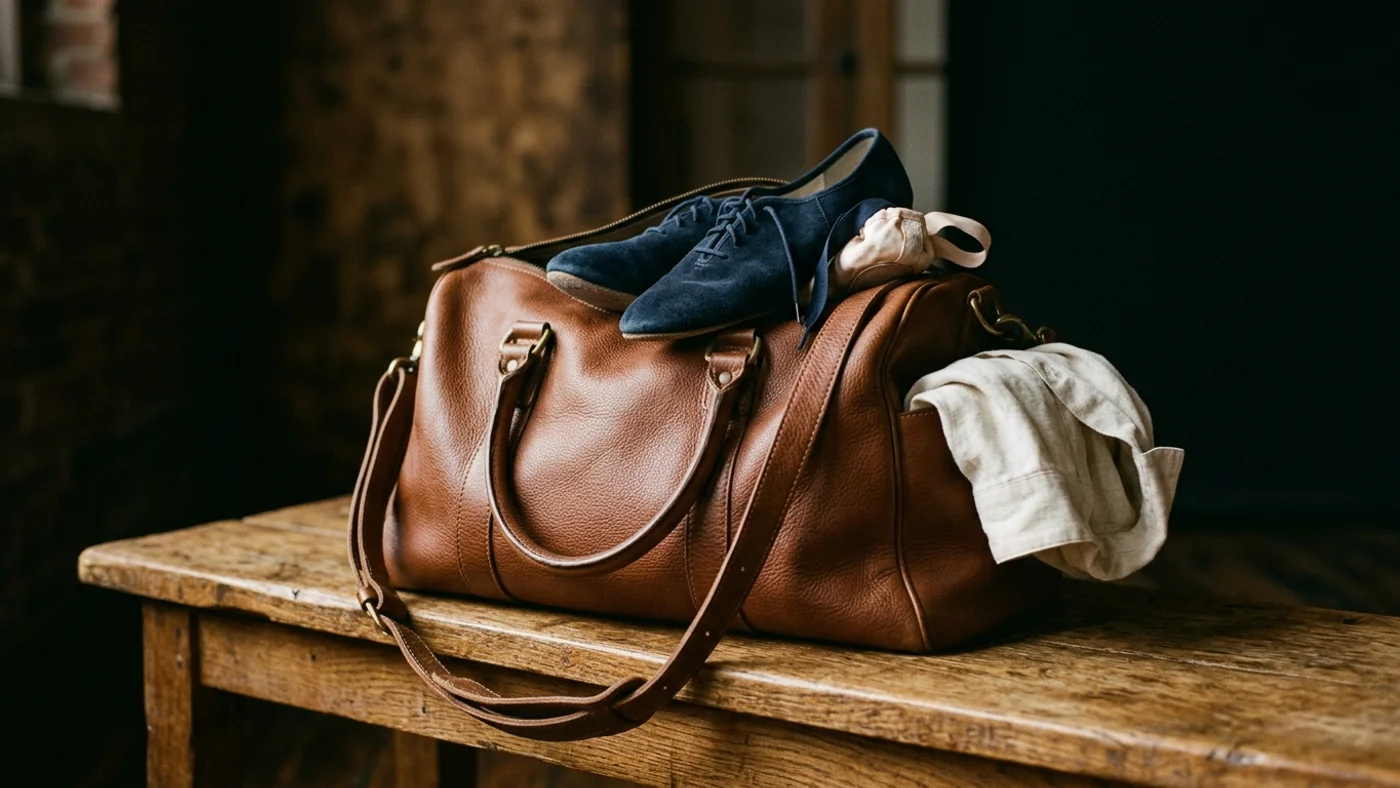
Bring a spare shirt. If you are dancing for three or four hours, your first shirt will be soaked by hour two. Change it discreetly — most venues have a bathroom or changing area. A dry shirt is one of the most considerate things you can offer your partners.
Wash your hands during the night, especially after eating or drinking. You will be holding your partner’s hands constantly.
If you are sick, stay home. A fever, a cold, or even a persistent cough is a reason to skip the social. Social dance floors are closed ecosystems where one sick person can spread an illness to thirty people in a single evening. I have seen scenes temporarily decimated by flu outbreaks traced to one dancer who pushed through. Do not be that dancer.
The Thank-You Rule
At the end of a song — or at the end of a set of songs if you stayed for more than one — both partners say thank you. With eye contact. With a smile. Not mumbled into the floor, not said while already walking away.
This is not just politeness. It is a structural part of social dancing. The thank-you closes the dance and frees both partners to move on to the next person. Without it, there is ambiguity — does the dance continue? Are we leaving together? The thank-you is the clear, mutual signal that this dance is complete.
Multiple dances with one partner: typically, you dance one song with a partner and then move on. You can absolutely dance two, three, or more songs in a row with the same person if you are both enjoying it — but check in between songs. The exchange goes: song ends, thank you, smile. If one of you is ready to dance the next song together, you signal it (holding the connection, starting to move as the next song begins). If either person has stepped back or dropped the hold, you have indicated you are done.
More than two or three in a row starts to look like you have paired up for the night, which is fine between established partners but unusual between strangers. In most scenes, the norm is rotating. Dance with lots of different people. That is the whole point.
Phones and Distractions
Put your phone away. Not just on silent — actually in your pocket or bag. Checking your phone mid-conversation with a potential dance partner is a fast way to end the interaction. Filming yourself dancing without asking your partner is a real faux pas — always ask before recording, and share the video with them if they agree.
Taking photos of other people on the floor without consent is also off. People come to social dances to dance, not to be content. Most scenes have an unspoken “what happens at the social stays at the social” ethic, particularly for close-embrace dances.
Special Notes by Style
The core etiquette is universal, but each dance has small cultural variations worth knowing.
Salsa: the asking-and-declining culture is strongest in salsa. Salsa socials are built around rapid partner rotation — one song, thank you, next partner. Multi-song dances are less common than in other styles.
Bachata: the close embrace in Sensual Bachata means consent cues matter more than in salsa. Pay attention to how your partner adjusts the hold — some dancers prefer close, others prefer more space. Never force the close embrace. See our Bachata styles guide for more on the close-hold etiquette.
Kizomba: the chest-to-chest connection in kizomba is fundamental to the dance, but it is also the most intimate hold in partner dancing. Kizomba communities generally take consent and boundaries seriously, and the dance is expected to be danced with respect. If you are new to kizomba and uncomfortable with the close hold, many teachers and communities will help you adjust.
Zouk: Brazilian zouk involves head movements and body movements that can feel unfamiliar to salsa dancers. Lead them gently, and follow with patience. Zouk communities are tight-knit and tend to be very welcoming to beginners.
What to Do if You Are New
All of this can feel like a lot. Here is the short version, useful for your first few socials.
- Take the beginner class before the social.
- Smile and make eye contact with other dancers around the edges of the floor.
- Ask at least three people to dance, even if you are nervous.
- Accept invitations. Say yes to dances with beginners and with advanced dancers.
- Apologise briefly if you mess up, then keep dancing. Do not over-apologise.
- Say thank you at the end of each dance, with eye contact.
- Sit out when you need to. Watch. Hydrate. Come back.
You will make mistakes. You will step on feet. You will miss leads. You will say the wrong thing. Nobody is keeping a list. The people who have been dancing longer than you remember what it was like to be new, and they are mostly rooting for you. Experienced dancers love welcoming newcomers into the scene. The more you show up, the more you will feel at home.
For a broader introduction to the beginner experience across styles, see our guides on salsa for beginners, what is Bachata, and Kizomba for beginners.
A Final Note
Social dance etiquette is not about following rules to avoid punishment. It is about making a room full of strangers dance well together. The thank-you, the decline-gracefully, the no-teaching-on-the-floor — these exist because they work. They create an atmosphere where people feel safe to show up alone, to be beginners, to make mistakes, to keep coming back.
The best thing you can do as a member of a social dance community is practice these small kindnesses consistently. Smile at newcomers. Ask beginners to dance. Apologise when you mess up. Thank your partners. Respect boundaries. Do not teach on the floor. Sit out when you need to.
Do those things, and you will be welcomed anywhere you go. I have danced in Madrid socials where I spoke five words of Spanish. I have walked into Tokyo bachata nights not knowing a single person. I have gone to London kizomba socials still learning the basic step. In every case, the etiquette travelled with me and opened doors.
Browse salsa, bachata, kizomba, and zouk events worldwide to find your next social. Or explore the full global dance map to see what is happening near you.