I remember the exact class when my teacher watched me dance and said, “You are doing the steps perfectly. Now you need to start dancing them.” I had no idea what he meant. I had the basic step down. I could execute cross-body leads. My footwork was clean. What was he talking about?
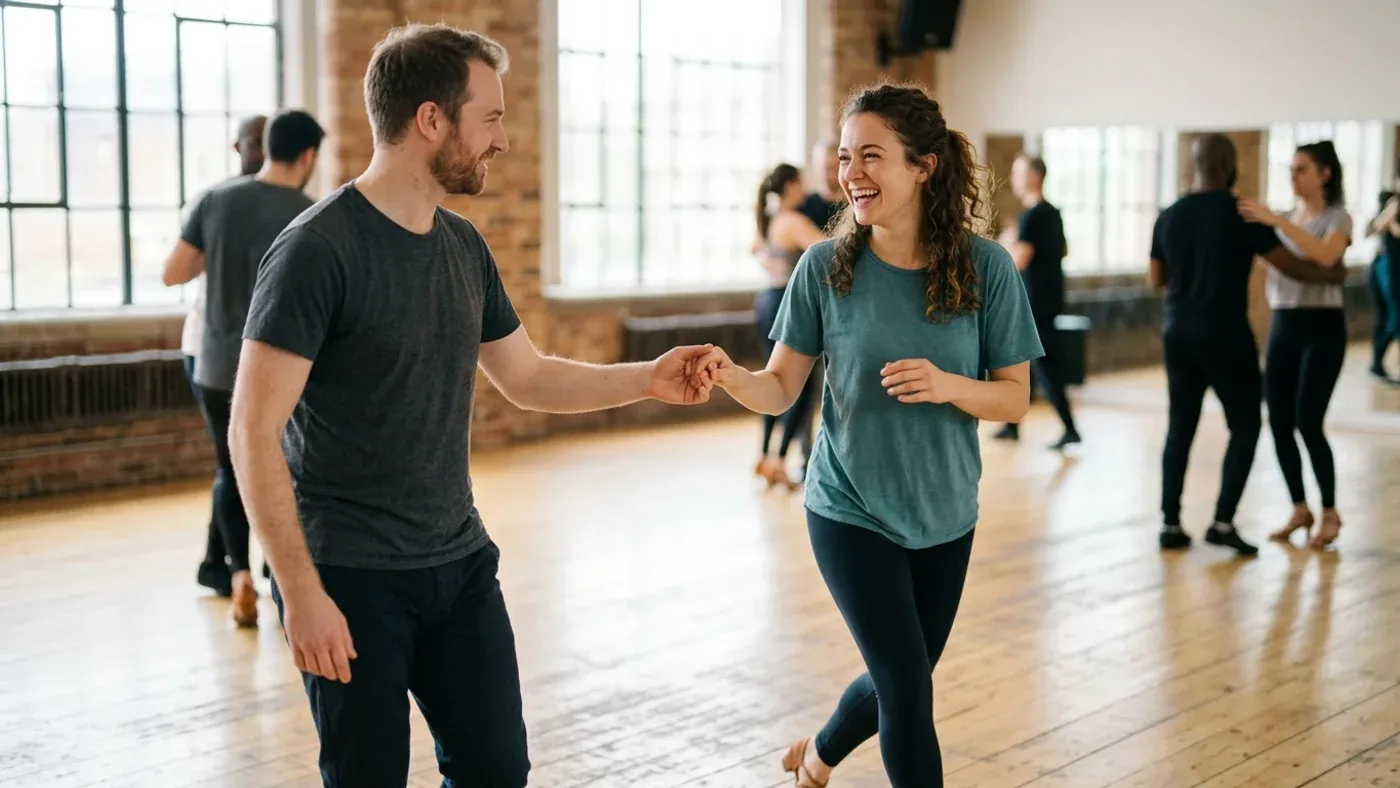
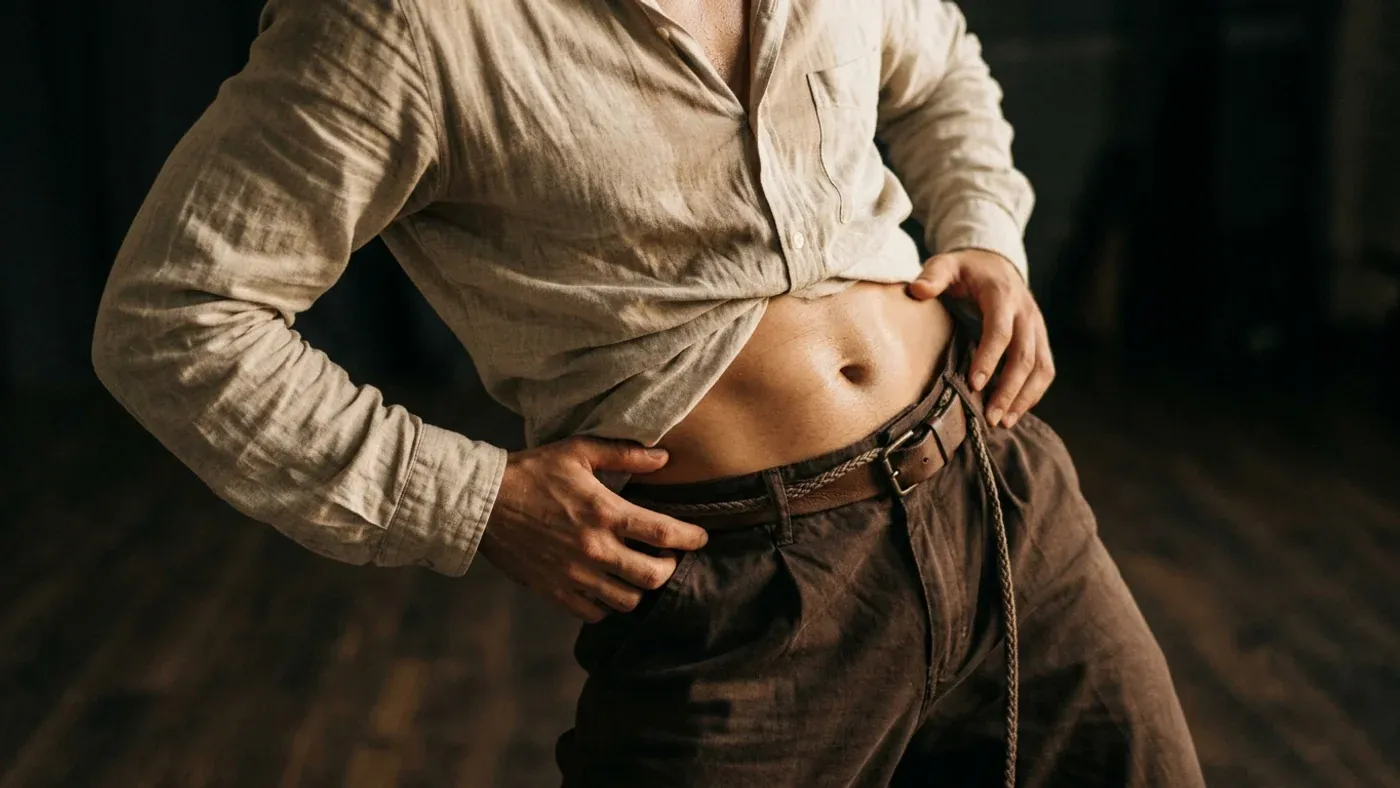
He pulled me aside after class and gave me a demonstration. He did the same basic step I had been doing — exactly the same foot placements, exactly the same timing. But his body looked completely different. His hips moved. His shoulders stayed relaxed. His head sat peacefully on his spine. His arms breathed with the music. The footwork I had was sitting on top of nothing. His was sitting on top of a body that knew how to move.
That class was my introduction to body movement — the thing that takes a dancer from “technically correct” to “alive on the floor.” It is the most under-taught subject in beginner salsa classes. Most teachers focus on patterns because patterns are easy to teach. Body movement is harder, takes longer, and is where the real dance lives.
This guide is the one I wish I had been handed in my first three months. It covers the physical fundamentals that make salsa look and feel like salsa, regardless of style. Nothing here is beyond a beginner. All of it rewards years of refinement.
Start With the Body, Not the Feet
Here is the fundamental reframe. Most beginners think of salsa as a series of foot placements with a body attached. Flip that. Salsa is a body moving to music, with feet landing where the movement sends them.
The difference is not just semantic. When you lead with the body, your feet go where they naturally should. When you lead with the feet, the body lags behind, and the whole dance looks disconnected.
This is why the drills in this guide are not “how to step on 1.” They are about posture, weight transfer, hip action, and frame — things that then let your footwork come alive. For structured solo practice using these fundamentals, pair this with our how to practice salsa at home guide.
Posture: The Foundation of Everything
If your posture is wrong, nothing else will work. Period. Hip motion collapses. Spinning wobbles. Frame sags. Fix posture first.
What Good Salsa Posture Looks Like
Stand with your feet hip-width apart. Imagine a string attached to the crown of your head, gently lifting you toward the ceiling. Let your ribcage lift slightly. Your shoulders drop down and back, not hunched forward. Your core is engaged — not clenched, but active, like you are about to sneeze. Your tailbone neither tucks nor juts. Your knees are slightly soft, not locked.
Check:
- Head: directly above hips, not jutting forward
- Shoulders: relaxed, pulled slightly back, not up around your ears
- Ribcage: lifted but not flared
- Spine: long, not compressed
- Hips: level, not tilted
- Knees: slightly bent, ready to absorb weight
- Feet: planted through the ball and heel
This is the “home” position you return to throughout the dance. Every time you lose posture — and you will, many times a night — find your way back to it.
Why Posture Matters So Much
Salsa is a vertical dance. The energy moves up and down through your spine with every step. If your spine is compressed, collapsed, or leaning, the energy has nowhere to go, and your hip motion fights gravity instead of flowing with it. With good posture, weight transfers through a clean vertical axis and the rest of the body can respond.
Posture is also what makes you spinnable. Follows who wobble on spins almost always have a posture issue — leaning forward, chin jutting, or shoulders pulled up. A spin on a vertical axis with a relaxed upper body lands cleanly. A spin on any other axis wobbles.
Drill: Posture Check Against a Wall
Stand with your back against a wall. Heels about an inch from the wall, butt against it, shoulders against it, head against it. Your lower back will have a small space — that is normal. Notice how your body feels in this alignment. Step away from the wall without losing the alignment. This is your starting posture.
Do this at the beginning of every practice session. Over time, the aligned posture starts to feel natural rather than effortful.
Weight Transfer: The Engine of the Dance
Salsa is a series of weight transfers from one foot to the other. That is the mechanical reality of the dance. Every other element — hip motion, frame, styling — is built on top of weight transfer.
What “Full Weight Transfer” Means
When you step onto your right foot on count 1, your entire body should commit to that foot. The left foot should be free — if I nudged it, you could pick it up without shifting your weight again. This is what “full weight transfer” means.
Beginners often take partial steps, where the weight is split across both feet. The dance then looks scuffly and small, because your body never fully arrives on each step. The fix is to exaggerate the commitment in practice. Step like you mean it. Let your body arrive fully on each foot before it leaves for the next one.
The Basic Step as Pure Weight Transfer
Put your feet together. Step forward with your left foot on count 1 — full weight transfer, the right foot is now empty. Step in place with your right foot on count 2 — weight back to the right, left foot empty. Step back with your left foot on count 3 — weight on the left, right foot empty. Pause on 4, where your weight just lives on the left foot for a beat.
Count 5-6-7: same mechanism, reversed. Step back with your right foot on 5, in place with your left on 6, forward with your right on 7, pause on 8.
Do this slowly, without music, for a minute. Feel the full commitment of each weight transfer. Notice which steps feel incomplete. Then do it again. The basic step can be danced for the rest of your life without being boring if you attend to the quality of each weight transfer.
Why This Matters
Every pattern in salsa is a chain of weight transfers with added arm positions and directional changes. Cross-body leads are weight transfers. Turns are weight transfers. Shines are weight transfers. If the basic mechanism is solid, patterns come easier. If it is sloppy, patterns look sloppy no matter how complex they get.
Cuban Motion: Where the Hips Come Alive
Cuban motion is the hip action that makes salsa look Cuban, which is to say, makes it look like salsa. Beginners often try to “add” hips on top of footwork, producing the awkward shake-your-hips-consciously look. That is not how it works.
How Cuban Motion Actually Happens
Cuban motion is a consequence of knee action during weight transfer, not a separate hip movement.
Here is the mechanism. When you step onto a slightly bent knee and then let the leg straighten, the hip on that side drops (because the hip has to move down as the leg extends) and the other hip rises. Reverse: step onto the other leg with a bent knee, straighten, hip drops on that side, the other rises. Done smoothly across every step, this produces the rolling, continuous hip action of Cuban motion.
You are not “shaking” anything. You are letting your hips do what they do naturally when your knees bend and straighten through weight transfer.
Drill: Hip Action Without Steps
Stand with feet hip-width apart. Bend both knees slightly. Now shift your weight entirely to your right leg while straightening the right knee. Notice: the right hip drops, the left hip rises. Hold. Now shift weight to the left while straightening the left knee. Left hip drops, right hip rises.
Do this side to side for a minute, no steps. Just weight transfer and knee action producing hip movement. Feel how natural it is when your brain stops trying to “move the hips” and just lets the mechanics do their work.
Drill: Hip Action With the Basic Step
Now add the basic. Step forward on 1 with a slightly bent knee, then straighten on 2 as your weight comes back. The hips respond. Step back on 3 with a slightly bent knee, straighten on 4. Hips respond again.
It is important to stay soft in the knees. Many beginners lock the knee straight on each step, which freezes the hip motion. Keep the knee springy — bend on the landing, straighten as the weight settles, bend again on the next step.
Why It Is Called “Cuban”
The hip action in salsa descends from Cuban dance traditions — son, rumba, and cha-cha-cha — where this rolling hip quality is central. Even LA and NY style salsa inherit it, though expressed slightly differently. Cuban Casino dancers have the most relaxed, continuous Cuban motion; LA style dancers tend to accent it more sharply. Our Cuban salsa vs LA style vs NY style guide unpacks these stylistic differences.
Frame: The Architecture of Connection
Frame is the third fundamental — the muscular engagement in your arms, shoulders, and torso that lets you communicate with a partner.
What Good Frame Feels Like
Stand and hold your arms in front of you as if holding a medium-sized ball — elbows slightly in front of your body, palms facing each other. Your shoulders are down. Your shoulder blades are engaged. Your wrists are neither floppy nor bent.
If I pressed gently into your hands, you should feel firm. Not stiff — I should be able to move your hands by pushing harder, but there is a clear tone I feel on first touch. Your elbows stay in place. Your shoulders do not lift.
That is frame. It is the skeleton your arms provide through which your body can communicate with a partner.
Common Frame Problems
Limp frame: your arms have no tone. Your partner cannot feel your lead or your response, because everything they transmit gets absorbed by dead weight. Fix: engage the shoulder blades, lift the ribcage, lightly activate the triceps.
Stiff frame: your arms are rigid and immovable. Your partner cannot adapt to you, and you cannot adapt to them. Fix: lower your shoulders, soften the elbows, breathe.
Broken frame: elbows collapse behind the line of your body, or shoulders hunch forward, or wrists bend out of line. Fix: elbows stay slightly forward of your torso, shoulders roll back and down, wrists stay straight.
High shoulders: shoulders creep up toward your ears, especially during turns or quick patterns. Fix: actively drop your shoulders away from your ears every few beats. This takes conscious effort until it becomes habit.
Drill: Frame Against a Wall
Stand facing a wall, about arm’s length away. Place both palms flat on the wall at shoulder height. Push gently into the wall. Feel the engagement through your shoulder blades and triceps. Hold for thirty seconds.
Now do the basic step in place while maintaining that wall-push engagement. Arms stay up. Frame stays engaged. Hips still move. Feet still step.
This drill is harder than it sounds because your brain wants to drop the arms when you start moving the feet. Practicing both at once teaches your body that frame is always on, even when other things are happening.
Frame in the Open Position
The classic salsa open position: leads hold the follow’s right hand in their left hand, at about chest height, with their right hand on the follow’s left shoulder blade (or upper back). Follows rest their left hand on the lead’s right shoulder or upper arm.
The frame in this hold is shared architecture. Both partners contribute. Leads set the structure. Follows meet it. Neither collapses into the other.
Connection: The Conversation Through Frame
Frame is the vehicle. Connection is what travels through it.
What Connection Actually Is
Connection is the information transfer between two dancing bodies. When a lead shifts their weight, the follow feels it through their hands, through their back, through the air between their bodies. When a follow responds, the lead feels the response. The dance is a continuous two-way transmission.
Good connection lets a lead signal a turn with a small redirect, and the follow initiates the turn smoothly without verbal cues. It lets a follow pause, and the lead feel the pause and shape the next move around it. It is how the dance stays musical — both partners are adjusting to the music and to each other in real time.
Connection Is Not One Direction
A common misconception is that connection runs only from lead to follow. Wrong. Connection is always bidirectional. The follow transmits information constantly — balance, readiness, tension, resistance, invitation. A good lead reads the follow’s body and adapts.
Building Connection Sensitivity
You cannot practice connection alone, exactly. But you can practice the qualities that make connection possible — frame, full weight transfer, responsiveness.
The best exercise: dance with as many partners as possible. Not just skilled ones. Everyone. Every partner teaches your body something about how connection varies — light vs firm, fast vs slow, precise vs vague. Over hundreds of dances, your sensitivity deepens.
Our dance floor etiquette guide covers the social side of this — how to ask, follow, and thank across all kinds of partners.
Balance: The Quiet Fundamental
Balance is rarely taught explicitly and often is the hidden weakness behind wobbles, missed turns, and shaky spins.
What Balance Looks Like in Salsa
You can stand on one foot for at least 10 seconds without reaching for anything. You can lift one foot to knee height and hold it there for several seconds. You can shift weight between feet without your torso swaying to compensate. You can rise onto the balls of your feet and stay there without falling forward.
Drill: Single-Leg Balance
Stand on one foot. Set a timer for 30 seconds. Stay upright. Breathe. Do not wobble. Do this both sides, every practice session. Progression: 45 seconds, 60 seconds, eyes closed.
This sounds basic. It is. And it is the single most overlooked fundamental for spinning and quick direction changes. Follows who cannot balance cannot spin cleanly. Leads who cannot balance cannot stop on a dime or redirect mid-pattern.
Drill: The Prep Position
Many salsa moves begin from a “prep” — one foot slightly back, weight on the front foot, upper body slightly rotated. The prep is a single-leg balance with additional tasks.
Practice stepping into your prep and holding for three seconds before executing any move. This teaches your body to arrive in the prep cleanly rather than rushing through it. Arriving cleanly means the next movement — the spin, the turn, the direction change — happens from a stable base.
Musicality: How the Body Hears the Music
The final fundamental is musicality — how your body responds to music. Not adding “styling” but being actually in conversation with what is playing.
Musicality Is a Body Skill
People think of musicality as an intellectual skill — counting, knowing the structure, recognising instruments. It is that, but it is also physical. Musicality is how your body moves differently during a soft passage vs a percussion break. How you soften your steps during a piano solo. How you sharpen your hits when the horn section lands.
Drill: One-Song Deep Listen
Pick a salsa track. Dance the basic step to it. But before every pass, listen for one thing — the clave, then the bass, then the horns, then the vocal phrasing. Let your body respond to what you are noticing. Soften during quiet sections. Accent during hits. Let the dance shape itself to the music.
Over time, this practice builds an unconscious musicality. You stop counting. You start hearing and responding. This is the quality that makes experienced dancers look like the music is coming out of their body rather than being followed by their body.
For a fuller treatment of musicality practice, see our how to practice salsa at home guide.
The Integration: Putting It All Together
Now the hard part — integrating everything into a single dance.
When you put posture, weight transfer, Cuban motion, frame, connection, balance, and musicality all together, what emerges is not “technique.” It is presence. A dancer with all the fundamentals looks grounded, alive, and present — regardless of how complex their patterns are.
This is why experienced dancers can look stunning executing the most basic moves. The patterns are not the thing. The body is the thing.
How to Practice the Integration
Pick one element per week. Week 1: posture. Every dance, every practice, every social — check your posture. Week 2: weight transfer. Obsessively attend to fully committing each step. Week 3: Cuban motion. And so on.
Rotating focus keeps you from getting overwhelmed by all seven fundamentals at once. Over time, each becomes automatic and moves into your subconscious, freeing your attention for the next element.
Film Yourself Regularly
The gap between how you feel you are moving and how you actually move is real and humbling. Film yourself once a month, watch it back, and look specifically at one fundamental at a time.
Things you will see on film that you do not see in the moment:
- Your shoulders lifting on turns
- Your head jutting forward during basic
- Your elbows collapsing on cross-body lead
- Your weight incomplete on step 3
- Your arms hanging dead during shines
Every one of these is fixable. Film reveals them faster than any other tool.
The Beginner’s Mistakes That Everyone Makes
I have taught enough beginners to see the patterns. Most of these I made myself.
Mistake 1: focusing on patterns before fundamentals. You will learn cross-body leads, turns, and hundreds of moves in your first year. If your posture is collapsing and your weight is not transferring, those moves will all look bad. Fundamentals first, always.
Mistake 2: trying to dance fast. Beginners often push for faster music thinking it will make them look better. It does the opposite. Your weaknesses are easier to see at faster tempos. Practice slow. Dance slow songs. The speed will come.
Mistake 3: comparing yourself to advanced dancers. You are not supposed to look like someone with ten years of experience after ten months. The comparison is between you now and you three months ago.
Mistake 4: practicing only patterns, never posture and weight transfer. Go back and practice the boring stuff. It is the fastest road to looking better.
Mistake 5: not getting partner time. Solo practice is essential but insufficient. You need regular socials and regular classes. See our salsa for beginners guide for an overview of the first-year path.
A Final Note
Salsa body movement is not a set of tricks you add on top of footwork. It is the footwork. It is how the dance lives.
Once you understand that Cuban motion comes from knees and weight transfer, not from performatively moving your hips — that frame is muscular engagement, not arm placement — that posture is the foundation everything else sits on — that connection is a bidirectional conversation rather than one-sided leading — the whole dance opens up. The moves become the vehicle for the body, not the other way around.
Be patient with it. Six months of fundamentals work will do more for your dancing than two years of pattern accumulation. Your teachers will notice. Your partners will notice. You will notice, every time a song starts and your body simply knows what to do.
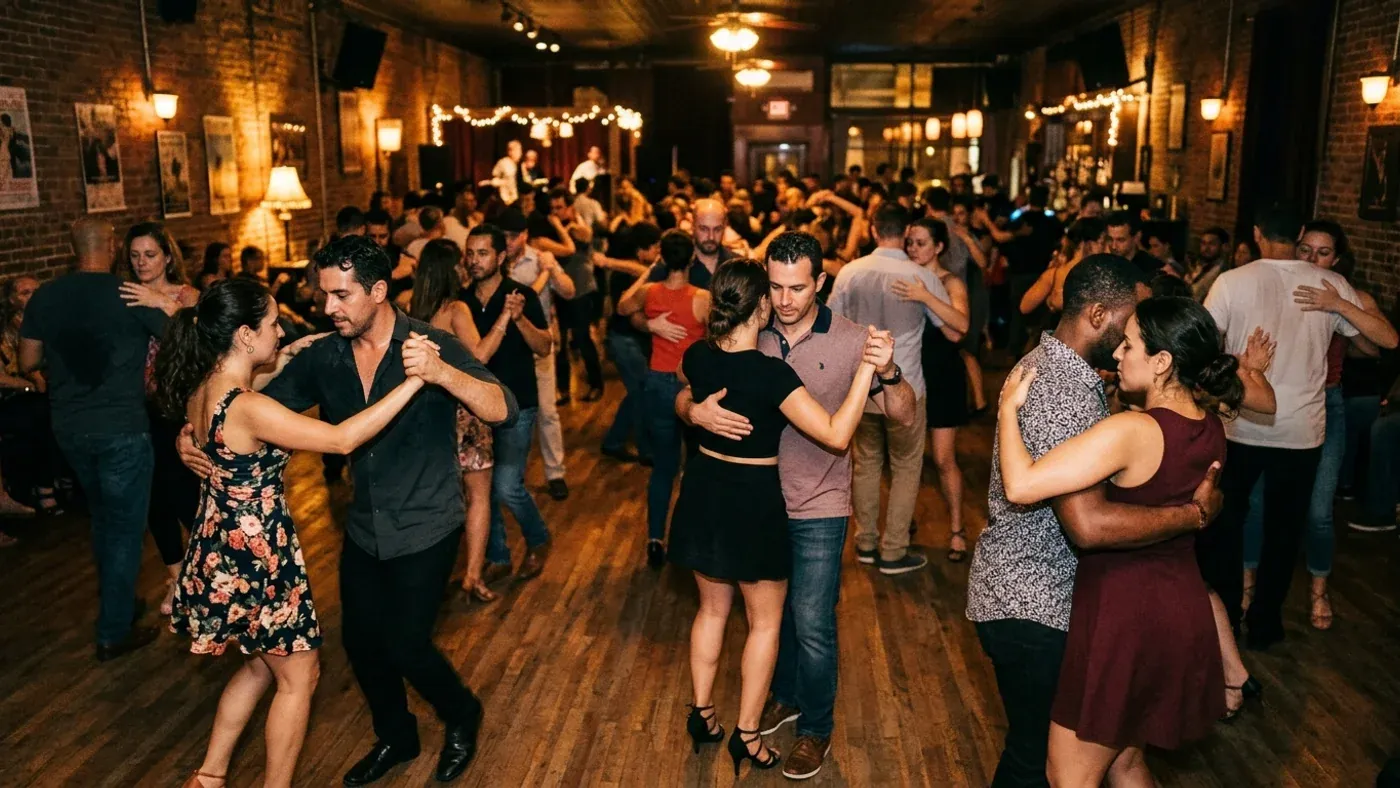
Browse salsa events worldwide to find socials to apply this. For deeper solo work on the fundamentals, see our how to practice salsa at home guide. And for stylistic context, our Cuban salsa vs LA style vs NY style guide explains how each salsa style expresses these fundamentals differently.