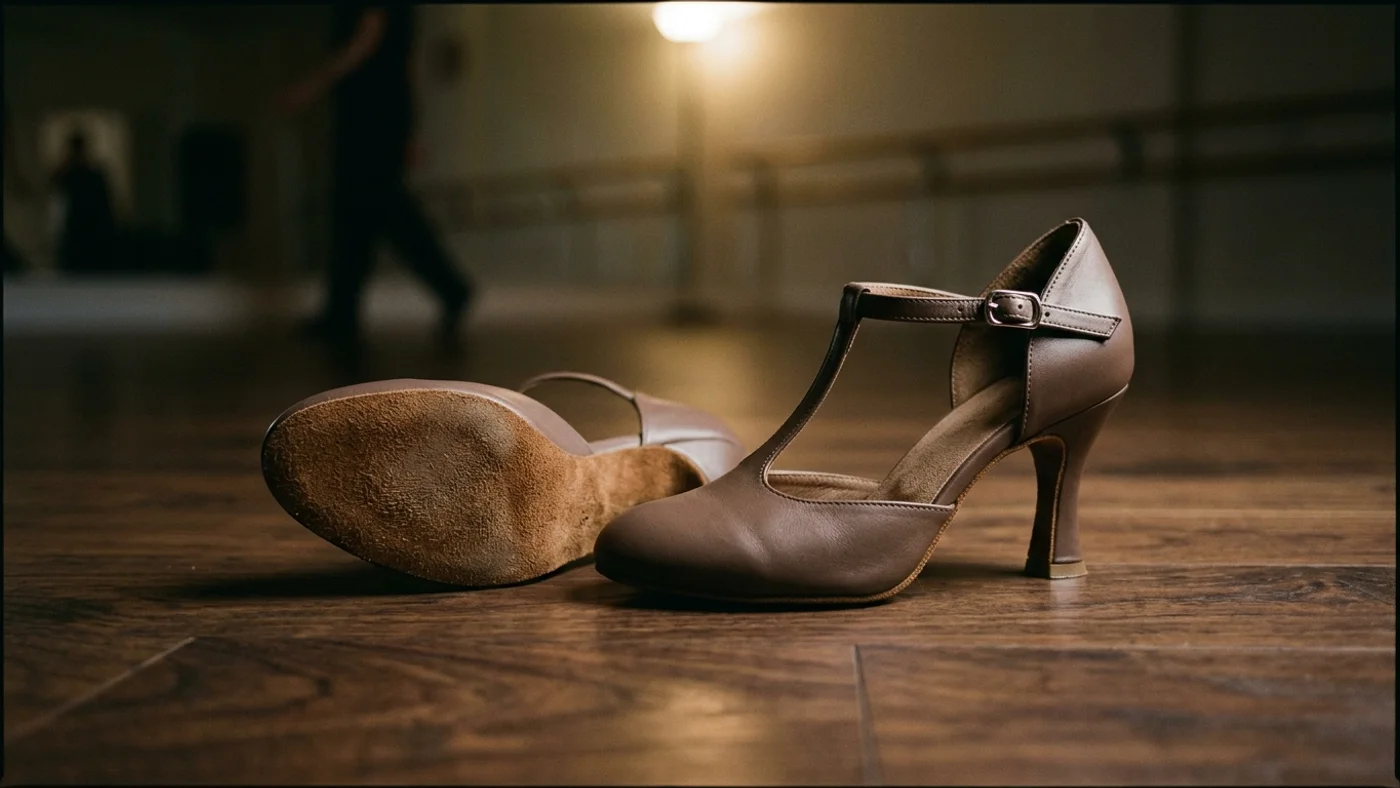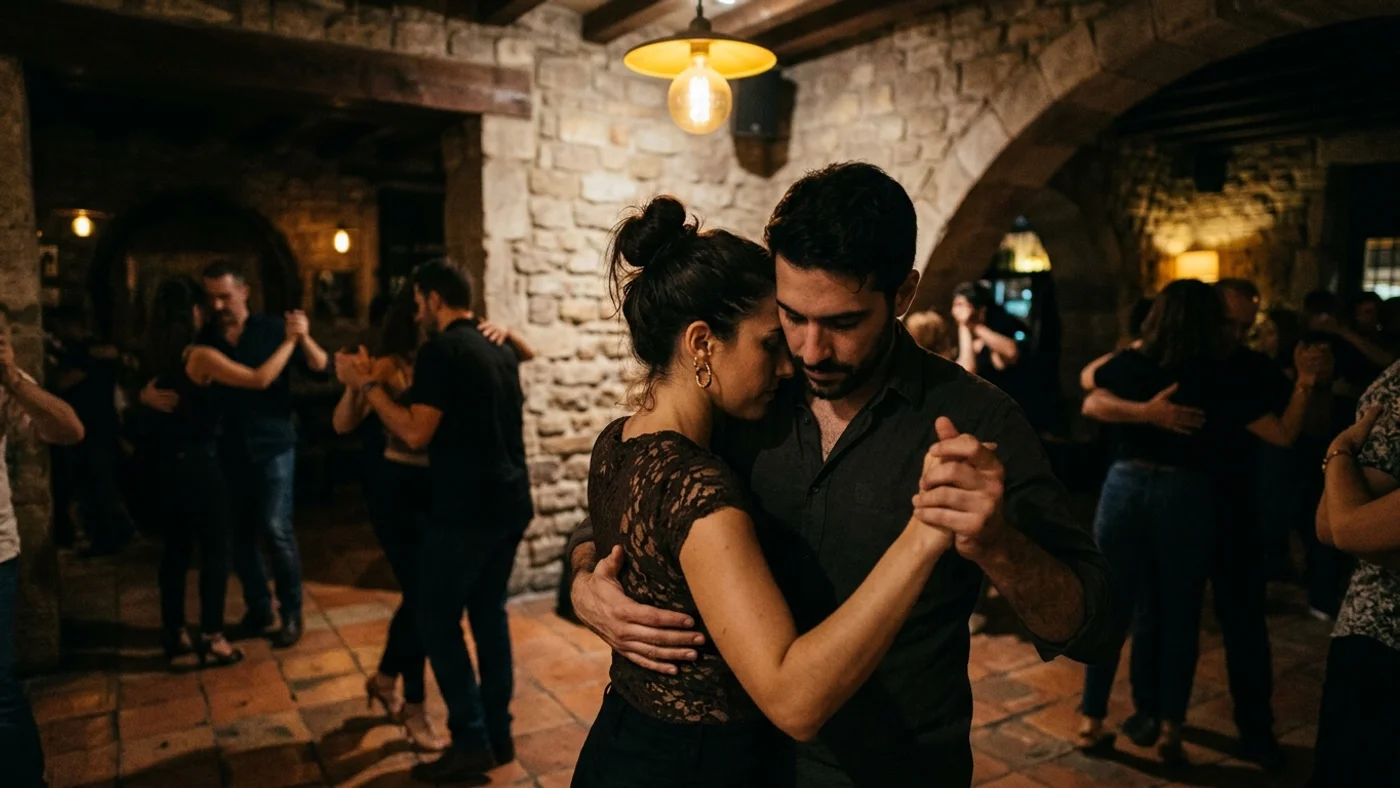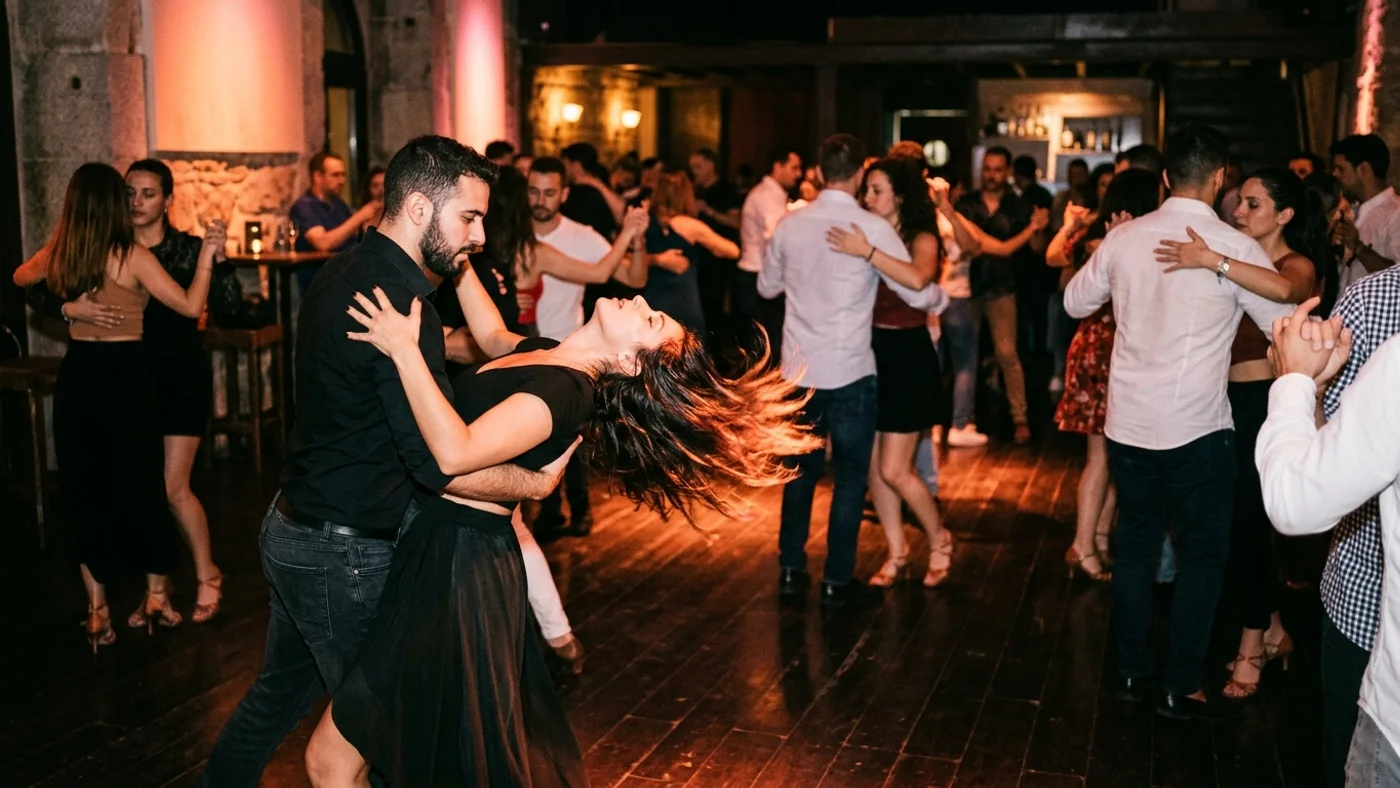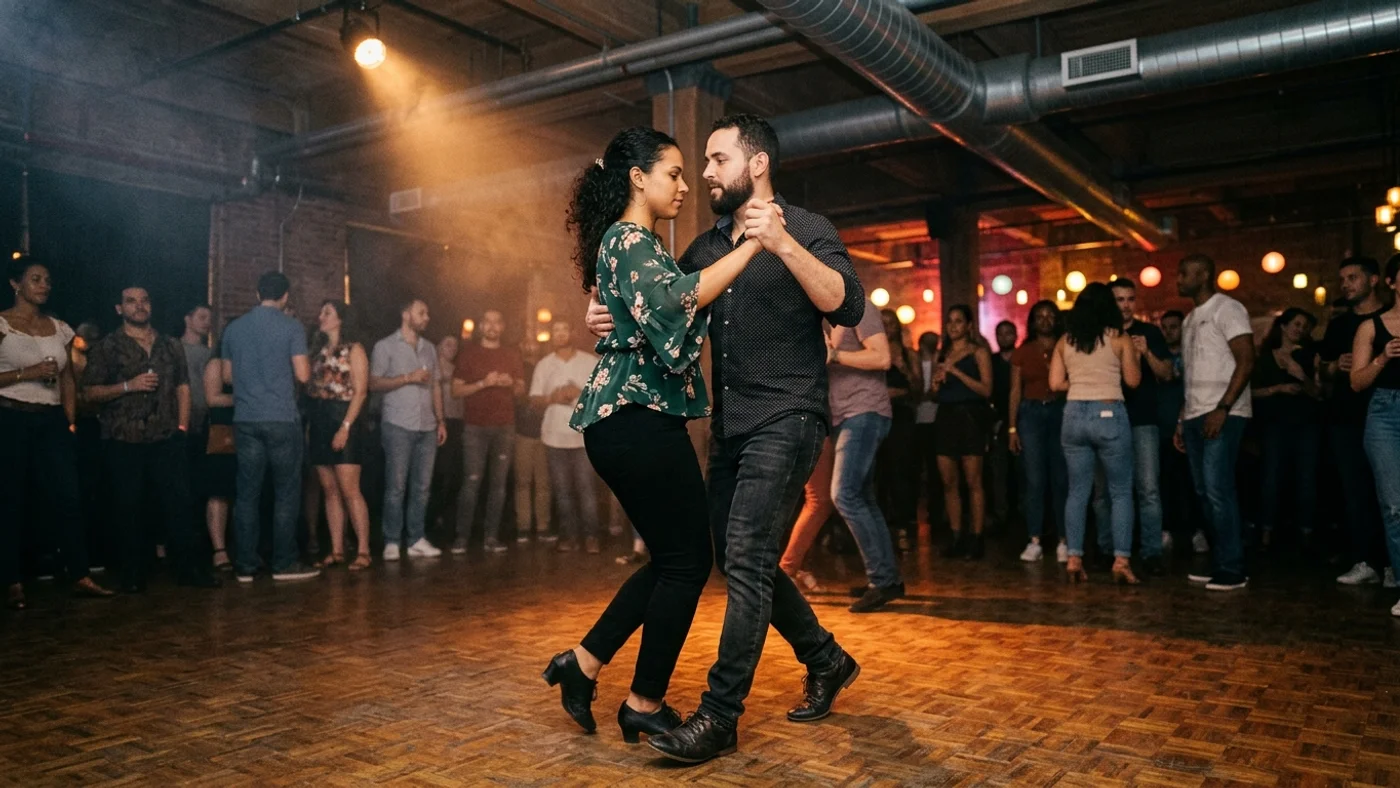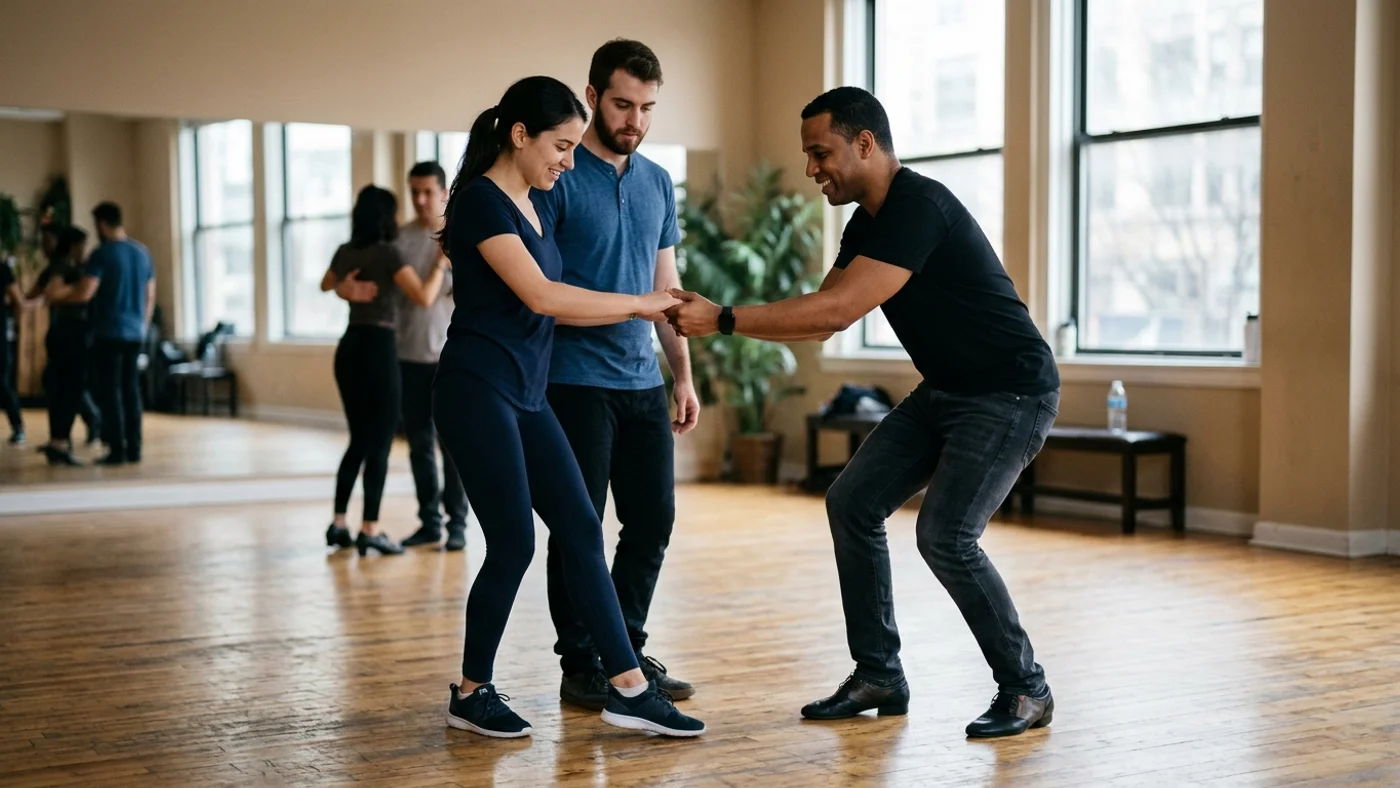
I remember my first bachata teacher vividly. Her name was Marisol. She was from the Dominican Republic, had been dancing since she could walk, and had a voice that could cut through any room. The first thing she taught us was not a step. It was how to listen to a bongo pattern. She played three different Dominican bachata tracks, made us close our eyes, and asked us to clap the bongo hits. Half the class got it wrong. She did not scold. She smiled and said, “This is what bachata is. The feet come later.”
That class shaped how I think about the dance to this day. I have since had other teachers, studied in four countries, and watched scenes evolve across two decades. But Marisol set the foundation — the idea that bachata is music first, connection second, footwork third — and I have never really unlearned that order. This is the point of a first teacher. They do not just show you how to step. They shape the relationship you have with the dance for years, maybe forever.
This guide is about choosing that relationship well. I will walk through what to look for, what to avoid, how to evaluate a class before committing, and why this decision matters more than most new dancers realise. If you are about to take your first bachata class, or your first few classes have not felt right, this is the guide I wish someone had handed me before I walked into a studio.
Why Your First Teacher Matters So Much
Every experienced dancer has a moment when they realise their first teacher shaped something in them they did not choose consciously. Sometimes the gift is a clean basic step and a love of the music. Sometimes it is bad habits that take years to fix — a frame that collapses, timing that drifts off, an understanding of the dance that ignores its roots.
The Foundation Is Sticky
The way you learn to do the basic step, to hold your frame, to move your hips, to hear the bachata rhythm — those habits cement quickly and resist correction. I have seen dancers with fifteen years of experience still fixing timing errors they learned in their first three months. Not because they were lazy. Because the initial pathway was wrong and the body remembers.
This is not meant to scare you. Plenty of people have mediocre first teachers and still become excellent dancers, because they are willing to rebuild later. But you can save yourself a lot of that rebuilding by choosing well the first time.
Teachers Transmit Culture, Not Just Technique
Bachata is a dance with a specific cultural history — it was born in the Dominican Republic, evolved in poverty, carries class and racial tensions, and has since been reshaped by international scenes, some of which respect the roots and some of which do not. Our bachata sensual vs traditional vs modern guide goes deep on this history.
Your first teacher will introduce you to this context whether they mean to or not. A teacher who speaks about bachata’s Dominican origins, plays traditional music alongside modern sensual tracks, and acknowledges the cultural conversations around the dance is teaching you to hold the dance responsibly. A teacher who talks about bachata as if it started in Spain in 2010 is leaving out the most important part.
The Social Element
Your teacher is also your entry point to the local scene. Good teachers introduce students to the community — they let you know where socials happen, who to ask to dance, what festivals are coming up. A strong first teacher effectively hands you the scene alongside the dance.
What to Look For in a First Teacher
Here is what separates a good first bachata teacher from a mediocre one. None of this requires specialised knowledge to evaluate — you can observe it in any class you visit.
1. They Teach the Music First
The best bachata teachers spend real time on the music before they drill a single step. They play Dominican classics. They explain the bongo, the guira, the bass, the guitar — the instruments that define bachata. They teach you how to hear the 1-2-3-tap pattern (the famous “hip pop” on count 4) before they ask you to move your feet.
Why this matters: bachata is a deeply musical dance. If you cannot hear the structure, you will always be guessing at your timing, and your dancing will feel like paint-by-numbers. Teachers who prioritise the music are giving you the tools to eventually dance without counting at all.
Watch for this in a trial class. Does the teacher reference the music beyond “just find the beat”? Do they name artists, talk about the history, explain why bachata sounds like bachata? A good teacher can spend fifteen minutes on music and make the class richer for it.
2. They Teach Connection, Not Just Choreography
Bachata is a partner dance. Everything in the dance is a conversation between two bodies. A teacher who drills patterns in solo formation for weeks before introducing partner work is teaching the dance wrong.
From your first or second class, you should be dancing with a partner (or rotating through a class of partners). The teacher should be showing you how to hold, how to lead, how to follow, how to feel your partner’s weight and respond. The focus is on connection quality, not on how many moves you know.
Watch for this: does the class rotate partners? Does the teacher give feedback on connection, frame, and response — not just “your foot goes here”? Do they explain why certain holds feel right or wrong? This is the sign of a teacher who is building dancers, not choreography students.
3. They Honour the Dominican Roots
This is a non-negotiable for me. Bachata was born in the Dominican Republic, evolved in Dominican communities, and has been shaped by Dominican musicians and dancers for six decades. A teacher who frames bachata as “Sensual vs Modern” without ever mentioning Dominican is teaching the dance without its context.
Watch for: does the teacher play Dominican artists — Aventura, Anthony Santos, Luis Vargas, Zacarias Ferreira, Raulin Rodriguez, Frank Reyes? Do they explain that Sensual Bachata developed in Spain in the mid-2000s and is a branch of the larger bachata family? Do they teach Dominican footwork alongside Sensual body movement, or do they treat Dominican as irrelevant?
You do not need a Dominican teacher to learn bachata well, but you do need a teacher who respects the lineage.
4. They Teach Slowly, With Layers
A good beginner teacher breaks the dance into small pieces and builds them methodically. Basic step first, without music. Then with music. Then with a partner. Then add direction changes. Then the first turn. Each layer gets time to settle before the next one.
Bad teachers rush to “fun moves” — dips, body rolls, sensual cambres — before students have a clean basic. The results are students who can do flashy patterns but wobble on the fundamentals.
Watch for: in your first few classes, are you spending real time on the basic step? Does the teacher correct foot placement, posture, and hip motion? Do they resist showing you complex patterns until the basic is clean? If yes — good sign.
5. They Are Patient, Especially With Beginners
This sounds obvious but is rarely true. Some teachers, particularly those who became teachers because they were fast learners themselves, struggle to slow down to beginner pace. They get frustrated when students do not pick up a move on the third demonstration. They focus on the faster students. They make the slower students feel small.
Watch for this in a trial class. How does the teacher respond to the student who keeps stepping on the wrong foot? Do they gently repeat the instruction? Do they give individual attention? Or do they move on, leaving strugglers to fend for themselves?
A patient teacher makes beginners feel welcome. An impatient one filters out anyone who does not learn on the first try — and the filtered-out people often were the ones with the most potential, because the fastest early learners are not always the best long-term dancers.
6. They Create a Safe Space
Partner dancing involves close physical contact. That makes psychological safety particularly important in a learning environment. A good teacher sets the tone.
Signs of a safe classroom:
- Clear explanation of the hold and why it is that way
- Encouragement to ask questions and say when something is uncomfortable
- Rotation of partners so nobody is stuck with one person for the whole class
- Respect for students who are new to partner dancing
- No shaming of beginners for any aspect of their body, dancing, or questions
Signs of a problem:
- Teacher pushes students into close embrace quickly without building comfort
- Jokes at students’ expense
- Physical corrections that feel invasive
- Clear favourites — attention goes to the attractive students or the ones who look like they will become regulars
Trust your gut. If a class feels off, leave.
7. They Dance Well Themselves
This sounds obvious. It is not always. Some teachers are good at teaching but mediocre dancers; others are excellent dancers but poor teachers. The ideal first teacher is solid at both.
How to evaluate: watch them dance. Go to the social their school runs, or find them on social media demos. Do you like the way they move? Does their basic look grounded, their frame relaxed, their musicality clear? A teacher whose own dancing you admire is a teacher who can show you what good looks like.
Be careful not to confuse showiness with quality. A teacher who does a lot of flashy moves in demos but whose basic step looks rushed is still teaching bad technique, however impressive the performance.
Red Flags: Teachers to Avoid
Here are the specific warning signs to watch for, drawn from students I have seen get stuck with the wrong teacher.
Red Flag 1: “Sensual is the real bachata”
Any teacher who dismisses Dominican bachata as “old-fashioned” or frames Sensual as the evolved, superior form is teaching from a place of ignorance or ideology. Both styles are legitimate. Both have their place. A teacher who only teaches one and disparages the other is giving you a narrow view of the dance and an unearned confidence in the style they prefer.
Red Flag 2: Fast-tracks to advanced classes
Some teachers push students quickly into intermediate or advanced classes, often because they have business incentives — advanced classes cost more, or because the teacher is more interested in teaching complex choreography than fundamentals. Good teachers let beginners stay beginners for as long as needed, often 6-12 months.
Red Flag 3: Only private lessons, or heavy upselling
A teacher whose business model is built on private lessons from the start is signalling either that group classes are not their strength, or that they are more focused on revenue than on building dancers. Private lessons have their place, but not for beginners who are still building foundations.
Red Flag 4: Overly physical corrections without consent
A teacher who reaches in to “correct” your hip position, your frame, or your body without asking first is violating a basic principle of consent-aware teaching. Good teachers demonstrate, verbally describe, and ask before touching. Bad ones just grab.
Red Flag 5: The scene regulars warn you off them
Other dancers know things that are not public. If you ask around the local scene and people gently say “that teacher is not great” or “we do not send beginners there” — believe them. They have seen students come out of that school, and they know what the output looks like.
Red Flag 6: No beginners in their advanced classes
Most strong schools have a steady pipeline from beginner to intermediate to advanced. If a teacher’s advanced classes are full but their beginner classes are empty or constantly rotating, their retention problem is telling you something about their teaching.
Red Flag 7: They only play their own mixes or a narrow music selection
A teacher who plays only electronic Sensual Bachata is limiting your musical education. You should be exposed to Dominican classics, modern pop bachata, urban bachata, and international artists. A narrow playlist creates narrow dancers.
How to Evaluate a Class Before Committing
Most schools offer a drop-in rate or a free trial. Use it. Here is how to use a single class to make a good decision.
Before the Class
Check the school’s website and Instagram. What level of bachata do they teach? Who are the teachers — do they have bios with credentials? What do student reviews say? Is the school culturally aware (mention Dominican roots, have teachers from varied backgrounds)?
Look at their social media. Watch the teachers dance in videos. Do they look like dancers you want to move like?
During the Class
Notice the structure. Does the class start with warm-up or with material? Is there musical context given, or just steps? Are fundamentals taught explicitly, or is there an assumption that students already know them?
Pay attention to the teacher’s communication. Do they use clear language? Do they give analogies that help you understand? Do they check in with slower students? Do they demonstrate with a partner or just solo?
Feel the energy of the room. Are students engaged and smiling, or bored and watching the clock? Do the regulars seem to like the teacher? Do they stay for the social or rush out?
After the Class
Ask yourself three questions:
- Did I learn something concrete today that I can practice?
- Did the teacher make me feel welcome and capable?
- Do I want to come back next week?
If the answer to all three is yes, you have probably found your teacher. If one or two are no, try another class or another school before committing to a package.
Try Two or Three Schools
Do not sign up for a 10-week course after one class unless you are absolutely sure. Sample a few schools. Even bad classes teach you something — they calibrate your sense of what good looks like. After three or four schools, the right one usually becomes obvious.
In-Person vs Online: What Actually Works
In 2026, there are excellent online platforms teaching bachata — Latin Dance Journey, Marius and Elodie, Dance Dojo, and many others. These have a place. But they have limits, and understanding them saves you wasted months.
What Online Can Teach Well
- Pattern learning (new moves, variations on moves you already know)
- Musicality and phrasing
- Styling and arm work (especially for follows)
- Body movement fundamentals (with a mirror and some discipline)
- Music appreciation and history
What Online Cannot Teach
- Real connection — a video cannot give you resistance, weight, or response
- Lead-and-follow communication — needs a real partner and real-time feedback
- Frame pressure — needs hands-on adjustment
- The social context of partner dancing
- The cultural transmission of the music and the scene
The Right Mix for Beginners
Month 1-6: mostly in-person classes, weekly. Social dance weekly once you have the basic. Online as supplement for practice at home.
Month 6-12: in-person classes continue, add one online course for specific focus (musicality, styling, spinning). Increase social frequency.
Month 12+: online and in-person become interchangeable for technique work, but socials and workshops remain the main place where your dancing actually develops.
For tips on solo practice at home between classes, see our how to practice salsa at home guide — most of the solo drills transfer directly to bachata.
What About Festivals and Visiting Teachers?
Once you have been dancing for six months to a year, festivals become a crucial part of learning. Touring teachers from all over the world come to teach workshops, and you can study with people whose style and expertise differ from your local teachers.
But do not jump into festivals too early. The pace is fast, the material is often intermediate or advanced, and beginners can get lost. Most teachers I respect recommend waiting until you have at least 6 months of consistent local class time before your first festival.
When you do go, pick workshops with teachers whose online videos you have studied. You will get more out of a workshop if you know what the teacher is about. See our best bachata festivals 2026 guide for major events this year.
The Private Lesson Question
I mentioned that private lessons should not be the main mode for beginners. But they have a role.
When Private Lessons Help
- Specific technical issues that group class cannot address
- Preparation for a competition or performance
- Fast-tracking a specific skill (spinning, body movement, connection)
- Getting feedback from a teacher whose perspective is different from your usual one
When They Do Not Help
- As a substitute for social dance time
- Before you have clear questions
- When the teacher is dictating the curriculum rather than responding to your actual needs
A good use of privates: you have been dancing for four months, group classes feel routine, and you notice your turns are unstable. You book one or two privates with a senior teacher, identify the specific mechanical issue, get drills, and resolve it. Then back to group classes with targeted homework.
Finding Teachers in Smaller Cities
If you are not in a major bachata city, your options may be limited. A few tactics.
Look Regionally
Are there dance schools in a larger city within driving distance? Many dancers commute an hour each way for good instruction. Monthly workshops with visiting teachers can fill the gap.
Travel for Festivals
Even if your home city is small, a few festival trips a year gives you access to world-class instruction. Budget for two or three festival weekends and treat them as intensive learning time. Our best cities for bachata in Europe and best cities for bachata in Latin America guides will help you choose where.
Online Courses with a Practice Partner
If in-person options are truly absent, online courses with a committed practice partner are workable. You and a partner watch the same class, drill the same patterns, and develop together. This is less ideal than in-person instruction but better than no instruction.
Build the Scene
Some of the best bachata communities started when one or two dedicated dancers in a small city organised a monthly social and invited visiting teachers. If you cannot find a scene, consider building one.
Early Warning Signs Your Teacher Is Not Right
You have been taking classes for a month or two. Something feels off. Here are the signs to trust.
- You are not making progress you can feel
- You dread going to class rather than looking forward to it
- Your teacher’s corrections are vague or unhelpful
- You do not feel safe or seen in the room
- The teacher seems more interested in advanced students than in you
- You have been shown complex moves but still cannot do the basic cleanly
Any of these, sustained for a month, is a signal to try another teacher. Do not feel guilty about it. You are not breaking up with them. You are doing what any learner should do — optimising your learning environment.
A Final Note
The right first bachata teacher gives you more than steps. They give you a way of hearing the music, a respect for the dance’s roots, a clean technical foundation, and an entry point into the community. The wrong one gives you habits you will spend years trying to fix.
Choose carefully. Visit multiple schools. Watch teachers dance. Listen to what other students say. Pay attention to how you feel after class. The signs are there — you just have to let yourself see them.
My bachata teacher Marisol is still teaching in the same studio, twenty years later. I visit her whenever I am back in that city. The basic she taught me on day one is still the basic I dance today — cleaner now, deeper now, but structurally the same. That is what a great first teacher gives you. A foundation you can build on for the rest of your dancing life.
Browse bachata events worldwide to find socials near you. For context on the bachata styles and their history, see our bachata styles guide. And for a broader orientation to the dance, what is bachata dancing covers the basics.