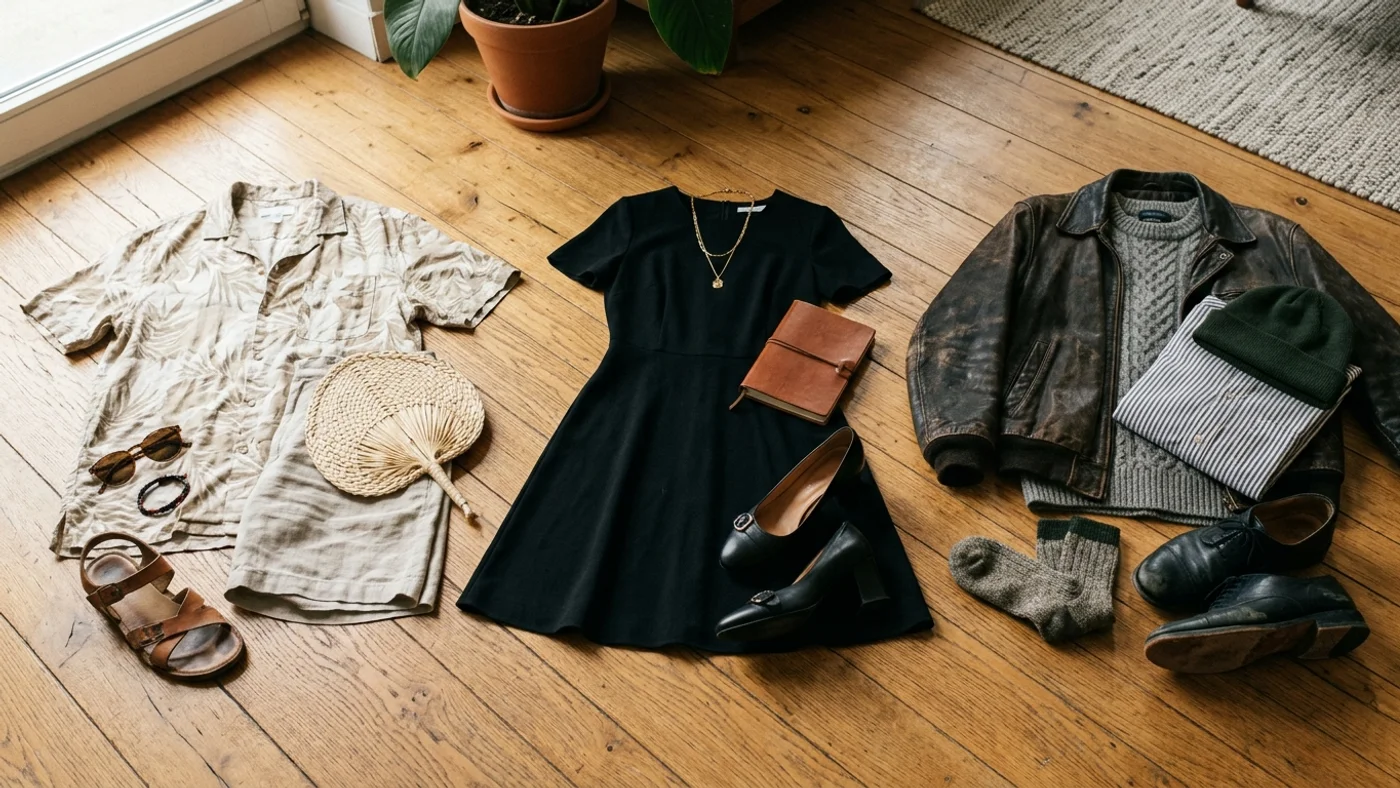
I remember the exact moment I learned that wearing the wrong thing to a social can tank your whole night. It was my second bachata social ever, a hot summer evening in a venue with no air conditioning, and I had worn tight new jeans because I thought they looked good. By the end of the first song my thighs were sticking to the denim, my knees could not bend properly, and the jeans were leaving blue dye streaks on my partner’s white shirt. I went home after four dances, furious with myself.
Nobody tells you this stuff when you start. You learn it by making the mistake.
This guide is what I wish I had read before that night. What to wear to a social in any climate, what to avoid, what fabrics work, what shoes to pivot in, and how dress codes differ between a tropical outdoor party in Cartagena and a studio social in Berlin in February. You do not need a whole wardrobe of dance clothes — you need a handful of smart choices and the knowledge of which mistakes are worth avoiding.
The Universal Rules (Everywhere, Every Climate)
Before we get into climate-specific guidance, a few principles hold anywhere in the world.
You Will Sweat. Plan for It.
This is the thing beginners under-estimate most. An hour of dancing is cardio. A three-hour social is serious cardio. A four-night festival weekend is an endurance event. Your clothes will get wet. They will start wet-ish by song five and be soaked by song ten. Planning for this is the difference between a night you enjoy and a night you survive.
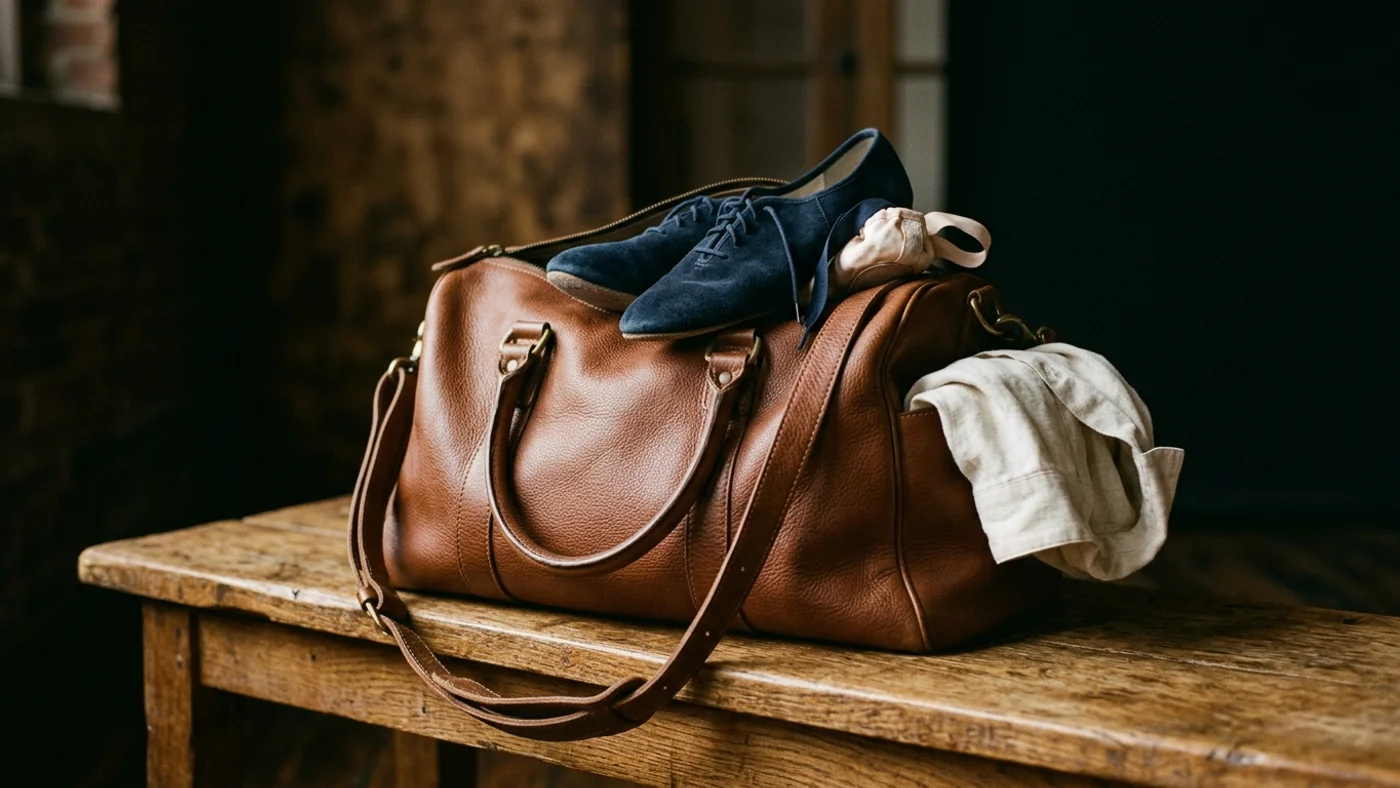
Bring a second shirt, always. This is the single highest-return piece of advice in this guide. A dry shirt between sets transforms the rest of your night. Your partners will also appreciate it — dancing close to a soaked shirt is an unpleasant experience for both people. Most venues have a bathroom or changing area where you can swap discreetly.
Deodorant before and during. Apply before you leave home. Keep a travel stick in your bag and reapply at the midpoint. This is basic courtesy in every partner dance community.
Breathable fabric beats cute fabric. Every time. A plain cotton t-shirt outperforms a fancy polyester blend in any venue warmer than 18°C. Save the dramatic synthetics for photos.
You Will Move a Lot. Clothes Need to Let You.
The other beginner mistake: dressing for the photo, not the dance. Your clothes need to let you raise your arms, lunge, spin, pivot, bend at the knees, and execute whatever else the dance throws at you. Fabric that stretches or drapes is good. Fabric that binds or tears is not.
Skirts: the right length and cut matter. Very short tight skirts restrict leg movement and cause repeated tugging. Very long skirts get stepped on. Mid-length with a flare or slit is the standard for follows who like to dance in skirts.
Dresses: the same rules as skirts, plus — many dancers prefer dresses with built-in shorts or wear dance shorts underneath. Skirts flying up on spins is not just awkward, it can also be unsafe on crowded floors.
Trousers / jeans: movement is everything. Wear through the fabric and see if your legs can spread into a wide lunge without the inseam threatening to split. If they cannot, wear something else.
Tops: sleeves that bind at the armpit are a disaster. Raise your arms overhead. If the shirt rides up to show your midriff or the sleeves constrict at the shoulder, pick a different top.
Your Shoes Need to Pivot
This is the single most important rule for anyone starting to dance. Social dances — particularly salsa, bachata, and zouk — involve constant turning on the ball of one foot. If your shoes catch on the floor instead of sliding or pivoting, your knees take the torque instead of your ankles, and that is the mechanism for a lot of avoidable injuries.
Test your shoes: stand in place, put your weight on one foot, and try to rotate 90 degrees without lifting the foot. If it slides smoothly, your shoes are safe. If it grabs or sticks, they are not.
Sticky rubber soles are the main offender. A lot of modern sneakers have grippy soles designed for running or cross-training — they are dangerous on a dance floor. Smooth rubber or leather soles are what you want.
Dance sneakers are the best all-around option for beginners. They look like regular sneakers, have a split sole that lets the foot flex, and a pivoting circle under the ball of the foot that lets you turn freely without stressing the knees. Bloch, Capezio, and Very Fine all make good ones. For specific recommendations, see our guides to the best salsa dancing shoes and the best bachata dance shoes 2026.
If you are wearing regular shoes: choose leather-soled dress shoes, clean sneakers with smooth soles, or dance sneakers. Avoid flip-flops, sandals, heavy work boots, and sticky-soled athletic shoes.
Climate One: Tropical Heat (Cartagena, Havana, Medellin, Bali, Tulum)
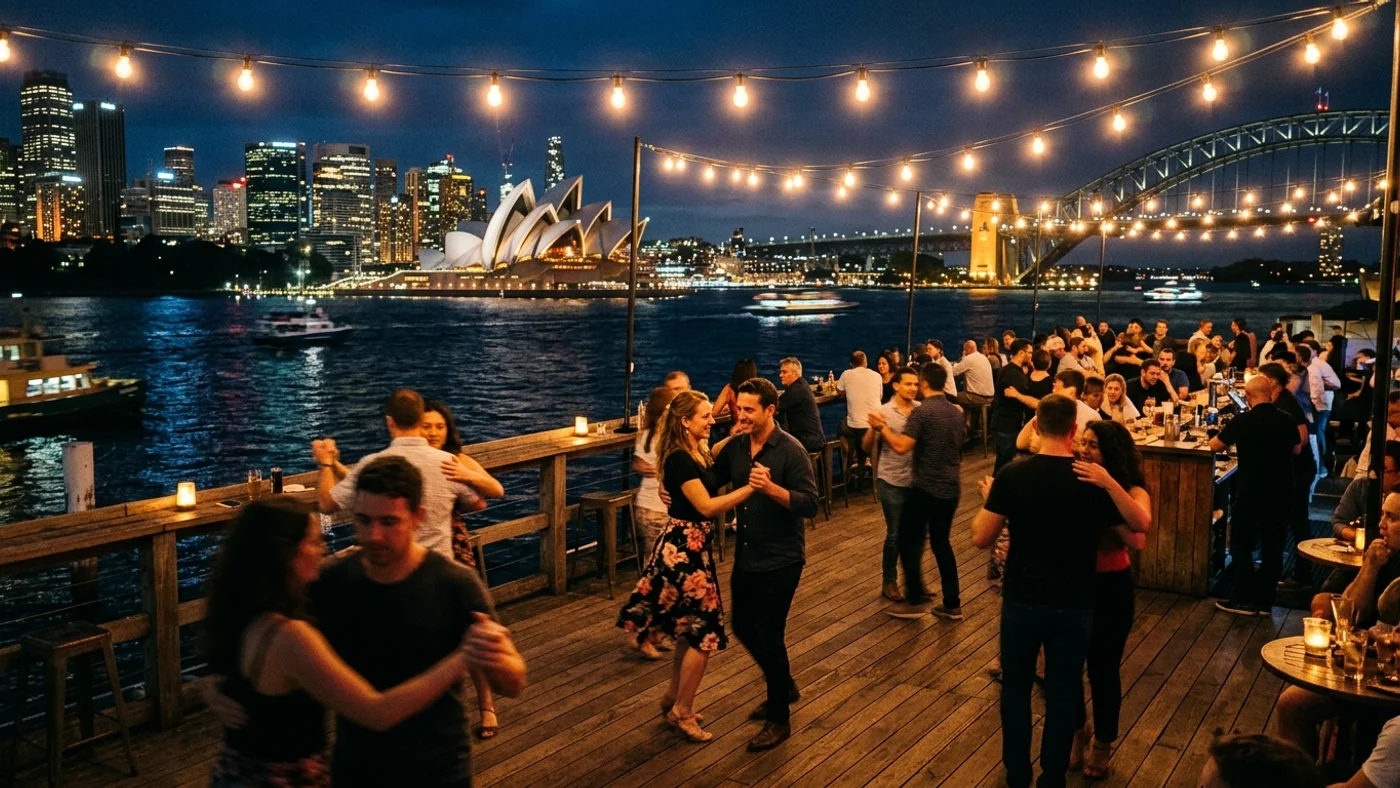
If you have never danced in a tropical climate, you are in for a lesson. The venues are usually open-air or lightly ventilated. The humidity is brutal. The floor is often concrete or tile. You will be soaked through by the third song, and you need to dress accordingly.
What Works
Lightweight natural fibres and moisture-wicking synthetics. Cotton t-shirts, linen blends, merino wool (yes, even in heat — merino breathes and dries fast), and purpose-built athletic fabrics that wick sweat away from the skin. Technical shirts designed for running are a surprisingly good choice for male leads in hot climates.
Loose cuts over tight cuts. Airflow is everything. A loose cotton shirt with a small breeze running through it will out-perform a tight moisture-wicking shirt any day.
Light colours. Sweat shows less on white, light grey, pastels, and prints. Dark colours show sweat aggressively under lights, and a wet dark shirt is visible to everyone.
Flats or dance sneakers for follows. Heels are a nightmare in tropical heat — your feet swell, the humidity makes the straps slip, and the outdoor floors are often uneven. Flat dance sandals or low dance sneakers work much better.
What to Avoid
Polyester shirts that are not designed for athletics. Regular polyester traps heat and does not breathe. The cheap party shirts you find at most clothing stores are a disaster at tropical socials.
Dark denim jeans. Hot, heavy, and show every drop of sweat. Save jeans for temperate climates.
Long sleeves, unless you genuinely need them for sun protection in an outdoor daytime event. Otherwise, short sleeves or sleeveless for maximum cooling.
Heavy jewelry. You will sweat it into corrosion. Keep it minimal.
The Tropical Packing List
For a weekend in Cartagena or Havana:
- Three light tops or shirts per day of dancing
- One pair of flowing, breathable dance trousers or a flowy skirt/dress
- Dance sneakers or low-heeled dance shoes
- A small hand towel for mid-song face wipes
- Deodorant stick you can re-apply
- Hair tie (sweat and hair mix poorly)
See our best dance bag for social dancers guide for how to pack all this efficiently.
Climate Two: European Festival Hall (Madrid, Barcelona, Berlin, Rome, Paris)
European festivals typically happen in large hotel ballrooms, convention halls, or dedicated dance studios with climate control. The temperature is designed to be comfortable for seated guests, which means it starts at around 20°C — and then a hundred people start dancing, and it rises fast. Plan for a venue that will be 25-28°C by the peak of the night.
What Works
Layering. Arrive in a light layer, peel it off when you start dancing. The entrance and early evening of most festivals are air-conditioned-cool. By 10 PM, the room is warm.
Smart-casual by default, dressier for gala nights. Fitted jeans or chinos with a nice shirt, dresses with movement, skirts with structure. European festivals lean slightly more polished than American or Latin American scenes — dress a notch up from what you would wear to a regular Tuesday social.
Indoor-appropriate dance shoes. Suede-soled dance shoes, sleek dance sneakers, or clean smooth-soled dress shoes. The floors are usually sprung wood or polished indoor surfaces that reward a proper sole.
Theme night outfits. Many festivals run themed parties — white parties, Cuban parties, gala galas. Bringing one outfit that fits the theme makes the evening more fun and helps you fit the vibe of the room.
What to Avoid
Heavy wool suits or thick dress shirts. They look sharp for about twenty minutes. After that you will regret everything.
New-from-the-box outfits. Always wear and test clothes before a festival. A shirt you have never worn will reveal its chafing problems at the worst moment.
Towering heels unless you are experienced. Festival floors are usually good for heel work, but you will dance for six hours straight. 2-3 inch heels that you can actually dance in beat 4-inch heels that you cannot.
Strong perfume or cologne. Partner dancing is close-contact, and strong scents become overwhelming fast. Subtle is right.
The European Festival Packing List
For a three-night festival:
- Two evening outfits per night (one for peak social hours, one backup in case the first is soaked)
- Dance shoes, plus a backup pair
- One gala-appropriate outfit for Saturday night
- Workshop clothes: comfortable athletic wear, layers
- A light cardigan or jacket for the cool venue entrance
- Water bottle (many venues are aggressive about not letting you refill at the bar)
Climate Three: LA Studio Social / West Coast American Scene
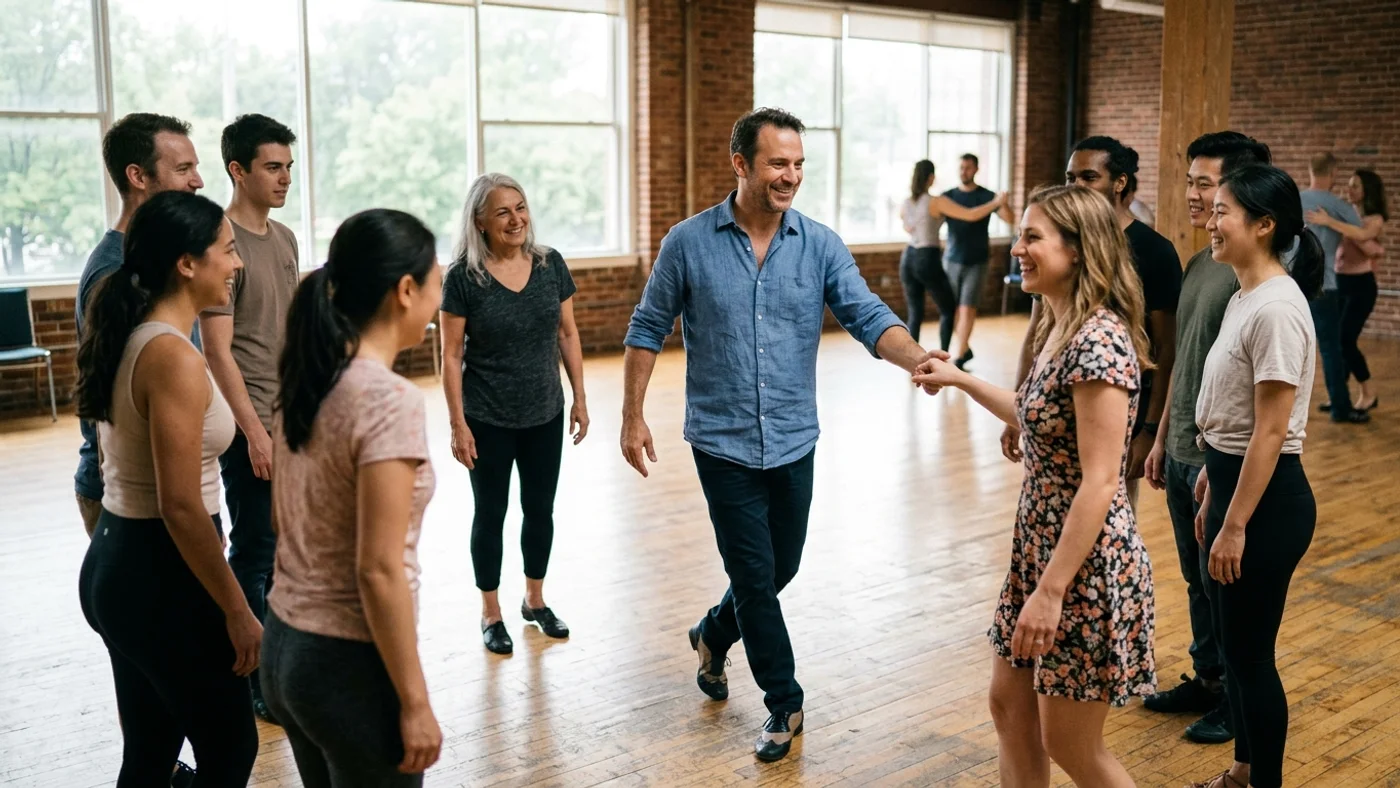
American studio socials — especially in LA, San Francisco, and Seattle — tend to be smaller, more casual, and run in wood-floored dance studios with good ventilation. The vibe is relaxed, the dress code is loose, and the emphasis is on dancing rather than on looking polished.
What Works
Athleisure elevated slightly. Leggings with a nice top, fitted joggers with a button-down, athletic shorts with a dance tank. The look is “I came to dance, I look good, but this is not a red carpet.”
Dance sneakers dominate. The LA studio scene has embraced dance sneakers more than almost anywhere. Capezio and Bloch models are everywhere on LA floors.
Layers. Studio air conditioning varies. Bring a light layer you can add or remove.
Fitted but flexible. American scenes lean more fitted than flowy. Fitted athletic tops, structured jeans that stretch, dancer-cut tank tops.
What to Avoid
Overdressing. Showing up in heels and a cocktail dress to an LA studio social makes you stand out in the wrong way. The dress code is casual; respect it.
Gym-soaked tank tops. The line between “came from the gym” and “dressed for the social” matters. Athletic wear is fine; wet-from-the-gym athletic wear is not.
Cowboy boots or heavy boots. The LA studio floor is wood and unforgiving. You want something that pivots.
Climate Four: Late-Night Nightclub (New York, London, Miami, Mexico City)
Dance nightclubs operate differently from studio or festival socials. The lighting is darker, the room is usually louder, the floor is often smaller, and the vibe leans closer to a night out than a dance gathering. Dress accordingly.
What Works
Club-appropriate dance wear. Think dress that flows but does not flutter up on spins, jeans that look sharp and move well, tops that handle being close-danced without sliding.
Shoes you can walk home in. Late-night clubs often end at 4 or 5 AM, and heels you could not wear to work the next day are heels you will regret by 2 AM. Make sure whatever you wear will survive the walk back to the subway or Uber.
Darker colours. The nightclub aesthetic leans black, navy, deep tones. You can wear brights, but the room will be darker than you expect.
What to Avoid
Club wear that restricts movement. Very tight dresses, very short hems, strappy tops that move off the shoulder every time you raise your arms. If it would annoy you after one dance, it will ruin a full night.
Flimsy shoes you bought for a Saturday night. The dance club difference is that you actually dance in these shoes — not just walk to the bar. Make sure they can handle it.
Outdoor coats. Coat check lines at 3 AM are miserable. If you can, take an Uber or a cab and skip the coat.
Climate Five: Outdoor Daytime Festival (Pool Parties, Beach Socials, Daytime Fiestas)
Some festivals program daytime outdoor events — pool parties, beach socials, rooftop events. These have their own rules because you are dancing in daylight, often with sun exposure, and sometimes without a proper dance floor.
What Works
Sun protection. Hat, sunglasses, breathable long-sleeve shirt or cover-up for between dances. Sunburn on day one of a five-day festival is misery.
Athletic shoes with smooth enough soles to move. Outdoor floors are usually concrete, wood decking, or tile. Sometimes sand. Dance sneakers are the best all-round option; flats work for sand.
Swimwear that you can actually dance in, if there is a pool. If the venue has a pool party, a lot of dancing happens in swim-suits. Pick one you can move in — no strappy tops that will wander, no bottoms that ride up.
What to Avoid
Flip-flops on a dance floor. They fly off. They cause falls.
Full makeup on a beach. Sweat plus sunscreen plus heat equals a mess. Go lighter than usual.
Heavy perfume in the sun. It turns weird in heat.
Climate Six: Cold Outdoor or Mixed Venue (Winter Festivals, Cruise Ships, Mountain Events)
This is the trickiest category. You travel in cold weather, dance in warm rooms, and move between the two multiple times a night.
What Works
A great travel jacket plus indoor dance wear underneath. The goal is to arrive dry and comfortable, then switch easily.
A real dance bag, not a tote. See our dance bag guide for specifics. You will be carrying indoor shoes, a change of shirt, and a full outfit — you need structure.
Indoor shoes you change into at the venue. Never dance in the shoes you walked through snow or rain in. They are wet, they are cold, they will have salt or debris on the soles.
What to Avoid
Dancing in your outdoor shoes. See above. Change at the door.
Wool layers you cannot peel off mid-night. If the venue is warm, those layers will cook you.
Shoe Specifics by Dance Style
Different dances favour different shoes. Some quick guidance.
Salsa: heels for experienced follows (2-3 inches, Latin-style with a flared heel for stability), flats or dance sneakers for beginners and leads. See our salsa shoes guide for detailed picks.
Bachata: similar to salsa. Sensual bachata in particular rewards flexibility in the shoe — body waves translate through the feet, so a split-sole dance sneaker or a flexible Latin shoe feels best. Our bachata shoes guide covers specific recommendations.
Kizomba: comfort first. Kizomba socials run for hours and the dance is slow enough that your feet bear your weight for long periods. Lower heels or flats win for kizomba. Dance shoes with ankle support reduce fatigue.
Zouk: dance sneakers or suede-soled dance shoes. The rotational movement of zouk needs a shoe that pivots cleanly. High heels are harder in zouk because of the constant weight shifting — experienced follows do it, but beginners should start lower or flat.
The One-Outfit Rule for Beginners
If you are brand new and do not want to invest in a dance wardrobe yet, here is what to buy or put together.
For follows: a simple fit-and-flare dress in a breathable fabric with enough length to spin in, a pair of dance sneakers or low-heeled dance shoes, a small bag to carry your valuables, and a hair tie.
For leads: fitted dark jeans or chinos that stretch, a button-down or fitted t-shirt in a breathable fabric, a pair of dance sneakers or leather-soled shoes, and a spare shirt in a small bag.
That’s it. That outfit plus deodorant, breath mints, and a water bottle will get you through the first three months of social dancing in most scenes without you thinking about clothes.
When to Upgrade
You will feel the upgrade moment. Usually around month three to six of regular dancing, something starts to bug you — the shirt rides up on spins, the shoes feel unstable, the jeans are too hot, the heels hurt by midnight. When that happens, invest.
The returns compound. Dance shoes protect your knees for years. A good pair of dance trousers or a well-cut dress becomes the thing you reach for every weekend. Breathable fabrics extend how long you can comfortably dance. The $80-$200 you spend on a proper dance wardrobe tends to save itself in physiotherapy and discarded purchases within a year.
A Final Note
The best-dressed dancer in any room is the one who looks comfortable and confident. That does not require expensive clothes or a specific aesthetic. It requires knowing what works for your body, the dance you are doing, and the venue you are in — and being clean, considerate, and prepared for the physicality of a long social.
I have danced in nightclubs in heels that hurt after forty minutes and in dance sneakers at festivals that carried me through eight hours without a second thought. The sneakers made me a better dancer. The heels just made me photogenic for the first forty minutes.
Dress for the dance. Pack a second shirt. Test your shoes on the floor before the social starts. Everything else is personal style.
Browse salsa, bachata, kizomba, and zouk events worldwide to find your next social. If you are still new, pair this with our dance floor etiquette guide and our beginner guides for your chosen style.