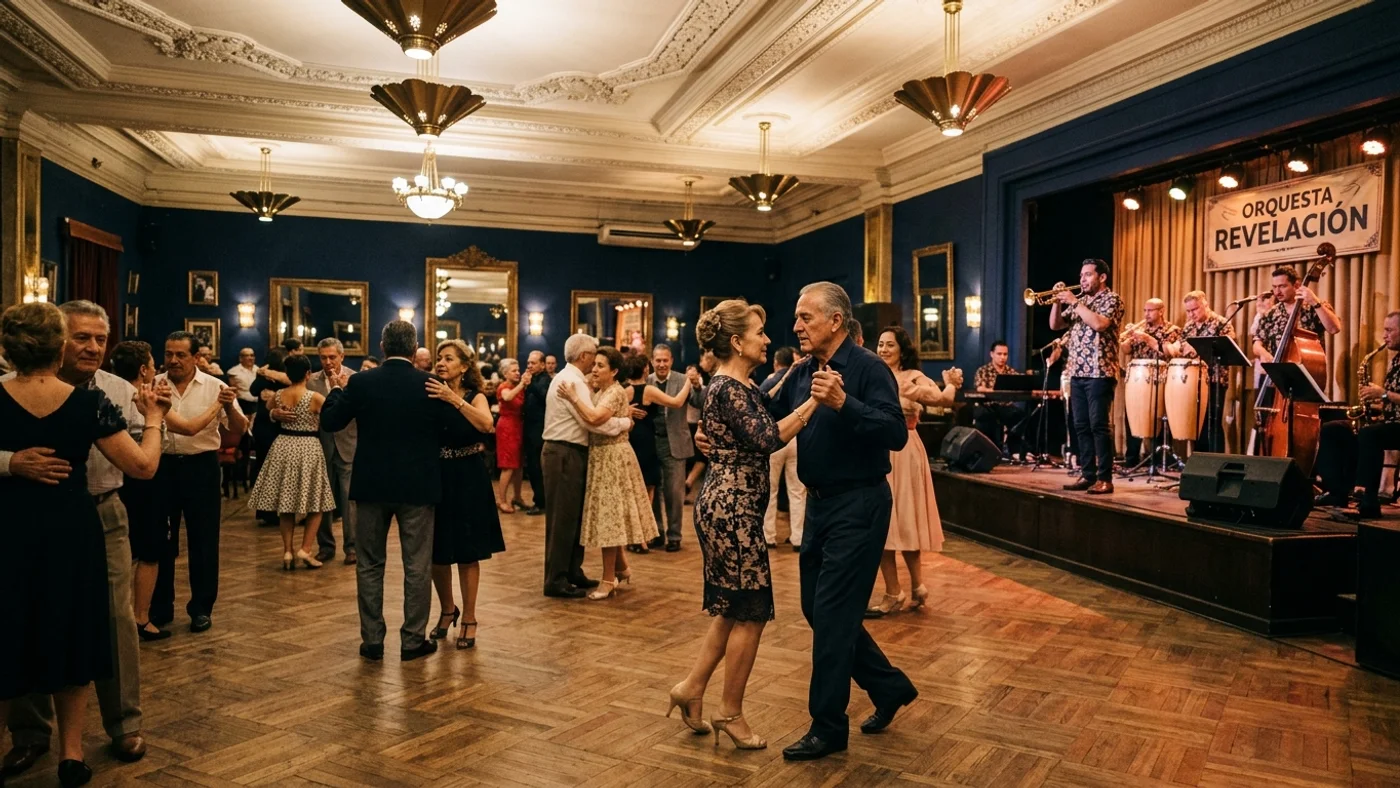
Mexico City is one of the most underrated salsa destinations in the Americas. The scene here does not get the tourist attention that Havana or Cali do, but it is genuinely deep — deeper in historical tradition than most dancers realize, with a direct living connection to the son-cubano era that produced modern salsa. Mambo cinema was filmed here. Pérez Prado made his name here. The Aragón Orchestra played here. And today the scene combines that old-school continuity with a modern, dance-school-driven community that makes CDMX an excellent place to dance for a week, a month, or longer. This guide covers the full picture: the historic ballrooms, the contemporary socials, the neighborhoods to know, and how to navigate a very large city as a dancer.
Table of Contents
- Why Mexico City’s Salsa Scene Matters
- Where Can I Dance Salsa in Mexico City?
- The Neighborhoods: Where the Scene Lives
- A Night-by-Night Guide to CDMX Salsa
- Understanding Mexican Salsa Style
- What to Expect at a Mexico City Salsa Social
- Bachata, Kizomba, and Zouk in CDMX
- Festivals and Congresses
- Safety, Transport, and Practical Tips
- Find Events
- FAQ
Why Mexico City’s Salsa Scene Matters
Before we get to the venues, it is worth understanding what makes Mexico City’s salsa scene different from, say, Los Angeles or Madrid. Three things.
First, historical depth. Mexico City’s relationship with Cuban music goes back nearly a century. In the 1940s and 1950s, as Cuba’s most famous musicians were touring Latin America, Mexico City became a second home for mambo, danzón, and son-cubano. Pérez Prado spent much of his career based here. Mexican films from that era — the golden age of cine de rumberas — cemented Caribbean music as a central part of Mexican popular culture. That legacy lives on: Mexico City is one of the only cities outside Cuba where you can still walk into a ballroom built in the 1930s and dance to a son-cubano band playing to a packed floor. This matters. It gives CDMX a flavor that more recent scenes simply cannot replicate.
Second, sheer size. The Mexico City metro area holds over 21 million people, making it one of the largest urban areas on the planet. That population supports a scene that is simultaneously deep in every direction — classic son-cubano at Salón Los Ángeles, contemporary dance-school socials at El Babalú, casino groups meeting weekly, LA-style on1 classes in Roma, Bachata Sensual scenes in Condesa, and multiple kizomba and zouk communities. You can have a different kind of dance night every day of the week and not run out of options.
Third, affordability and ease. Mexico City is dramatically cheaper than US cities and most European capitals. It is safer than most visitors expect (in the right neighborhoods). Flights from North America are cheap, the food is extraordinary, and dancers routinely extend planned week-long trips into month-long stays. Digital nomads have made Roma and Condesa into de facto dance neighborhoods — a lot of traveling dancers end up living here for three months because the combination of cost, climate, and scene is hard to beat. Our best cities for bachata in Latin America guide gives CDMX special attention for exactly these reasons, and the salsa scene deserves the same treatment.
Where Can I Dance Salsa in Mexico City?
Here are the venues that anchor the weekly scene.
Salón Los Ángeles
Salón Los Ángeles is the historic heart of Mexican social dancing. Opened in 1937 in the Guerrero neighborhood, it is one of the oldest continuously operating ballrooms in Latin America. Walking in, you feel it: the wooden floor, the high ceilings, the murals, the house band still playing live music on Saturday nights. This is not a nostalgic re-creation — it is a working dance hall that has been doing this for nearly 90 years. The Saturday salsa nights (10pm to 4am) pull an extraordinary mix of dancers: seventy-year-olds who grew up dancing here, young dancers discovering the tradition, serious casino practitioners, and visitors who have made the pilgrimage. If you go to one salsa night in Mexico City, make it Salón Los Ángeles on a Saturday. It is not just a dance — it is a piece of living history.
The catch: the Guerrero neighborhood is less polished than Roma or Condesa. Take an Uber to the door and back. Inside, you are perfectly safe. Outside, do not wander.
California Dancing Club
California Dancing Club is another historic institution, located in the Obrera neighborhood south of the centro. Like Salón Los Ángeles, it has decades of history and a dedicated older crowd who learned these dances in their youth. Programming varies by week — traditional bands rotate through, and specific salsa nights change. Check current listings before you go, and take an Uber. This is a venue for dancers interested in the older traditions of Mexican social dancing; it is not a typical modern social.
El Babalú
El Babalú is one of the most accessible salsa venues in the city for visiting dancers. Salsa Tuesdays run from 8pm onwards, with a class starting at 8pm and social dancing continuing late. The venue sits in a convenient neighborhood and draws a mixed crowd of regulars, dance-school students, and travelers who have found their way in. If you are visiting CDMX and want one reliable salsa night to anchor your trip, Babalú is the pick.
Mama Rumba
Mama Rumba is a long-running Latin club in Roma that hosts Latin nights Tuesday, Thursday, Friday, and Saturday — salsa, bachata, and general Latin energy with live bands on weekends. It is more of a club-with-dancing than a dedicated dance venue, which means the crowd is mixed (serious dancers, regulars, people out for a Latin night). The Thursday Latin Night is a favorite among locals who want a midweek night out. Weekends get packed.
Busan Restaurante Bar Coreano
Busan in Roma Norte might sound like an odd location for salsa, but the venue has become a weekly fixture for LA-style salsa and bachata socials. The Thursday night runs Salsa LA and Bachata Kimochy Party — a 7:30pm salsa class, 8:30pm bachata class, then social dancing. Wednesdays host The Bachateamo Night with a 7:30 to 9pm class followed by the social. It is a younger, more dance-school-driven crowd — good if you want structured classes plus social dancing in one evening.
Smaller Venues and Dance Schools
Beyond the core venues, Mexico City has dozens of smaller socials hosted by dance schools, bars, and restaurants across Roma, Condesa, Polanco, and Coyoacán. Programming shifts more often than in more structured European cities — schools run monthly socials, bars introduce weekly Latin nights, and Instagram is the primary discovery channel. Check salsa events in Mexico City for the current confirmed schedule, and ask at any dance school you visit for WhatsApp group invites.
The Neighborhoods: Where the Scene Lives
Mexico City is huge, and understanding its geography will dramatically improve your trip.
Roma Norte and Roma Sur
Roma is the hipster heart of CDMX. Tree-lined streets, Art Deco buildings, dozens of cafes and restaurants per block, and a thriving dance scene anchored by Mama Rumba and Busan. This is where most visiting dancers end up staying and spending their evenings. It is safe, walkable, and full of Airbnbs. Most dance-school classes run in Roma or adjacent neighborhoods.
Condesa
Condesa is Roma’s slightly more polished neighbor. Same vibe, slightly more upscale, Art Deco apartment buildings and Parque México. The dance scene overlaps heavily with Roma — schools and venues are often a short walk apart. Condesa is where a lot of Bachata Sensual teaching happens.
Centro Histórico
The historic downtown has the city’s grandest architecture and some of the oldest dance venues (including California Dancing Club nearby). It is vibrant during the day and mostly quiet at night — tourists retreat to Roma and Condesa for nightlife. Go to the Zócalo and the Templo Mayor by day; do not plan to party in Centro.
Polanco
Polanco is the upscale financial district — nice hotels, good restaurants, higher prices. There are some salsa venues and events, but the center of the dance scene is not here. Stay in Polanco if you are combining dance with business travel or prefer a more polished neighborhood.
Coyoacán
Coyoacán is south of the center — a more local, artsier, cobblestoned neighborhood with its own cultural life. Fewer dedicated salsa venues than Roma, but a handful of weekly socials run at restaurants and cultural centers. Worth visiting for the neighborhood itself; not worth staying in if dance is your priority.
Guerrero (Salón Los Ángeles)
Guerrero is a working-class neighborhood northwest of the centro. Your primary reason to go there is Salón Los Ángeles. Take Uber there, Uber back, and you will have a perfectly safe and unforgettable dance night.
Where to stay. For dancers, Roma Norte is the default. It puts you walking distance from Mama Rumba, Busan, most dance schools, and a dozen excellent restaurants. Condesa is a second choice with very similar benefits.
A Night-by-Night Guide to CDMX Salsa
Monday. Quieter. Some dance schools run Monday classes but few dedicated socials.
Tuesday. Good midweek. El Babalú runs Salsa Tuesdays with a class at 8pm. Mama Rumba runs its Latin Night.
Wednesday. The Bachateamo Night at Busan — 7:30pm class, 9pm social.
Thursday. The scene warms up. Mama Rumba hosts one of its most popular nights. Busan runs Salsa LA and Bachata Kimochy Party with back-to-back classes followed by social.
Friday. Weekends start. Mama Rumba Latin Night, plus a long list of pop-up and regular socials at dance schools and restaurants across Roma, Condesa, and Polanco.
Saturday. Peak night. Salón Los Ángeles for the full historic experience (10pm to 4am). Mama Rumba for the Roma club experience. Multiple dance-school socials running.
Sunday. Quieter but not dead. Dance-school Sunday socials pop up periodically. The traditional “tardeada” culture (afternoon dances) still exists at some older venues — worth asking about if you are here for an extended stay.
The pattern: Thursday-Saturday is your core. Add a Tuesday or Wednesday class-plus-social for a midweek pick-up. Do not plan a trip that only covers Monday through Wednesday — you will miss the good nights.
Understanding Mexican Salsa Style
Mexico City is unusually eclectic in what is danced and taught. Here is the breakdown.
Casino and son-cubano. At older venues like Salón Los Ángeles and California Dancing Club, the tradition is casino (Cuban-style salsa) and related Caribbean dances — danzón, chachachá, mambo as originally danced. The music skews toward classic son, guaracha, and mambo from the golden age. Casino is circular rather than slot-based: couples rotate around a shared center, with patterns that emphasize connection and rhythmic play rather than spins and turns. If you have never danced casino, our Cuban salsa vs LA style vs NY style guide explains the basics. Rueda de casino — the group version where multiple couples dance in a circle following a caller — also has a following in CDMX.
LA style (on1). This is the dominant style at dance-school-driven socials in Roma and Condesa. It is the style most visitors from the US or Europe are familiar with: slot-based, turn-focused, with the break step on beat 1. Busan’s Thursday class teaches LA style.
On2. Less common than on1 but present. A few schools teach New York style mambo on2, and you will occasionally find on2-preferred socials. Not a given — do not plan a CDMX trip around on2 the way you would for New York.
Bachata. Huge. Arguably as big as salsa in Mexico City. Both traditional Dominican bachata and Bachata Sensual have strong followings. See the bachata section below.
Style crossover. Most dancers in Mexico City dance multiple styles. A skilled CDMX dancer can shift from casino at Salón Los Ángeles to LA on1 at Busan to Bachata Sensual at a Condesa social over a single week without blinking. That flexibility is part of what makes the scene so rich. Be open to adjusting your style depending on the venue — do not walk into Salón Los Ángeles and try to dance LA on1.
What to Expect at a Mexico City Salsa Social
Timing. Nights start later than in Europe but not as late as in Colombia or Cuba. Most socials get going between 9pm and 10pm and peak around 11pm to 1am. Salón Los Ángeles stays open until 4am on Saturdays.
Dress. Roma and Condesa venues dress casually but nicely — jeans, proper shoes, a clean shirt. Salón Los Ángeles has its own sartorial culture where older regulars often dress in more classic styles (guayaberas, proper dresses) while younger visitors wear whatever. Either works. Avoid athletic wear.
Shoes. Bring dance shoes if you have them. Salón Los Ángeles has a proper wooden floor that rewards leather-soled shoes. Modern venues are more forgiving. Our best salsa dancing shoes guide covers what works for multi-style travel.
Cover and drinks. Covers run 100 to 200 pesos (roughly 5 to 12 USD), often including a class. Beers run 50 to 80 pesos. Cocktails 120 to 180 pesos. Water is always available — ask for “agua natural” (still) or “agua mineral” (sparkling).
Language. Spanish is essential outside Roma and Condesa, useful everywhere. English is widely spoken in Roma dance schools and among younger dancers. Basic phrases still go a long way — “quieres bailar?” (want to dance?), “otra?” (another?), “gracias, estuvo lindo” (thanks, that was lovely).
Floor etiquette. Eye contact plus a gesture to ask. One to two songs per partner. Thank your partner and move on. Standard Latin social norms apply — our dance floor etiquette guide covers broader principles.
Drink culture. Mezcal, tequila, Mexican craft beer, and micheladas are everywhere. Many venues have excellent cocktail programs. It is normal to sip a drink between dances; it is not normal to get visibly drunk. Mexican dance culture values composure.
Bachata, Kizomba, and Zouk in CDMX
Bachata is massive in Mexico City — arguably more active than salsa in some neighborhoods. Both traditional Dominican bachata and Bachata Sensual have dedicated followings. Busan’s Bachateamo Night on Wednesdays is a solid anchor for bachata-focused dancers, and countless dance schools in Roma and Condesa run bachata socials. Mexico has hosted some of the largest bachata congresses in Latin America. Our best cities for bachata in Latin America guide covers CDMX’s bachata scene in more depth, and the bachata sensual vs traditional vs modern explainer will help you navigate styles. See bachata events in Mexico City for current listings.
Kizomba has a smaller but serious scene. A few dance schools teach it weekly, and occasional socials run in Roma and Condesa. If this is your style, check kizomba events in Mexico City and our kizomba for beginners guide.
Zouk is smaller still but present — a handful of dance schools and the occasional monthly social. Zouk events in Mexico City lists what is confirmed.
The point: Mexico City is one of the few cities in the world where a multi-style dancer can build a full weekly schedule across salsa, bachata, kizomba, and zouk without running out of options.
Festivals and Congresses
Mexico City has an active festival calendar throughout the year, with some of the largest bachata and salsa congresses in Latin America. Events rotate annually — check our festival calendar for confirmed upcoming dates. Festival season runs most intensely from late summer through early spring, with a lull in June and July.
Notable nearby events also worth considering: several annual congresses in Cancun and Playa del Carmen combine dance with beach vacation, and Puebla and Guadalajara have their own growing scenes. For a multi-city Mexico dance trip, CDMX plus Guadalajara plus a coastal stop makes an excellent two-week itinerary.
Safety, Transport, and Practical Tips
CDMX is safer than most visitors expect in the right neighborhoods, and more dangerous than most expect in the wrong ones. Here is what dancers should know.
- Stay in Roma Norte, Condesa, or Polanco. These are the safest neighborhoods for dance tourists. Coyoacán is also fine. Avoid Tepito, Doctores, and unfamiliar parts of the centro at night.
- Use Uber or DiDi, never taxis you hail off the street. This is non-negotiable. Rideshare is cheap (100 to 200 pesos for most rides within central CDMX) and safe. Street taxi scams and kidnappings, while rarer than in past decades, still happen.
- The metro is excellent by day, questionable late at night. Use the metro to explore during the day. For getting home from a 2am social at Salón Los Ángeles, Uber.
- Altitude. Mexico City is at 2,240 meters (7,350 feet). Most people feel fine but you may notice reduced stamina dancing for the first day or two, especially if you flew in from sea level. Hydrate more than usual. Skip heavy drinking on day one.
- Air quality. Winter months (December to February) have the worst air. Summer rains clear it. If you have asthma, this is real.
- Tipping. 10 to 15 percent at restaurants. Round up on Ubers. Bartenders appreciate 10 to 20 pesos per drink at busy socials.
- Money. ATMs are easy. Use ones attached to banks. Cash (pesos) is useful at smaller socials, but cards are widely accepted at established venues.
- Cash on you. Keep 300 to 500 pesos in cash for cover, drinks, and tips. Big bills (500 peso notes) can be hard to break at smaller venues — get smaller denominations at the ATM when possible.
- Phone and SIM. Buying a local Telcel or AT&T Mexico SIM at the airport takes 15 minutes and gives you reliable data for Uber and WhatsApp. Essential.
- Spanish. Learn basics. Mexico City is more English-friendly than Medellin but less than, say, Buenos Aires. Attempting Spanish is appreciated even when your grammar is terrible.
Find Events
Our salsa events in Mexico City page is updated weekly with confirmed weekly socials and one-off events. For other styles, see bachata events in Mexico City, kizomba events in Mexico City, and zouk events in Mexico City. Use our interactive map to see exactly where venues are relative to your accommodation.
Planning a broader Latin American dance trip? Our guides on salsa dancing in Medellin, best cities for bachata in Latin America, and how to find social dance events while traveling will help you plan the rest of the route.
FAQ
Where is the best place to dance salsa in Mexico City?
Salón Los Ángeles is the historic heart of Mexico City salsa — a 1937 ballroom in the Guerrero neighborhood that hosts salsa nights steeped in son-cubano tradition. For a more contemporary scene, El Babalú runs Salsa Tuesdays with a pre-social class, and Mama Rumba is a long-running Latin club in Roma with multiple salsa nights per week. Busan Restaurante Bar Coreano in Roma Norte hosts LA-style salsa and bachata nights on Thursdays. Check our salsa events in Mexico City page for the current schedule.
What style of salsa is danced in Mexico City?
Mexico City dances a mix. The old-school scene around Salón Los Ángeles and California Dancing Club leans toward casino (Cuban-style) and classic son-cubano footwork — Mexico has deep historical ties to Cuban music from the 1940s and 1950s. The newer dance-school scene in Roma, Condesa, and Polanco teaches mostly LA-style on1 and some on2, plus a huge amount of bachata. You can dance any style somewhere in CDMX on a given week. Our Cuban salsa vs LA style vs NY style guide explains the differences.
Is Mexico City good for salsa dancing?
Yes. Mexico City has one of the largest and most varied Latin dance scenes in the Americas. The sheer size of the city (over 21 million people in the metro area) supports multiple salsa nights per week across distinct neighborhoods, a strong dance-school infrastructure, and a genuine continuity with classic son-cubano history through venues like Salón Los Ángeles. It is affordable, safe in the right neighborhoods, and welcoming to visiting dancers.
How much does it cost to dance salsa in Mexico City?
Most salsa socials charge 100 to 200 pesos (roughly 5 to 12 USD) at the door, often including a pre-social class. Drinks are cheap by US or European standards — a beer runs 50 to 80 pesos and a cocktail 120 to 180 pesos. A full night out including entry, two drinks, and an Uber home typically runs 400 to 700 pesos (about 25 to 40 USD). Mexico City is one of the most affordable major salsa capitals in the world.
Is Mexico City safe for dance tourists at night?
Yes, with the standard precautions that apply in any big Latin American city. Stick to Roma, Condesa, Polanco, and Coyoacán at night. Use Uber or DiDi, never street cabs. Do not walk alone late at night in unfamiliar neighborhoods. Salón Los Ángeles is in the Guerrero area which requires more awareness — take Uber there and back rather than walking. Mexico City’s dance venues themselves are safe and welcoming.