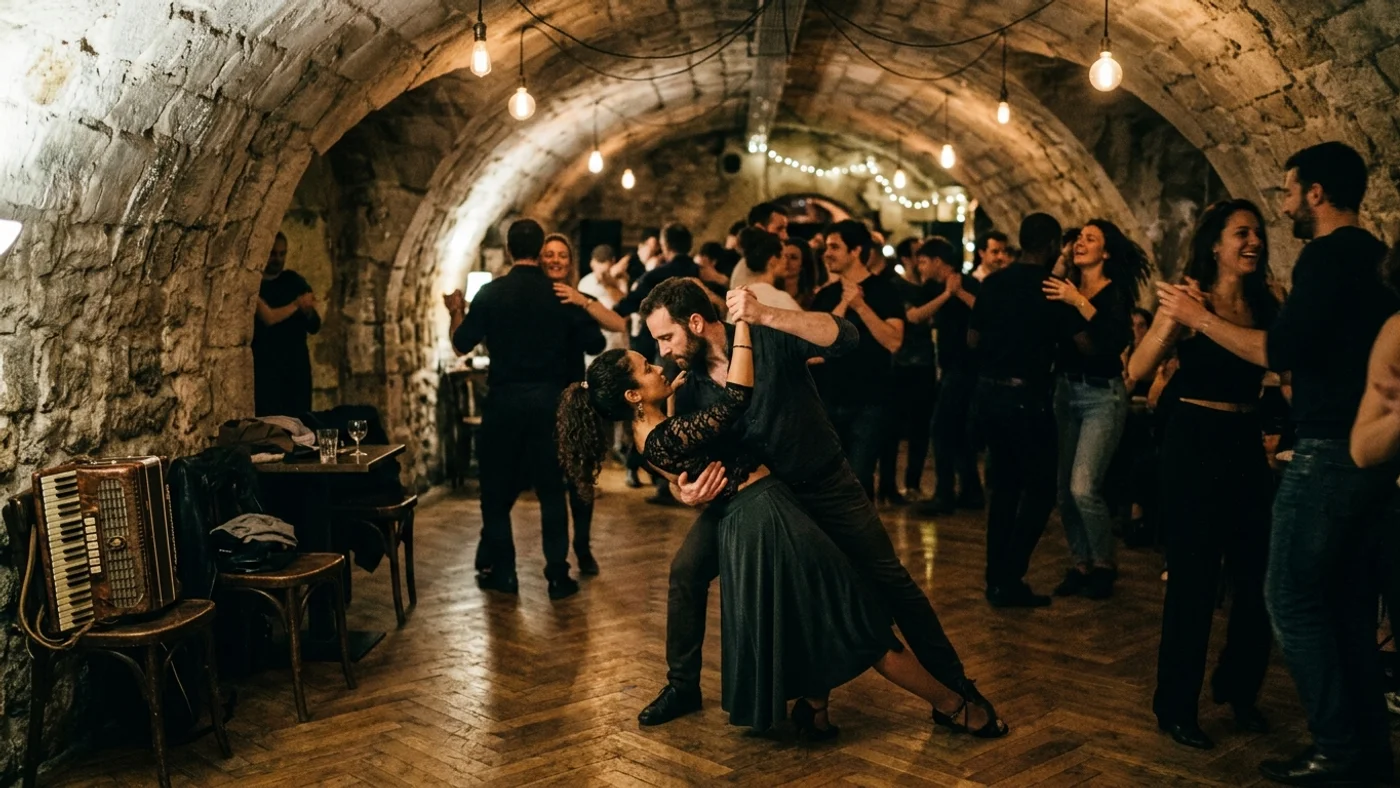
Paris does not have the single-biggest salsa scene in Europe, but it has one of the most interesting. The city runs a hybrid of salsa, bachata, kizomba and zouk across roughly twenty active weekly venues — some classic Latin clubs with history, some studio socials, some bars that have turned their back rooms into makeshift dance floors. The scene is fragmented, it’s more expensive than Spain or Berlin, and it rewards dancers who do their homework before a night out. This guide is the homework: the reliable venues, the nights that matter, and the honest caveats of dancing in Paris in 2026.
Table of Contents
- What Is the Paris Salsa Scene Actually Like?
- Where Can I Dance Salsa in Paris?
- What Nights Are Best for Salsa in Paris?
- The Style Mix: Cuban, Linear, and the SBK Culture
- What Should I Expect at a Paris Salsa Social?
- Bachata, Kizomba and Zouk in Paris
- Summer Socials on the Seine and Outdoor Dancing
- Are There Salsa and Dance Festivals in Paris?
- How Do I Get to Paris Salsa Venues?
- Where Should I Stay to Dance?
- Tips for Visiting Dancers
- Find Events
- FAQ
What Is the Paris Salsa Scene Actually Like?
The honest summary: Paris is a good dance city that punches below its size for pure salsa. For a metropolitan area of 12 million people, the specifically-salsa weekly calendar is smaller than Madrid’s (a city a third the size). What Paris has is breadth across all four Latin-Afro styles — salsa, bachata, kizomba, zouk — rather than depth in any single one. On a typical Wednesday night you might find one strong salsa floor, two strong bachata floors, one kizomba floor, and one zouk floor, each with its own separate community. That fragmentation is both a strength (variety) and a weakness (you never see the same 300 dancers in one room the way you do at Azúcar in Madrid).
The scene also has a distinctive technical flavour. Parisian dancers train. They take multi-year courses, attend intensives, work on body movement. The result is a floor where average technical level is high, particularly on bachata sensual and zouk. The flip side: the scene can feel slightly closed at first — dancers come with partners and friends, and asking a stranger mid-song-cycle can take more effort than in Barcelona or Berlin. Give it a song or two. Once you’ve had one good dance, the floor opens.
One important context for anyone arriving with preconceptions: Paris is no longer a big-Latin-nightclub city. The classic era of Barrio Latino (12th arrondissement, now closed as a Latin club) and Chapelle des Lombards (the legendary live-music venue, closed years ago) is over. The scene today is organised around studio socials, bar takeovers, and a few surviving club venues like Le Balajo. This shift makes Paris harder to navigate for a drop-in tourist — you need the event calendar, not just an address.
Where Can I Dance Salsa in Paris?
The venues below are verified active in 2026 and run regular weekly salsa or salsa-heavy events. Paris scheduling moves more than other European cities, so always cross-check with salsa events in Paris before heading out.
La Pachanga
La Pachanga at 8 Rue Vandamme in the 14th arrondissement is arguably the most reliable dedicated salsa-bachata-kizomba venue in the city. It runs SBK nights Wednesday (9:30 PM – 2:00 AM), Thursday (10:00 PM – 2:00 AM), Friday (9:30 PM – 2:00 AM), and Saturday (9:30 PM – 2:00 AM), all with pre-social classes from 7:30 PM or 8:00 PM. Four nights a week in a single venue is as close to a hub as the Paris scene has.
The venue itself is a dedicated Latin dance bar — proper sound, a real floor, and a crowd of regulars who have been coming for years. If you’re in Paris for multiple nights and want one reliable address, make La Pachanga your anchor.
Le Balajo
Le Balajo is a piece of Paris nightlife history — a 1930s Bastille dance hall that has hosted everything from musette to rock-and-roll to Latin. On Thursdays it runs an SBK social (Salsa, Bachata, Kizomba) from 21:30, with a salsa class from 19:30. The atmosphere is unique: a historic ballroom with a real stage, worn-in wooden floors, and the weight of nine decades of dance. Even if you only go once, it’s worth the visit for the venue alone. Entry €10–€12.
Owen’s Bar
Owen’s runs Soirée Salsa Paris on Friday nights — 8:45 PM to midnight, with a class from 7:45 PM. Entry €8. It’s a smaller, more intimate bar-format social, which suits dancers who prefer focused evenings over club chaos. A good option if you want a Friday night that starts and ends earlier than Paris’s usual dance schedule.
Vendôme Club
Vendôme Club at 9 Rue Daunou in the 2nd arrondissement runs two distinct nights: Para Bailar Casino on Sundays (Cuban salsa and rueda from 18:30, with a 17:00 class) for €12, and Bachatime on Tuesdays (bachata-focused from 22:00) for €10 including drink. The Sunday casino night in particular is one of the few dedicated Cuban salsa fixtures in Paris — worth building a Sunday around if casino is your style.
Café Oz Grands Boulevards
Café Oz Grands Boulevards at 8 Bd Montmartre runs Salsa Sundays — free entry before 23:00, €10 after, from 18:30 with a salsa class at 17:30. It’s a Paris institution of sorts: cheap, central, busy, salsa-specific. The Café Oz bars (there’s also one at Châtelet — Café Oz Chatelet — which runs Paris Latino SBK on Thursdays with free salsa cubana class at 20:00) are a solid budget option for visiting dancers.
SalsaO’Sulli (O’Sullivans Pigalle)
SalsaO’Sulli at 92 Bd de Clichy runs Sunday Salsa from 19:00 to 01:00. Another reliable Sunday option, with a more Pigalle-nightlife vibe than the Café Oz free format.
La Felicità and Les Halles de la Cartoucherie
La Felicità runs a Salsa, Bachata & Konpa night on Wednesdays (19:00–23:30) with free entry — a useful earlier-evening midweek option. Les Halles de la Cartoucherie runs Bachata Sensu’Halles on Wednesdays with classes 19:30–21:30. Both are bigger-format venues that fit a broad crowd.
Bigger Picture
Beyond these, Paris has a significant number of studio socials, promoter-run events (Mambosalsa, Capital of Fusion, Sergio’s DJ nights) and venue pop-ups that rotate. This is the fragmentation I mentioned — the scene rewards a phone with the right Facebook events loaded. For a weekly snapshot, the salsa events in Paris page is the single best source.
What Nights Are Best for Salsa in Paris?
Paris’s salsa-specific week in 2026 roughly breaks down:
- Monday: Very quiet. Rest night.
- Tuesday: Kizomba-heavy at Saida Kizomba; Vendôme Club runs Bachatime. Not a strong salsa night.
- Wednesday: La Pachanga SBK, La Felicità, Les Halles bachata. Moderate salsa presence in the SBK mix.
- Thursday: Le Balajo SBK, The Station SBK (free), Café Oz Châtelet, La Pachanga. Strongest midweek.
- Friday: La Pachanga, Owen’s, plus various studio events. Decent but not peak.
- Saturday: La Pachanga, plus rotating one-off events. Often the quietest weekend night for pure salsa, oddly.
- Sunday: The strongest salsa night of the Paris week. Café Oz Grands Boulevards, SalsaO’Sulli, Vendôme Club (Para Bailar Casino), and Bachata Vibe Paris all run Sunday-night events.
The Paris pattern is unusual compared to the rest of Europe: Sunday is your best salsa-specific night, not Friday or Saturday. That’s worth knowing if you’re planning a weekend trip — arriving Friday evening and leaving Sunday afternoon means you miss the scene’s actual peak.
Note also that Paris socials run shorter than Madrid or Barcelona. Most events end at 01:00–02:00 rather than 04:00–05:00. That’s partly driven by the Paris metro shutdown (00:40–01:15 on most nights, 02:15 on weekends) and partly by French nightlife culture.
The Style Mix: Cuban, Linear, and the SBK Culture
Paris’s salsa floors lean slightly Cuban (Casino) compared to Berlin’s LA-style or Madrid’s Spanish sensual-flavoured mix. The French Caribbean community — from Guadeloupe, Martinique, and the Francophone African diaspora — gives Paris a particular relationship to Cuban and Afro-Cuban music that you don’t find in Germany or Scandinavia. Para Bailar Casino on Sunday at Vendôme is the clearest expression of this, but you’ll hear plenty of timba, Cuban classics and Afro-Latin tracks on nearly every Paris salsa floor.
Linear styles (LA On1, NY On2) are present but minority. The Spanish sensual-salsa style is less visible than in Madrid or Barcelona. If you dance pure linear On2, you may find the Paris floor slightly less intuitive to lead or follow on — the circular, slightly more body-led Paris style is closer to casino than to slot work.
The dominant culture, though, is SBK — Salsa, Bachata, Kizomba — often in the same venue on the same night. This is a French and Southern European format where DJs rotate blocks of each style through the evening. If you only dance salsa, plan to sit out the bachata and kizomba sets (or use them as a water break). If you dance multiple styles, SBK is efficient — you get all your styles in one night and one cover charge. Our guide on Cuban salsa vs LA style vs NY style explains the underlying style differences if you want to read the floor better.
What Should I Expect at a Paris Salsa Social?
Dress Code
Paris dresses up. Not formal, but considered. Dark jeans, clean shoes, a nice top. Women frequently dance in heels, though dance sneakers and flats are entirely accepted. Show up in a tracksuit and you’ll feel conspicuous — show up in a well-cut shirt and you’ll blend with the regulars. Our dance floor etiquette covers the broader conventions if this is your first Paris trip.
Cover Charge
€8–€15 is the working range, often including a pre-social class and occasionally a drink. A few venues are free (The Station on Thursdays, La Felicità on Wednesdays, Café Oz Grands Boulevards before 23:00 on Sundays). Drinks are expensive — €8–€12 for a beer, €12–€16 for a cocktail. Budget €30–€50 for a full evening.
Asking to Dance
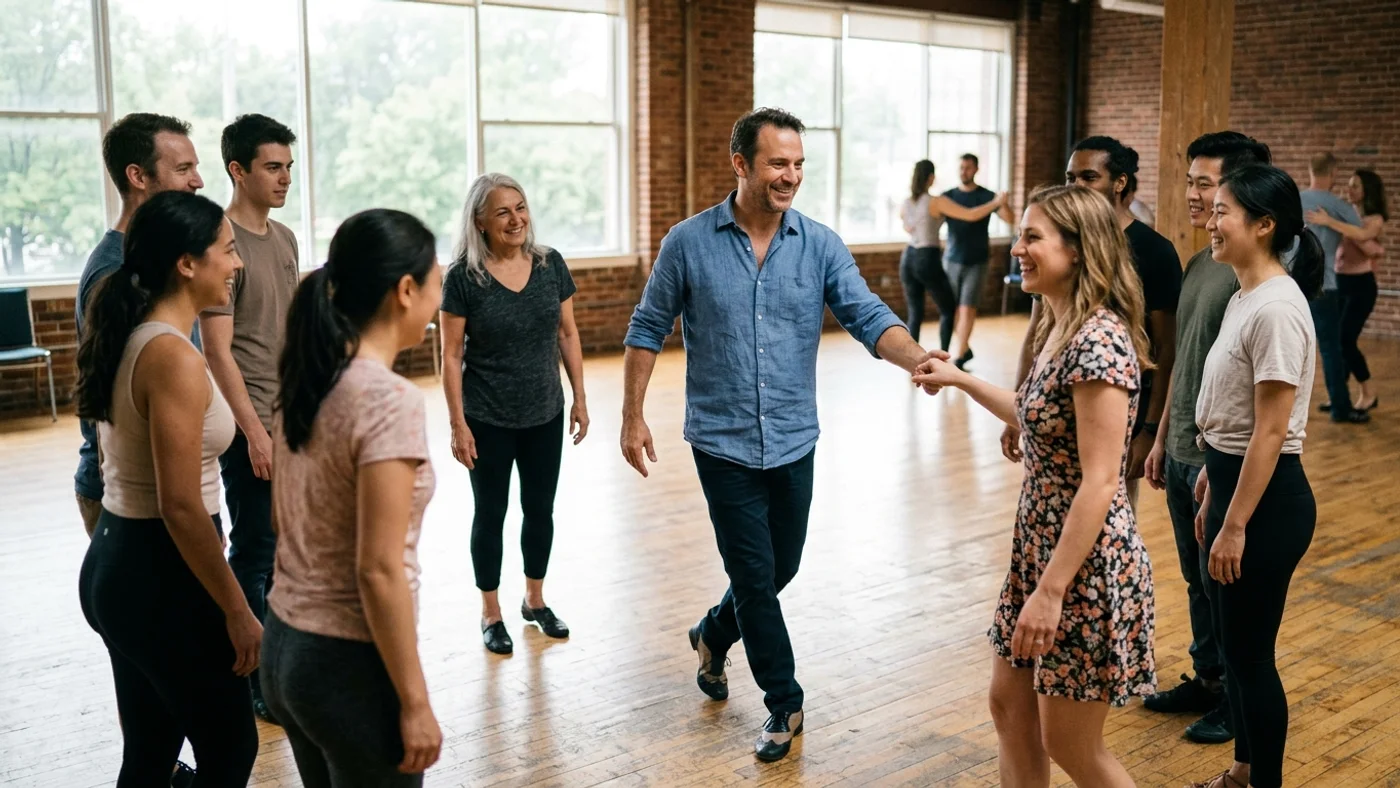
Slightly more reserved than Madrid or Barcelona. Regulars have social circles and tend to dance within them early in the evening. This is not rudeness — it’s just Paris. The workaround: arrive during the pre-social class and meet people there. Once you’ve danced with two or three people during the class rotation, they’ll ask you back during the social. A bonsoir at the door and a simple on danse? to invite work perfectly.
Paris-Specific Etiquette
- Say bonsoir when you enter and bonne soirée when you leave. It sounds small; it isn’t.
- On the floor: compact moves. Paris venues are often smaller than their Spanish counterparts, and dancers notice floor craft.
- Don’t try to lead a follower into a sensual-bachata-style close connection during a salsa set. Paris dancers maintain clear style separation — sensual is for bachata, salsa stays open.
Bachata, Kizomba and Zouk in Paris
Paris’s non-salsa Latin scenes are arguably stronger than its salsa scene.
Bachata
Paris has a large and technically accomplished bachata community, particularly in sensual. Dedicated bachata nights at Les Halles de la Cartoucherie (Wednesdays), Bachata Vibe Paris at Paris Épicentre (Sundays), Bachata Vibe Expérience at Salle Colonne (Wednesdays), Ditc (Wednesdays), and Vendôme Club’s Bachatime (Tuesdays) give you bachata four or five nights a week in a single city. See bachata events in Paris for current listings and best cities for bachata in Europe for how Paris compares to the rest of the continent.
Kizomba
Paris is one of Europe’s strongest kizomba cities, reflecting the Francophone African community and a dedicated local dancer base. Saida Kizomba on Tuesdays at Ditc is a fixture. Paris also hosts major kizomba festivals (covered below). See kizomba events in Paris and our kizomba for beginners guide.
Zouk
Paris has a surprisingly vibrant Brazilian zouk scene — Zouk Unity Paris on Wednesdays, TPZ Zouk Academy on Fridays, Royal Connexion Zouk on Thursdays, and the occasional Temple of Zouk at Temple du Swing. If you’re a zouk dancer, Paris is one of the best cities in Europe for weekly zouk — see the best zouk festivals 2026 roundup for the festival side too.
Summer Socials on the Seine and Outdoor Dancing
Summer in Paris (roughly June through early September) brings a distinctive outdoor scene. The Seine quays around Square Tino Rossi (the jardin des sculptures) have hosted free outdoor salsa, tango and rock socials on summer evenings for decades — a Paris institution that happens informally and rarely gets listed on mainstream event calendars. The vibe is pure community: dancers bring small sound systems, spread out on the quay, and dance to cassette- or USB-sourced music until the sun sets on the river. It’s not the most polished floor, but it’s the most Parisian dancing experience available.
In addition, several organisers run boat socials on the Seine (on vessels like Bateau Concorde Atlantique) — ticketed Latin dance cruises with a proper DJ and a few hundred dancers. These are event-driven rather than fixed, so watch the Paris event feeds in June and July.
The Île du Martin Pêcheur venue, which hosts Royal Connexion Zouk on Thursdays, sits on an island in the Marne and has a particularly summer-garden feel — a good warm-weather alternative to central Paris clubs.
For the off-season version of the warm-outdoor-dancing idea, our best warm-weather winter salsa escapes guide covers where to go when the Seine is too cold to dance by.
Are There Salsa and Dance Festivals in Paris?
Paris runs a substantial festival calendar. For 2026:
Paris International Salsa Congress (PISC) 2026
PISC 2026 runs 7–12 April 2026 and is the city’s flagship salsa event — covering salsa, bachata and kizomba. International artists, multiple rooms, nightly socials. One of the oldest and most respected salsa congresses in Europe.
Paris Sensual Festival 2026
Paris Sensual Festival (21–25 May 2026) is a major bachata-focused weekender. Sensual bachata dominates, with strong international instructor bookings.
Paris Bachata Vibe Festival 2026
Paris Bachata Vibe Festival (16–21 September 2026) is the autumn bachata flagship.
Paris Salsa Marathon 2026
Paris Salsa Marathon (18–20 September 2026) is the pure-salsa flagship — marathon format (less workshop-heavy, more social-heavy). If your technique is already solid and you just want floor time with strong dancers, this is the format.
Paris Kizomba Congress 2026
Paris Kizomba Congress (19–23 November 2026) is the city’s flagship kizomba event. Paris is one of the best kizomba cities in Europe, and this festival showcases it.
KIZMEUP Paris Festival and Paris Kizomba Summer
KIZMEUP Paris Festival (28–31 May 2026) and Paris Kizomba Summer (24–27 July 2026) round out a heavy Paris kizomba calendar.
For the full European picture, browse our festival calendar and the best summer salsa festivals in Europe 2026 roundup.
How Do I Get to Paris Salsa Venues?
Paris’s metro is dense and efficient — nearly every dance venue is a 10-minute walk from a metro stop. Key addresses:
- La Pachanga (14th): Metro L6 to Edgar Quinet or L4 to Montparnasse–Bienvenüe
- Le Balajo (Bastille): Metro L1, L5 or L8 to Bastille
- Vendôme Club (2nd): Metro L3 to Opéra or L7/L14 to Pyramides
- Café Oz Grands Boulevards: Metro L8/L9 to Grands Boulevards
- Owen’s: Central, metro-accessible from multiple lines depending on exact location
Operational detail: the Paris metro closes between 00:40 and 01:15 on most nights, and runs until 02:15 on Friday and Saturday. Noctilien night buses fill the gap but are slower. Many dance venues end at 01:00–02:00 specifically because of this schedule. If you’re staying out past the metro, Uber, Bolt and Heetch all work — budget €12–€20 for a cross-city ride.
Bikes (Vélib’) are a real option in warmer months. Paris is reasonably flat, and cycling home from a Bastille dance night at midnight is genuinely pleasant.
For visualising where venues cluster, use our interactive map.
Where Should I Stay to Dance?
The Paris dance scene is spread out, but two neighbourhoods work particularly well as bases:
- 11th arrondissement (Bastille/République): Walkable to Le Balajo, metro-accessible to nearly everywhere else. Lots of bars, restaurants, late-night food. Dancer-friendly and lively.
- 2nd / 9th (Opéra/Grands Boulevards): Central, short metro to most venues including Vendôme Club and Café Oz. Slightly more tourist-hotel territory but practical.
The 14th (Montparnasse) puts you close to La Pachanga specifically but further from most other venues. The 18th (Pigalle/Montmartre) is close to SalsaO’Sulli and has a nightlife density that suits late-night dancers, though the immediate area can feel more nightclub than dance-community.
Avoid booking in the outer arrondissements (15th edges, 16th, far 20th) — the metro time back to the core venues will eat your dancing hours.
Tips for Visiting Dancers
- Check our salsa events in Paris listing — Paris scheduling shifts more than any other major European city, and last-minute venue changes are common
- Build your week around Sunday and Thursday. These are the strongest salsa-specific nights in Paris
- Say bonsoir. Parisian greetings matter. A respectful entrance earns you a warmer first dance
- Budget more than other European cities. Paris is €30–€50 per dance evening, roughly 50 percent above Barcelona or Berlin
- The metro closes early. Plan your last dance with the last train in mind, or budget for a rideshare
- Cash is rarely needed — nearly every Paris venue takes card
- Don’t try to cram four cities into a European salsa week with Paris. Paris demands its own time. Pair it with London (Eurostar 2h15m) or Amsterdam (train 3h20m) rather than squeezing it between Madrid and Berlin
- Summer means the Seine. If you’re in Paris in June, July or August and haven’t danced on the quays, find the outdoor socials
- Learn a few French dance phrases. On danse?, merci, une autre, bonne soirée. The effort gets returned
- Pre-social classes are genuinely useful in Paris even for experienced dancers — they’re the easiest way to break into a slightly closed regular scene
Find Events
Browse the current salsa events in Paris, bachata events in Paris, and kizomba events in Paris, all updated weekly. If Paris is one stop on a European salsa trip, read salsa dancing in Barcelona and salsa dancing in Madrid for the Spanish leg, or our salsa dancing in Berlin guide for the German alternative. Our how to find social dance events while traveling guide has the full research workflow, and the interactive map is useful for visualising where dance events cluster across the city and the continent.