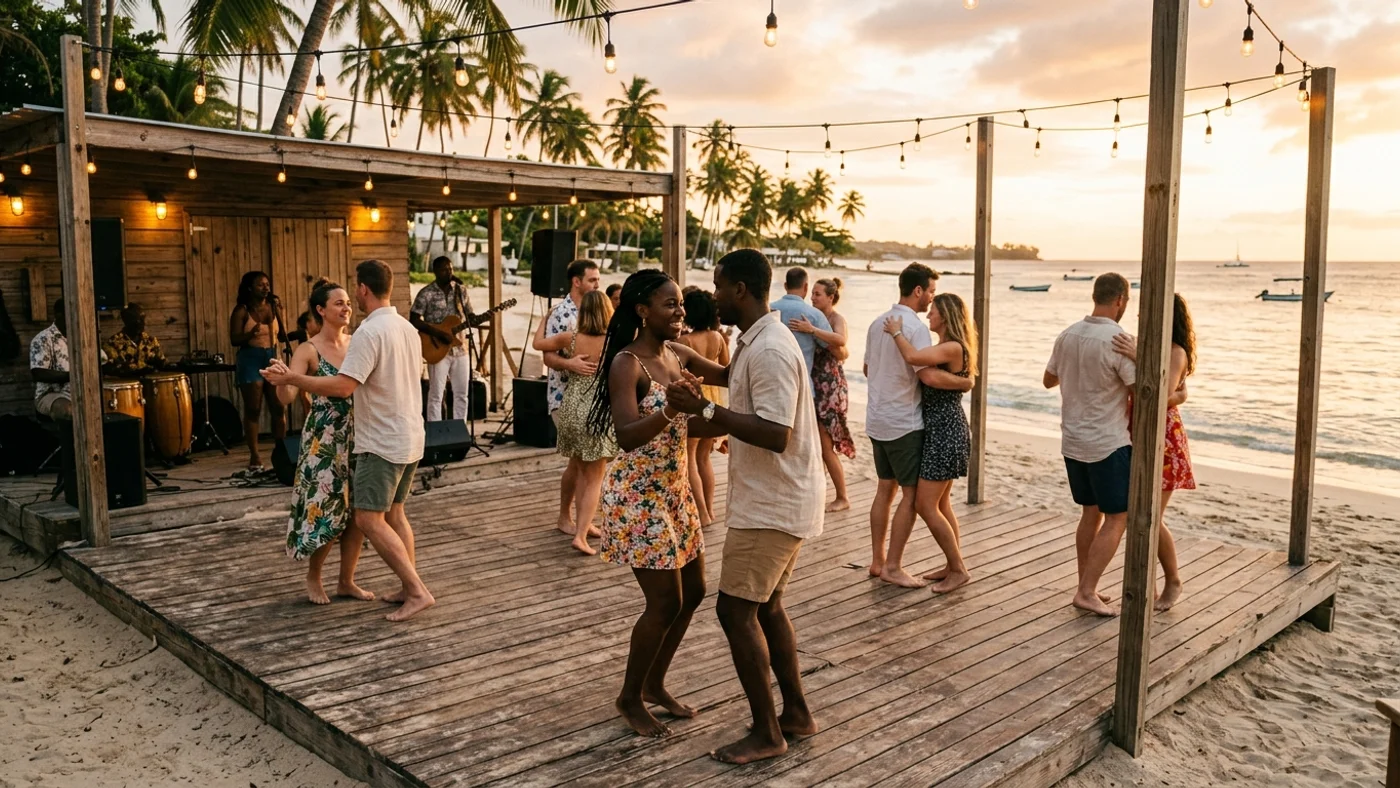
December through February is brutal for dancers in Northern Europe and the Northeast US. Outdoor events die, attendance at weekly socials dips, and the psychological weight of short days and cold floors grinds on everyone’s motivation. The antidote, for those who can travel, is a salsa escape to somewhere warm — a place where dancing does not stop for winter and where the cultural context happens to make Latin dance more alive rather than less.
This guide ranks six destinations for a December-to-February salsa escape in 2026 and 2027. The ranking weighs scene depth, climate, cost, and cultural authenticity against the practical realities of traveling for dance. Honest framing up front: none of these destinations are secrets, and all of them have dedicated dance communities that operate year-round. What winter-escape timing gives you is warmth, fuller attendance (as other travelers also escape to these scenes), and the specific magic of dancing in shorts and sandals while your friends at home shovel snow.
If you are new to winter dance travel, our how to find social dance events while traveling guide covers the fundamentals of walking into a new scene cold.
Table of Contents
- Medellín, Colombia
- Bali, Indonesia
- Miami, Florida
- Mexico City, Mexico
- Havana, Cuba
- Cali, Colombia
- Honorable Mentions
- Festivals to Build a Trip Around
- Planning a Winter Escape
- FAQ
Medellín, Colombia
Medellín is the best all-around winter salsa escape for most dancers. The climate is the city’s most famous feature — Medellín sits at 1,500 meters elevation in a valley that holds spring-like temperatures year-round, averaging 22-24°C (72-75°F) in December through February. No humidity shock, no altitude exhaustion, no cold-weather wardrobe changes. Dancers who spend a week in Medellín often describe the climate as the best argument for the trip by itself.
Scene depth: Excellent. Medellín has a substantial salsa community with weekly socials across the city, dedicated studios, and regular festival-scale events. Cuban casino, Colombian Cali-style, and international LA-style On1 all coexist — the scene is plural in ways that most single-country destinations are not. Bachata and kizomba scenes run alongside and are significant in their own right, giving a visiting dancer a broad Latin dance experience rather than salsa alone.
Best venues and neighborhoods: El Poblado and Laureles are the main expat-friendly districts with the densest weekly scene. Son Havana, a long-running institution, hosts Cuban-style salsa with live music on key nights. Salsa studios across the city (Dancefree, Arrabal, and others) run classes and socials that feed the weekly calendar. The tourist-facing dance scene in El Poblado is genuinely high quality, not watered down.
What makes it special: The combination of climate, price, scene depth, and accessibility is unique. Medellín is cheap by US and European standards — a full night of dancing with drinks costs a fraction of what it would in Miami or Barcelona — and the scene welcomes international visitors actively. English is increasingly spoken in dance contexts, though Spanish deepens the experience considerably.
Practical notes: Spanish is strongly preferred in the deeper scene; English works in tourist-oriented venues. Medellín is safer than its historical reputation but requires normal urban-travel caution. Stay in El Poblado, Laureles, or Envigado; use rideshare rather than walking late at night. Altitude (1,500 meters) is modest but noticeable — give yourself 24-48 hours to adjust before intensive dancing. Read our salsa dancing in Medellín guide for detail on the full scene.
Find all salsa events in Medellín.
Bali, Indonesia
Bali is the most different option on this list. It is not a traditional Latin dance destination and does not have deep cultural roots in salsa. What it has instead is the most daily-active Latin dance scene in Asia — an expat and digital-nomad driven community where you can dance every night at a different venue, in a tropical climate, on an island that costs a fraction of the Caribbean.
Scene depth: Surprisingly excellent, particularly for a non-Latin location. The Canggu and Ubud circuits combined run salsa, bachata, kizomba, and zouk nearly every night of the week. International instructors pass through regularly on retreat circuits. The crowd is transient — expats, digital nomads, and travelers cycling through — which keeps the social dancing fresh.
Best venues and neighborhoods: Canggu and Ubud share the weekly calendar. Monday kicks off with Jalapeno Latin Night and Amavi Monday Social. Tuesdays bring Herb Library and Litut Bar. Wednesday and Thursday run Beach Garden, Amavi Wednesday, Rolling Fork, and Zouk Social nights. Fridays peak at Cafe Dunia and CP Lounge. Weekends run Hatch Bar Live, Mad Monkey Bachata, and Brazilian Zouk Party. Outdoor sessions at Azul Beach add the tropical element.
What makes it special: Lifestyle density. No other destination combines this amount of social dancing with beach life, yoga, surfing, and Southeast Asian prices. A month in Bali with daily dancing costs less than a single week in Miami or London. The scene is international — mostly Western, Australian, and increasingly Asian — and welcomes visitors without friction.
Practical notes: Wet season runs November to March, which means short afternoon downpours are common but rarely disrupt full days. December through February are genuinely pleasant despite the wet-season label — temperatures are warm, humidity is high but tolerable, and rain rarely cancels events. Scooters are the default transport. Entry fees are low, often free with a drink minimum. Indonesian visa rules vary by nationality — check current requirements. Find all salsa events in Bali.
Miami, Florida
Miami is the obvious choice for US dancers and the best option for dancers who want to escape cold weather without leaving English-speaking territory. The city’s climate makes winter genuinely pleasant — 20-26°C (68-79°F) highs in December through February, dry air, blue skies. The dance scene, rooted in the Cuban diaspora, does not contract for winter.
Scene depth: Strong in Cuban casino and rueda, solid in LA-style On1, modest in On2. Miami is the only major US city where Cuban-style salsa dominates, which makes it a distinctive destination even for Americans who have danced in New York and Los Angeles. Bachata has grown significantly, and the combined Latin dance scene supports multiple nights per week in multiple neighborhoods.
Best venues and neighborhoods: Little Havana, Wynwood, Brickell, and the Kendall suburbs each have their own scene. Ball & Chain and other Calle Ocho venues host live Cuban bands multiple nights a week — this is one of the few US cities where social dancing to a live timba band is a weekly rather than festival-only experience. Studio-run socials and weekly rueda nights fill out the calendar. Weekend nights at upscale venues in Brickell and South Beach cater to a mixed tourist-local crowd.
What makes it special: Live music with Cuban cultural rootedness. The continuous Cuban diaspora community means you are dancing to music played by musicians who trained in Havana or grew up in Miami-Cuban households, on floors shared with dancers who learned casino from their parents. That cultural depth is rare even in Latin America and impossible to replicate in non-Cuban locations.
Practical notes: The scene runs later than most US cities — Cuban cultural norms push peak hours to 11 PM-2 AM. Many Cuban-culture venues operate in Spanish; the studio scene is more bilingual. Dress codes are enforced at upscale venues. Miami is expensive relative to Medellín, Bali, and Mexico City — a full night with drinks can easily run $80-120. Our salsa events in Miami listings weight toward the English-speaking studio scene; the deepest Cuban dance culture is advertised in Spanish and discovered by word of mouth.
Mexico City, Mexico
Mexico City is the sleeper pick on this list and the best value for dancers who want cultural authenticity, Spanish-language immersion, and a substantial scene at Central American prices. The city runs a mild winter — 18-22°C (64-72°F) daytime highs, cool nights that require a light jacket — and the high elevation gives cool, dry air that is comfortable for dancing even at peak hours.
Scene depth: Excellent. Mexico City has one of the largest salsa communities in the Americas outside of New York, Miami, and Cali, with Cuban casino, Colombian Cali-style, and LA-style On1 all represented substantially. The scene is heavily Spanish-speaking but not closed to visitors — English is increasingly spoken in studio contexts, and the cultural warmth of Mexican dancers makes walking in cold easier than in most cities.
Best venues and neighborhoods: Roma Norte, Condesa, and Zona Rosa are the hubs. Mama Rumba in Roma Norte is the long-running institution — live bands, packed floors, decades of continuous operation. Salón Los Ángeles in the Guerrero neighborhood has been running since 1937 and is the oldest continuously operating dance hall in Latin America — salsa and danzón nights here are as much cultural experience as dance experience. Weekly studio socials across the city feed the scene with newer dancers.
What makes it special: Cultural richness at affordable prices. A full night of dancing with live music costs 200-500 MXN ($10-25 USD), a fraction of comparable US or European nights. The experience is culturally authentic — not tourist-oriented — while still welcoming visitors. Pairing dance with the city’s food, art, and architectural culture makes Mexico City a genuinely well-rounded trip destination.
Practical notes: Spanish is strongly preferred. Altitude (2,240 meters) affects stamina — first-night visitors often burn out fast, so build in a day of rest before intensive dancing. December and January have the best weather; February gets slightly cooler but remains comfortable. Our salsa dancing in Mexico City guide covers the scene in more depth.
Find all salsa events in Mexico City.
Havana, Cuba
Havana is the cultural source of everything salsa. Casino, rueda, timba — all were born or shaped on this island, and dancing here is the closest any traveler can get to the origin of Cuban salsa as a living, daily culture. The tradeoff: Havana’s tourism infrastructure is more limited and more complicated than any other destination on this list. US travelers face specific regulatory restrictions; all travelers face infrastructure realities that do not exist elsewhere.
Scene depth: Unmatched for Cuban casino. Casa de la Música Habana, Salón Rosado de la Tropical, Café Cantante, and 1830 Club host nights with live bands, crowded floors, and the specific informal cultural mixing of tourists, locals, and serious dancers that defines the Havana experience. The scene operates on its own logic — many nights are not advertised internationally, many venues close unpredictably, and many great experiences happen via word of mouth rather than planning.
Best venues and neighborhoods: Centro Habana, Vedado, and Miramar host the main venues. Casa de la Música has locations in Centro Habana and Miramar — both draw serious dancers. Salón Rosado de la Tropical (La Tropical) is an open-air venue with legendary weekend programming when live acts perform. Private and semi-private dance schools (Salsabor a Cuba, Baila Havana, and others) offer daytime classes that introduce visiting dancers to the scene.
What makes it special: Cultural source. You are dancing where the music is made, on floors shared with Cubans who dance casino the way Americans drive — a baseline skill absorbed from childhood rather than learned in adulthood. The live music culture is genuine and inseparable from the dance; hearing a full Cuban timba band in full flight on a Saturday night in Havana is an experience no recording can reproduce.
Practical notes: US travelers need to travel under an authorized category (Support for the Cuban People, educational, etc.) — tourism-only travel is restricted. Check current US Treasury OFAC guidance well before booking. Canadian, European, and most other travelers can visit freely. The US dollar is useful but Cuban pesos and the informal economy dominate daily transactions; bring cash (euros are widely accepted). Infrastructure (internet, electricity) is more limited than you may expect — plan accordingly. Salsa events in Havana are thin online because most Cuban dance culture is not on international event platforms.
Cali, Colombia
Cali is the world capital of Colombian salsa and the most culturally intense salsa destination on this list. The local style — salsa caleña — is fast, footwork-driven, and street-rooted in a way that other scenes cannot replicate. Walking into a Cali salsateca as a visitor dancing LA or NY style is a humbling experience; Cali dancers have their own aesthetic and their own pride in it, and you will be recognized as an outsider immediately. This is a feature, not a bug — it is part of what makes a Cali trip valuable.
Scene depth: Deep but stylistically specific. Cali is unapologetically a Cali-style salsa city — the fast footwork, the specific musical palette (salsa dura, boogaloo, pachanga), the distinctive performance aesthetic that Cali dance academies produce for international competition. Other styles are present but secondary. If you want a deeply culturally rooted single-style experience, Cali delivers.
Best venues and neighborhoods: Barrio Juanchito across the river from the main city is the traditional heartland — multiple salsatecas operate weekly, with live bands on key nights. Zona Rosa in the city proper has tourist-accessible venues. Tin Tin Deo is the most internationally famous salsateca. Dance academies (Salsa Viva, Salsa Pura, and others) offer structured training that can meaningfully prepare a visiting dancer for the local floor.
What makes it special: The intensity of the local dance culture. Cali takes salsa seriously in a way that is genuinely different from how studio-city scenes take it seriously. The city is built around the dance — academies teach children from age four, professional dance companies regularly win international championships, the music is everywhere. A visitor who respects the local style and takes a few days of classes before trying to social dance will have a much better experience than one who walks in expecting to improvise LA-style.
Practical notes: Spanish is essential. Cali has had safety challenges historically; the city has improved significantly but normal urban-travel caution applies — use rideshare at night, stay in reputable neighborhoods, do not flaunt valuables. Temperatures are warm year-round (average 24-26°C / 75-79°F). Take daytime classes before trying the evening scene cold. Find all salsa events in Cali.
Honorable Mentions
Bangkok, Thailand
Bangkok combines a rising salsa scene with tropical winter weather and Southeast Asian prices. January is festival season — the Thailand Latin Extravaganza 2027 pulls European dancers escaping the cold. Scene is smaller than Medellín but growing fast. Pairs naturally with a Bali stopover.
Buenos Aires, Argentina
Southern hemisphere summer. December through February is Argentine peak season — warm weather, outdoor events, and a scene that runs salsa alongside its world-famous tango community. More culturally complex than a pure salsa destination but rewarding for dancers with broader interests. Find all salsa events in Buenos Aires.
Cartagena, Colombia
Coastal Caribbean Colombia with a growing tourist-accessible salsa scene. Less culturally deep than Cali or Medellín but warmer and more visually spectacular. Works well as a weekend add-on to a Medellín trip.
Puerto Rico
San Juan and Ponce have solid year-round salsa scenes rooted in the island’s fundamental place in salsa history. US travelers benefit from domestic-flight ease. The scene is smaller than New York or Miami but culturally rooted and genuinely warm.
Dominican Republic
Santo Domingo and Punta Cana have growing salsa scenes alongside the country’s primary focus on bachata and merengue. For salsa alone, less deep than other Caribbean options; for a mixed Latin dance trip, strong.
Canary Islands, Spain
Technically European but with winter temperatures that match Medellín’s and a genuine Spanish-speaking dance culture. Tenerife and Gran Canaria both have weekly salsa scenes and occasional festivals. Good for European dancers who want warmth without a long-haul flight.
Marrakech or Fujairah, UAE
North Africa and the Gulf both offer warm winter weather with smaller expat-driven Latin scenes and occasional destination festivals. The Fujairah Latin Festival 2026 in April sits at the edge of this window.
Festivals to Build a Trip Around
Festival weekends change the calculus on any winter escape. A week of regular scene time paired with a festival weekend gives you the full range of what a destination can offer.
Thailand Latin Extravaganza 2027 — January 2027, Bangkok. The biggest January Latin dance event in Asia. Pairs perfectly with Bali.
Kiz Nature 2026 — December 2026, Chiang Dao, Thailand. Outdoor nature-format kizomba festival in Northern Thailand. Different energy than city-based events.
New York SBKZ Congress 2027 — January 2027, New York. A winter congress in a cold-weather city, but for US dancers who cannot escape to tropical destinations, this is a high-quality anchor event.
Reno Latin Dance Fest 2027 — January 2027, Reno, Nevada. West Coast US winter anchor. Reno is cold but the indoor festival is warm.
Colombian cities including Cali host an annual International Salsa Festival (Festival Mundial de Salsa) in September, plus the Delirio Caliente season of cultural performances. Medellín has year-round weekly events supplemented by occasional international festivals. Havana’s major salsa events cluster around specific dates tied to Cuban cultural calendars. Our salsa festivals 2026 guide covers the global festival landscape.
Browse the full festival calendar for verified listings.
Planning a Winter Escape
Pick one destination, not three. The temptation to combine Medellín, Havana, and Miami in a single trip is real and nearly always a mistake. Each of these scenes rewards several days of immersion; spreading a two-week trip across three locations means you get the surface of each without the depth of any. Better to go deep on one destination and return to others on future trips.
Time around local dance rhythms. Weekly scenes have peak nights — usually Friday and Saturday, sometimes Thursday or Sunday. Arrive on a Monday, rest and adjust, take classes Tuesday-Thursday, and peak on weekend nights. Leaving Sunday or Monday lets you catch weekend socials at full strength.
Learn basic language greetings. Spanish in Latin America, Portuguese in Brazil, basic English-plus-Indonesian in Bali — even rudimentary greetings change how you are received at venues. The effort signals respect and opens conversations that “Do you speak English?” does not.
Budget by tier. Medellín, Mexico City, Bali, and Cali are cheap by US and European standards — a full night of dancing costs $15-40. Miami and New York are expensive ($60-120). Havana sits in the middle with a specific cash-economy logic. Budget accordingly and consider stacking a high-cost destination with a low-cost one (Miami + Havana, Bangkok + Bali) to manage overall trip cost.
Prepare for climate realities. “Warm weather” varies substantially. Mexico City is mild and dry. Miami is warm and humid. Medellín is spring-like. Bali is tropical with wet-season rain. Havana and Cali are consistently warm. Pack for the specific destination, not the abstract “winter escape” concept.
Use local dance contacts. Online dance communities, Instagram accounts of major local instructors, and connections through dance teachers in your home city can produce introductions that unlock doors. A message to a local studio saying “I dance LA-style, I will be visiting from [city] next week, any recommendations?” often produces personal introductions worth a week of cold networking.
Take classes on arrival. Every destination on this list has at least one serious local style or set of expectations. Taking 1-2 classes in the first few days — Cali-style footwork in Cali, casino in Havana, Colombian-style in Medellín — calibrates you to the local dance and earns respect from the community when you arrive on the floor.
Build rest into the schedule. Dancing five nights in a row in an unfamiliar city with different food, heat, altitude, and hours burns out most dancers by day three. Plan one full rest day in a seven-night trip. Your last two nights will be far better for it.
Travel with at least one pair of dedicated dance shoes. Beach shoes, hiking shoes, and running shoes will not work. Our guide to salsa dance shoes covers what to pack. The best dance bag for social dancers covers carry-on and travel logistics.
Check current conditions. Visa requirements, safety advisories, and political conditions change — particularly for Cuba and Colombia. Verify close to travel dates. Check our salsa page for current event listings and our festival calendar for the latest verified events.
FAQ
Which is the best warm-weather salsa destination in January?
Medellín for scene depth and perfect year-round climate. Bali for daily dance density and lifestyle. Havana for cultural authenticity if you can travel there. Miami for the best US option. All four work — the choice depends on whether you want cultural rootedness, production values, or a long multi-week dance vacation.
Is Cuba open for dance tourism in 2026 and 2027?
Cuba is open to most international visitors, but US travelers face restrictions on tourism-only travel. Many US dancers travel to Havana under the “Support for the Cuban People” or similar authorized categories — dance study with cultural content typically qualifies. Check current US Treasury OFAC guidance before booking. Canadians, Europeans, and most other nationalities can travel with minimal restrictions.
How does dancing in Cali compare to Medellín?
Different dances. Cali is the world capital of Colombian salsa caleña — fast footwork, “azúcar” energy, and a street-culture rootedness that other cities cannot replicate. Medellín is more cosmopolitan — salsa casino and New York-style coexist with Cali-style, and the scene is more internationally accessible. If salsa is your only reason for the trip and you want the cultural peak, Cali. If you want a warmer climate and a broader Latin dance scene, Medellín. Our salsa dancing in Medellín guide covers the Medellín scene in depth.
Can I dance in Bali without being a lifestyle-nomad type?
Yes. The Bali dance scene accommodates short-term visitors perfectly well — you do not need to stay for months to have a good experience. A two-week trip can include daily social dancing, international workshops, beach time, and cultural sightseeing. The scene is organized enough that newcomers can drop in and find their footing within a day or two. See our best salsa cities in Asia guide for the broader Asian context.
What is the best value winter salsa destination?
Mexico City. Warmer than Europe, culturally rich, cheap entry fees (roughly $5-15 USD), substantial scene, and home to Latin America’s oldest continuously operating dance hall. Medellín is close behind on value. Both are significantly cheaper than Miami or a Caribbean trip. Cali is also excellent value if the single-style focus fits what you want.
Find Salsa Events Worldwide
Browse all salsa events to find socials in your destination city. Our complete festival calendar lists every verified event. For destination-specific detail, our guides to salsa dancing in Medellín and salsa dancing in Mexico City cover individual scenes in depth. The summer counterpart to this guide is our best summer salsa festivals in Europe 2026 guide. For year-round planning, see our best salsa festivals 2026. Traveling dancers should also read how to find social dance events while traveling and review dance floor etiquette before walking into a new scene. Beginners planning a first warm-weather trip should start with our beginner-friendly salsa destinations worldwide guide.