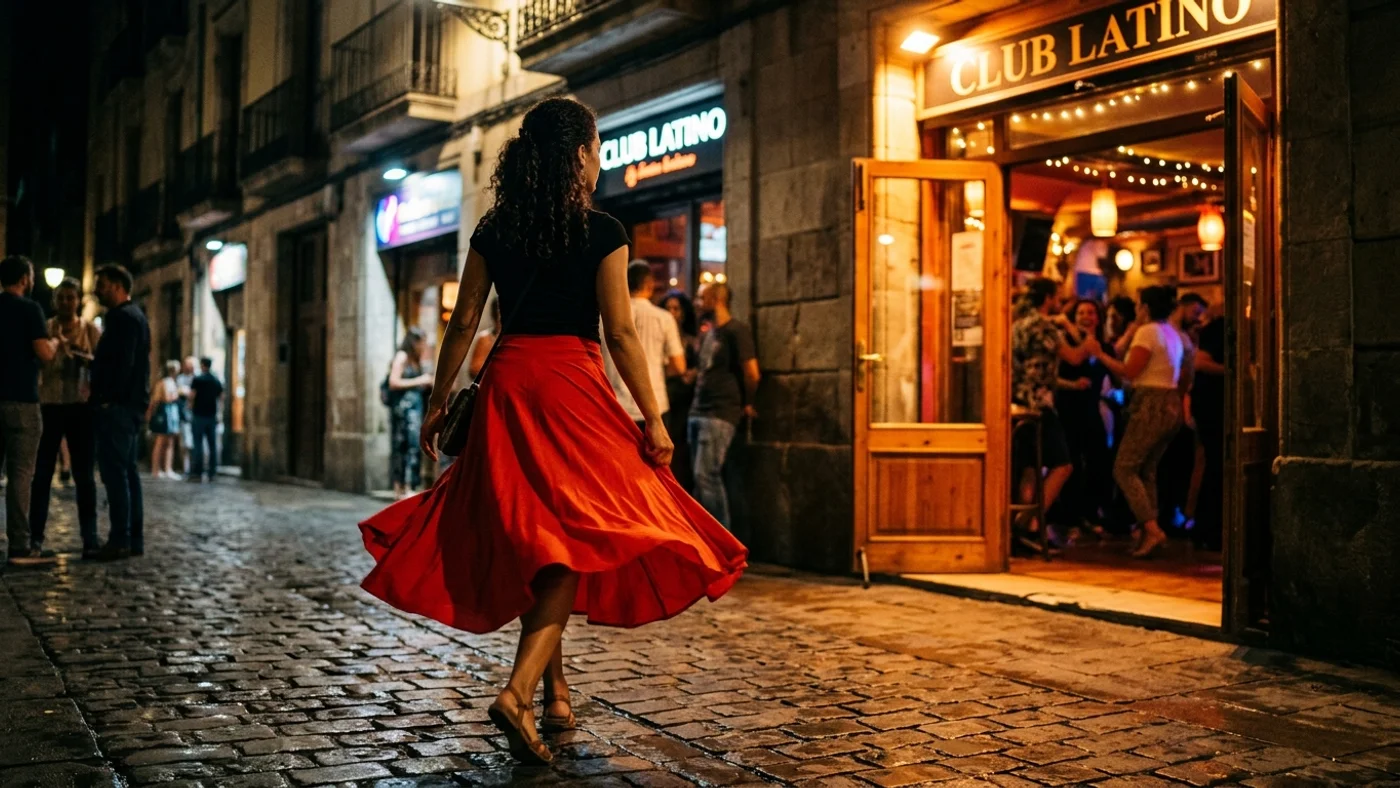
Solo female dance travel is one of the richest ways to experience the international scene. You set your own schedule, you meet people organically through the dance, and you are not compromising on priorities with a non-dancer travel companion. But it also requires honest thinking about safety, local scene culture, and which destinations are genuinely welcoming versus which require more careful navigation.
This guide ranks cities for solo female dance travelers based on safety, scene welcome, cultural accessibility, and the everyday logistics of walking into a new scene alone. Honest framing up front: “best” is contextual. A highly experienced dancer with street smarts can handle cities that would overwhelm a first-time solo traveler. The rankings here lean toward accessibility for travelers who want an easier experience, with honest notes about cities that require more care.
If you are new to dance travel, pair this with our how to find social dance events while traveling guide for practical scene-entry tips.
Table of Contents
- The Safest, Most Welcoming Cities
- Excellent for Solo with Some Context
- Warm-Weather Destinations
- Cities That Are Harder (But Still Possible)
- General Safety and Scene Entry Tips
- Festival Considerations for Solo Travelers
- FAQ
The Safest, Most Welcoming Cities
These are the cities where solo female dance travel is easiest — scene culture is welcoming, urban safety is high, and the practical logistics are smooth.
Amsterdam
Amsterdam is probably the easiest major European dance city for solo female travelers. The city is compact and walkable, public transport runs late, cycling is safe enough that it is the default local transport, and the dance culture is genuinely inclusive rather than cliquey. English is universal in venues. Dress culture is relaxed — dressed-up jeans and a nice top work for most weekly socials.
Scene welcome: Strong. Dutch dance scene attitudes are characteristically direct and friendly. Introducing yourself to strangers is not awkward, and experienced dancers actively help newcomers navigate the calendar.
Best neighborhoods for accommodation: Jordaan, De Pijp, Oud-West, or central city. All are safe at all hours and within walking or bike distance of major venues.
Practical notes: Trust the bike lanes. Download the 9292 public transport app. Use official taxis or Uber rather than unlicensed drivers. See our salsa dancing in Amsterdam guide for scene details.
Copenhagen
Copenhagen is arguably the safest major European city, period, and the dance scene reflects Nordic social norms — introverted on first contact but welcoming once you make the first move. The city is compact, safe at any hour, and the dress culture is comfortable rather than formal.
Scene welcome: Reserved initially, very warm once broken through. Walking into a Copenhagen social and expecting to be approached unprompted is a mistake. Walking in and introducing yourself works consistently well.
Best neighborhoods: Vesterbro, Nørrebro, and central Copenhagen all work. Avoid the more remote suburbs unless your hotel is specifically there.
Berlin
Berlin has one of Europe’s deepest dance scenes and a genuinely inclusive culture. The city is safer than its reputation suggests for most neighborhoods, runs 24-hour public transit, and has dance events every night of the week. Language is not a barrier — English is universal in dance contexts, and German dancers often prefer practicing English.
Scene welcome: Excellent. Berlin’s expat-heavy population means the dance scene skews internationally-mixed, and locals are accustomed to integrating visitors.
Best neighborhoods for accommodation: Mitte, Kreuzberg, Friedrichshain, Prenzlauer Berg. All safe, all close to major venues, all walking-friendly. See our salsa dancing in Berlin and bachata dancing in Berlin guides for scene context.
Stockholm
Similar to Copenhagen — high safety, compact geography, initially reserved but welcoming scene, strong English comfort. Stockholm is more expensive than most European dance cities but the dance experience is consistently high quality.
Scene welcome: Scandinavian reserve applies. Take initiative and you will be well received.
Helsinki
Smallest of the Nordic capitals but similar safety profile. The dance scene is smaller but committed. Good for dancers who want a genuinely quiet-city experience rather than a major-capital buzz.
Tokyo
Tokyo deserves mention as one of the safest large cities in the world for solo female travelers. The dance scene is smaller than Berlin or Amsterdam but very welcoming to visitors. Late-night transport is complicated (last train at midnight or 1am for most lines), but taxis are safe and reliable if expensive. See our best salsa cities in Asia guide for broader Asian context.
Melbourne and Sydney
Australia’s two biggest cities are solo-female-friendly with safe urban infrastructure, English as native language, and welcoming dance scenes. The Australian scene tends to be more direct and friendly on first contact than the Nordic scenes. See our best cities for salsa in Oceania guide for scene details.
Excellent for Solo with Some Context
Cities where solo female dance travel works well but benefits from specific local knowledge or some extra planning.
Barcelona
Barcelona has one of Europe’s largest dance scenes but the city itself requires more awareness than Amsterdam or Copenhagen. Pickpocketing is genuinely common in tourist areas. The dance scene is warm and welcoming once you plug in, but some venues are in less-central neighborhoods that require rideshare late at night.
Best neighborhoods for accommodation: Gràcia, Eixample, Born-Gothic Quarter (central). Avoid Raval late at night unless staying in a secure building.
Practical notes: Secure your bag. Use Uber or Cabify for late-night returns. Spanish helps but is not required. See our salsa dancing in Barcelona and bachata dancing in Barcelona guides for scene context.
Madrid
Madrid feels safer day-to-day than Barcelona (less tourist crime) and has a deeper salsa scene. Spanish helps more in Madrid than in Barcelona. Late-night transport works well — the metro runs until 1:30am and night buses cover the rest. See our salsa dancing in Madrid and bachata dancing in Madrid guides.
London
London is safe in the standard big-city-caution sense — be alert on the tube at night, avoid specific neighborhoods late, use licensed cabs or Uber. The dance scene is large and international, but the city’s geography is sprawling and getting between venues requires planning. See our salsa dancing in London guide.
Best neighborhoods: Camden, Islington, Soho-adjacent central London. Late-night Uber is essential for venue returns.
Paris
Paris has a large dance scene but with a more cliquey culture than Amsterdam or Berlin. Breaking in as a solo visitor takes more active effort — introduce yourself to organizers specifically, and plug into the scene via a class or festival before a standalone social. Safety is standard European-big-city. See our salsa dancing in Paris guide.
Practical notes: The Paris metro closes relatively early (around 1am on weekdays, later on weekends). Plan rideshare for late returns.
New York City
New York’s dance scene is world-class but the city is big, expensive, and requires navigation. Manhattan and the closer parts of Brooklyn and Queens are safe for solo female travelers with normal urban-travel awareness. Subway is fine but avoid empty cars late at night. See our salsa dancing in New York and bachata dancing in New York guides.
Tel Aviv
Strong dance scene, beach city, safe in normal circumstances. Current geopolitical situation requires checking travel advisories before booking. In baseline circumstances, Tel Aviv is one of the most welcoming Middle Eastern destinations for solo female dance travelers.
Warm-Weather Destinations
The solo female dance traveler experience in warm-weather destinations has specific considerations. These cities are ranked honestly based on what to expect.
Medellín
Medellín is the best warm-weather destination for most solo female dance travelers. The climate is ideal year-round (22-24°C), the dance scene is deep, English is increasingly functional in dance contexts, and the expat-heavy El Poblado and Laureles neighborhoods are genuinely safe with sensible precautions.
Safety context: Medellín is dramatically safer than its 1990s reputation suggests but remains a Latin American city with petty crime and some neighborhood disparity. Stay in El Poblado, Laureles, or Envigado; use rideshare rather than walking after 10pm; do not wear expensive jewelry or visibly carry electronics.
Scene welcome: Strong. Medellín’s dance community welcomes international visitors and has accommodated solo travelers for years. See our salsa dancing in Medellín guide.
Bali (Canggu and Ubud)
Bali is possibly the best warm-weather destination in Asia for solo female dance travelers. The expat community is enormous, the dance scene runs nearly every night, and both Canggu and Ubud have established infrastructure for digital nomads and solo travelers. Safety is generally excellent.
Practical notes: Rent a scooter only if you are comfortable riding in Southeast Asian traffic (most accidents involve inexperienced Western riders). Use Grab or Gojek rideshare otherwise. Avoid Kuta nightclub district. See our best warm-weather winter salsa escapes guide for Bali scene details.
Mexico City
Mexico City has a strong salsa scene and is cheaper than any North American alternative. It requires more care than Medellín — the city is larger, neighborhoods are more varied in safety, and English helps less. Solo female travel here works well with good neighborhood selection and standard big-city caution.
Best neighborhoods: Roma Norte, Condesa, Polanco, Coyoacán. Avoid unfamiliar neighborhoods late at night.
Practical notes: Use Uber exclusively after dark. Spanish genuinely helps — basic Spanish is much more useful than in Medellín or Barcelona. See our salsa dancing in Mexico City guide.
Lisbon
Lisbon is warmer than most of Europe year-round and has a growing kizomba and bachata scene. Portuguese is similar enough to Spanish to navigate easily, and English works in most dance contexts. Safety is excellent. See our kizomba dancing in Lisbon guide.
Havana
Havana requires specific context for solo female travelers. Cuban street culture includes constant verbal attention from men (catcalling, persistent approaches) that is culturally normalized but can feel intense. The dance scene itself is welcoming and safer than the streets — inside venues, the atmosphere is generally respectful.
Practical notes: Travel US-Cuba restrictions still apply — check current State Department guidance. Cuba is not a dangerous country by crime standards but the cultural male-attention friction is real. See our social dancing in Havana guide.
San José, Costa Rica
Small but growing dance scene. San José itself requires some neighborhood care (Escazú is safest). For solo female dance travelers who want a warm-weather Latin American experience less intense than Mexico City or Havana, Costa Rica is a viable option.
Cities That Are Harder (But Still Possible)
Cities where solo female dance travel is absolutely doable but requires more planning, local knowledge, or specific scene connections.
Rio de Janeiro
Rio has a rich dance scene (especially zouk and forró) but the city’s safety disparity across neighborhoods is significant. Ipanema, Leblon, and Copacabana beachfront are reasonable for solo female travelers with standard big-city caution. Favelas and many non-beach neighborhoods should be avoided without a local guide. Rideshare is essential. See our zouk dancing in Rio de Janeiro guide.
Honest note: Many dancers have excellent Rio experiences. The safety profile here is about selecting neighborhoods carefully rather than avoiding the city.
São Paulo
Larger and more complex than Rio. Solo female travel works best in Vila Madalena, Pinheiros, and Jardins — the expat-and-business districts where most good dance venues also cluster. Public transport is functional but Uber is the default. See our zouk dancing in São Paulo guide.
Bogotá
Strong salsa scene but the city requires neighborhood awareness. Chapinero, Zona Rosa, and the Parque 93 area are reasonable. Avoid wandering outside tourist-and-business districts. Taxis and rideshare for all late-night moves.
Istanbul
Dance scene is genuinely excellent and growing, but solo female travel requires more care than in Western European cities. Current political situation adds complexity — check travel advisories. Beyoğlu and Kadıköy are the best neighborhoods for dancers. Central Istanbul is safe by day and reasonable by night with normal caution.
Santo Domingo
The bachata cultural experience is worth the trip but the city itself is less solo-female-friendly than Medellín or Mexico City. Colonial Zone is the best neighborhood for staying, rideshare is essential, and standard Caribbean-city caution applies. See our bachata dancing in Santo Domingo guide.
Mumbai and Delhi
India’s dance scene is small but growing. Solo female travel in Indian cities requires significant cultural and safety considerations that go well beyond the dance scene itself. If you are new to India, consider arriving with a non-dance plan first (guided tour, conference, or visiting friends) before attempting solo dance travel here.
General Safety and Scene Entry Tips
Research neighborhoods before booking. The single most important decision is where you stay. A safe neighborhood in every city listed above exists — be specific about which one you book.
Rideshare is essential for late returns. Uber, Cabify, Bolt, Grab, Gojek — download whichever operates in your destination before arrival. Late-night public transport is fine in some cities and unreliable-to-unsafe in others. Rideshare is the universal default.
Send your location to a trusted contact. Before heading to a venue, share your live location with a friend or family member. Apps like WhatsApp or Find My make this trivial. Check in when you return.
Carry less, secure more. A small crossbody bag that zips is better than a purse. Carry a card and some cash, not everything. Keep your phone in a front pocket, not a back pocket. At packed venues, keep bags visible rather than on the floor.
Introduce yourself first. Scene culture in most cities rewards dancers who take initiative. Walking into a new venue and waiting to be approached works poorly; walking in and saying “I’m visiting, this is my first time here” works consistently well.
Join festival and scene WhatsApp or Telegram groups. Most festivals run attendee-coordination groups 2-4 weeks before the event. Most weekly scenes in major cities have similar groups. Ask at the venue for invitations.
Learn to say “no thank you” cleanly. In most dance cultures, declining a dance is acceptable but should be done politely and consistently. You are not obligated to dance with anyone for any reason. Scene norms support declining — use them.
Report harassment. Every major festival now has harassment policies and reporting mechanisms. Every reputable weekly venue has an organizer or host who is responsible for attendee experience. If something happens, report it. Silence protects bad actors.
Use dance-specific clothing strategically. In some cities (Medellín, Mexico City, Istanbul, Rio) dressing dance-appropriate rather than tourist-casual helps you fit in. Our social dance dress code guide for every climate covers the style question by region.
Trust your instincts. If a venue feels off, leave. If a partner feels off, thank and move on. Scene reputation is real — cities and venues have reputations, and so do individuals. You are not obligated to give strangers the benefit of the doubt at personal cost.
Festival Considerations for Solo Travelers
Choose accommodation at the festival hotel. Walking distance to the main venue matters more for solo attendees than for group trips. You will return to your hotel multiple times per day, and late-night returns are much simpler when the hotel is connected to the venue.
Use festival Telegram or WhatsApp groups. Solo female dancers use these to find room shares, meal groups, and first-night introductions. Most 2026 festivals run these groups — ask the organizers.
Arrive early on the first day. Arriving early lets you scout the venue, meet organizers, and introduce yourself before the intensity peaks. First nights at festivals can be overwhelming; being established before the crowd hits makes a significant difference.
Partner-match with another solo attendee. Many solo female festival-goers pair up informally for the duration of the event — meals together, travel to and from the hotel, end-of-night departure coordination. This reduces solo-navigation friction significantly without sacrificing independence.
Beach and outdoor festivals are especially solo-friendly. The outdoor pool-party and beach atmosphere at Croatian Summer Salsa, Benidorm Dance Fest, Sicilia Salsa Sensual, and Sensation Days Albena creates more organic mixing than urban congress formats. See our best outdoor salsa festivals 2026 guide.
Retreat formats suit solo travelers structurally. The meal-together, small-group, full-week format of a genuine retreat is built around breaking down solo-traveler isolation. See our best salsa retreats 2026 guide.
Festivals with safety-positive reputations. Berlin Salsacongress, Croatian Summer Salsa Festival, Dance Casa Festival Budapest, and all Nordic festivals have particularly strong reputations among solo female attendees. Smaller boutique events tend to be safer than mega-festivals simply due to crowd size.
FAQ
Which city is the easiest for a first-time solo female dance traveler?
Amsterdam. The city is compact, safe at night, the dance scene is genuinely welcoming to newcomers, English is universal, and the dress culture is relaxed rather than formal. Copenhagen and Berlin are close seconds. Among warm-weather destinations, Medellín (specifically El Poblado and Laureles) works well for most dancers with sensible urban-travel caution. See our salsa dancing in Amsterdam guide for scene context.
Are there cities where solo female dancers should be cautious?
Yes, with context. Some Latin American cities require more careful neighborhood selection and rideshare-only late-night transport (Mexico City after midnight, parts of Rio, parts of Bogotá). Some European cities have specific dance-scene cultures that can be harder to navigate alone (Paris can feel cliquey). Nothing disqualifying, but context matters. Detailed notes in the sections above.
How do solo female dancers meet people in new scenes?
Walk in early, introduce yourself to the DJ or venue host, take a class before the social if offered, post in local Facebook or WhatsApp dance groups before arriving, and accept help from experienced dancers who offer. Festival Telegram groups are especially useful for coordinating rooms, transport, and first-night introductions. Our how to find social dance events while traveling guide has more detailed scene-entry tactics.
Is dance travel safer than general solo travel?
In most cases yes, because dance scenes are social networks that operate with internal norms against harassment. You walk into a venue and there are people whose job is to check on you. That said, the dance scene is not insulated from the surrounding city — standard solo-travel precautions still apply outside the venue. Stay in safe neighborhoods, use rideshare at night, keep valuables secure.
What should solo female dancers pack?
Dance shoes and a dance bag, outfits that match the local dress culture (see our social dance dress code guide for every climate guide), a reliable charger for maps and rideshare, a card wallet rather than a purse at busy venues, and basic self-defense items if they are legal in your destination. Most importantly: the willingness to introduce yourself first. Our best dance bag for social dancers guide covers packing essentials.
Find Events Worldwide
Browse all salsa events, bachata events, and kizomba events to plan your trip. Our complete festival calendar lists every verified event. For city-specific scene guides and neighborhood intel, see our salsa dancing in Barcelona, salsa dancing in Madrid, salsa dancing in Berlin, salsa dancing in Amsterdam, salsa dancing in Medellín, and salsa dancing in Mexico City guides. For festival-specific solo-traveler tips, see our best summer salsa festivals in Europe 2026 guide.